
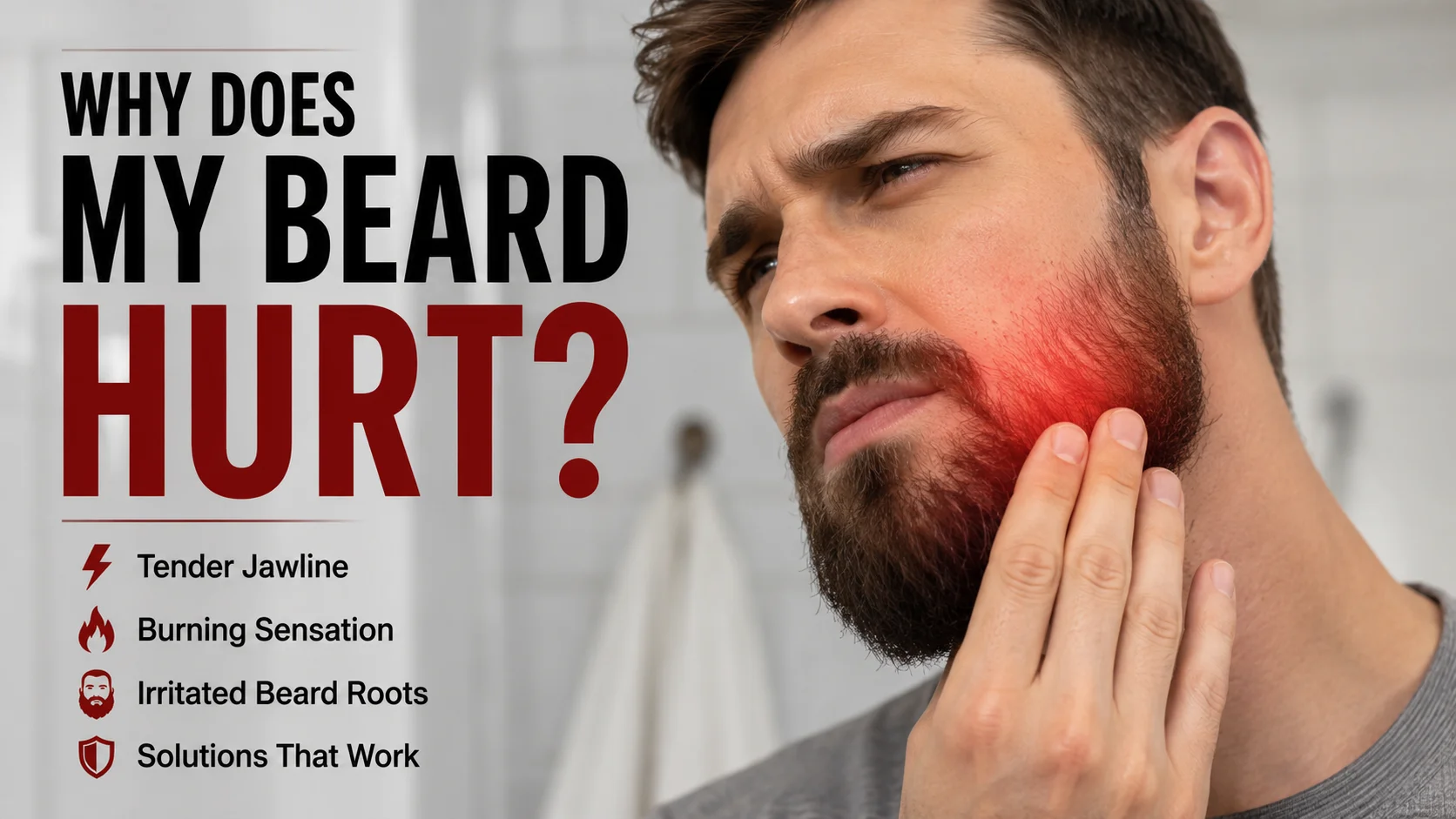

Hair follicles are tiny, tunnel-shaped structures in your skin where hair grows. Each follicle is surrounded by nerve endings, sebaceous (oil) glands, and immune cells. When a follicle becomes irritated, infected, or blocked, it triggers folliculitis—inflammation of the hair follicle.The short answer is follicle inflammation. But to understand why that inflammation occurs—and how to stop it—you need to look beneath the surface of your skin.
In the beard area, this condition is specifically called Folliculitis Barbae. When it becomes chronic, deep-seated, and recurring, it progresses to Sycosis Barbae (also known as barber’s itch or sycosis vulgaris). Both conditions share the same root cause: inflammation that makes every hair root feel like a tiny, painful thorn.
Medical Disclaimer: Research into the beard microbiome and immune health is still emerging. This article is intended for educational and informational purposes only and is not designed to diagnose, treat, cure, or prevent any medical condition. Readers should consult a qualified healthcare professional for medical advice.
Expert Review: This article was reviewed by Dr. Mohammed Abdul Azeem Siddiqui, a clinician and health researcher with more than 30 years of experience in dermatology-related care, scalp biology, facial hair science, and hair restoration education.You’ve grown your beard with care—oiling, brushing, trimming. But lately, something feels wrong. When you touch your jawline, there’s tenderness. When you shave or even wash your face, a burning sensation radiates from the roots. The question echoes in your mind: Why does my beard hurt?
Why Does Inflammation Cause Pain?
Healthy follicles are silent. You don’t feel them. But when inflammation sets in:
- Swelling compresses nerve endings around each root.
- Immune cells release chemicals (like histamine and cytokines) that directly stimulate pain receptors.
- Pus or debris builds up inside the follicle, creating pressure.
The result is a burning sensation, tenderness to light touch, and sometimes sharp pain when the hair moves.
What Does Folliculitis Beard Look and Feel Like? (Symptoms)
If you’re experiencing painful beard roots, check for these classic signs:
| Symptom | Description |
|---|---|
| Red bumps | Small, pimple-like lesions around hair shafts |
| Pustules | White-headed bumps filled with pus |
| Burning sensation | Warm, irritated feeling across the beard area |
| Itching | Persistent urge to scratch, which worsens inflammation |
| Painful beard roots | Tenderness when pressing on or moving hairs |
| Crusting | Yellowish or honey-colored scabs |
| Ingrown hairs | Hairs that curl back into the skin |
| Thickened scars | In chronic sycosis barbae, permanent keloid-like scarring |
Note: Sycosis barbae is a more severe form where inflammation spreads from follicle to follicle, creating large, painful, boggy plaques on the chin and upper lip.
What Causes Follicle Inflammation in the Beard?
Several factors can trigger or worsen folliculitis barbae:
1. Bacterial Infection (Most Common)
- Staphylococcus aureus bacteria enter follicles through micro-cuts from shaving or friction.
- The bacteria multiply, triggering an immune attack → pus, redness, pain.
2. Fungal Infection
- Yeast like Candida or Malassezia can cause folliculitis, especially in humid climates or with excessive sweating.
3. Ingrown Hairs (Pseudofolliculitis Barbae)
- Curly or coarse beard hairs curl back into the skin instead of exiting properly.
- The body treats the hair as a foreign object → inflammation without infection.
4. Physical Irritation
- Tight collars, face masks, helmet straps, or repeated touching.
- Friction damages the follicle opening, inviting bacteria inside.
5. Shaving Technique
- Dull razors, shaving against the grain, or dry shaving creates micro-trauma.
- This opens the door for bacteria and irritates follicles.
6. Blocked Follicles
- Heavy oils, waxes, or pomades can trap bacteria and dead skin inside the follicle.
When Is It More Than Just a Pimple?
A single pimple on your beard line is common. But you should suspect folliculitis barbae or sycosis barbae when:
- Multiple painful bumps appear in the beard area.
- The same spots keep recurring after shaving.
- You feel a burning sensation even when you’re not touching the area.
- There is no improvement with over-the-counter acne treatments.
- The inflammation spreads or leaves dark marks/ scars.
How Is Folliculitis Beard Diagnosed?
A dermatologist can usually diagnose by looking at your skin. In stubborn cases, they may:
- Take a swab of the pus to identify bacteria or fungus.
- Perform a skin biopsy (rare) to rule out other conditions.
Folliculitis Beard Treatment Options
Treatment depends on the cause and severity. Always consult a doctor before starting any regimen.
Mild Cases (Home Care)
| Treatment | How It Helps |
|---|---|
| Warm compresses | Reduce pain and help drain pus |
| Gentle cleansing | Use antibacterial soap (e.g., chlorhexidine or benzoyl peroxide wash) |
| Stop shaving temporarily | Allows inflammation to subside |
| Over-the-counter antibiotic ointment | Bacitracin or Neosporin for minor cases |
Moderate to Severe Cases (Medical Treatment)
| Treatment | Indication |
|---|---|
| Topical antibiotics (clindamycin, erythromycin) | Bacterial folliculitis |
| Oral antibiotics (doxycycline, cephalexin) | Widespread or deep infection |
| Topical antifungals (ketoconazole) | Fungal folliculitis |
| Oral antifungals (fluconazole) | Resistant fungal cases |
| Corticosteroid cream | Reduces severe inflammation |
| Isotretinoin | For refractory, scarring sycosis barbae |
For Ingrown Hair Related Folliculitis
- Stop shaving for 2–4 weeks.
- Use chemical exfoliants (salicylic acid or glycolic acid washes).
- Laser hair removal is the most effective long-term solution.
What If You Ignore It?
Untreated folliculitis barbae can lead to:
- Chronic pain and burning
- Permanent hair loss (scarring alopecia)
- Dark spots (post-inflammatory hyperpigmentation)
- Keloid scars (thick, raised scars)
- Furuncles and carbuncles (deep, painful boils)
Sycosis barbae, if left untreated, can destroy follicles entirely, leaving smooth, scarred skin where no beard will ever grow again.
When to See a Doctor
Make an appointment if:
- Pain or burning interferes with daily life.
- Bumps spread despite home treatment.
- You develop a fever or chills (sign of deeper infection).
- You see red streaks spreading from the area (possible sepsis).
- Scarring or hair loss is occurring.
FAQS :
Q1. What is inflammation of the beard hair follicle?
Inflammation of the beard hair follicle is commonly called Folliculitis barbae. It occurs when beard hair follicles become irritated or infected due to bacteria, fungi, shaving friction, ingrown hairs, sweat, or clogged pores.
Common symptoms include:
- Red bumps
- White-headed pimples
- Itching or burning
- Tender beard skin
- Pus-filled lesions
Severe cases may develop into Sycosis barbae, a deeper infection affecting the beard area.
Q2. Do inflamed hair follicles hurt?
Yes. Inflamed hair follicles can be painful because the surrounding skin becomes swollen and irritated.
Pain may feel like:
- Tenderness when touching the beard
- Burning after shaving
- Deep soreness under the skin
- Painful acne-like bumps
If infection develops, the pain can become more severe and may include swelling, warmth, or pus.
Q3. How do you heal beard folliculitis fast?
To heal Folliculitis barbae quickly:
- Stop shaving temporarily
- Wash the beard gently twice daily
- Apply warm compresses for 10–15 minutes
- Use antibacterial cleansers
- Avoid touching or picking bumps
- Replace old razors regularly
- Keep towels and pillowcases clean
Doctors may prescribe:
- Topical antibiotics
- Antifungal creams
- Oral antibiotics for severe infections
Most mild cases improve within 1–2 weeks with proper care.
Q4. Can folliculitis spread through shaving?
Yes. Shaving can spread folliculitis by transferring bacteria between hair follicles.
Common causes include:
- Dirty razors
- Reusing blades too long
- Shaving too closely
- Sharing razors
- Shaving over infected skin
To reduce risk:
- Use clean sharp blades
- Shave in the direction of hair growth
- Disinfect razors and trimmers
- Avoid dry shaving
Q5. Is scalp folliculitis fungal or bacterial?
Scalp folliculitis can be either bacterial or fungal.
Bacterial scalp folliculitis
Usually caused by Staphylococcus aureus bacteria and may cause:
- Painful bumps
- Pus-filled pimples
- Crusting
Fungal scalp folliculitis
Often linked to yeast or fungal overgrowth and may cause:
- Itchy bumps
- Oily scalp
- Flare-ups after sweating
Sometimes both bacteria and fungi contribute together.
Q6. What kills folliculitis naturally?
Mild folliculitis may improve naturally with proper hygiene and anti-inflammatory care.
Natural remedies include:
- Warm saltwater compresses
- Diluted tea tree oil
- Aloe vera gel
- Honey
- Turmeric-based creams
Helpful lifestyle habits:
- Keep skin clean and dry
- Avoid tight clothing or hats
- Reduce sweat buildup
- Maintain razor hygiene
Persistent or severe infections may still require medical treatment.
Q7. Does folliculitis go away permanently?
Sometimes, but folliculitis can return if triggers remain.
Common triggers include:
- Frequent shaving
- Oily skin
- Dirty razors
- Sweat and friction
- Chronic bacteria on the skin
Long-term control often improves with:
- Better shaving techniques
- Regular antibacterial cleansing
- Treating fungal overgrowth
- Reducing skin irritation
Chronic or scarring cases like Sycosis barbae should be evaluated by a dermatologist.
Final Word: Your Beard Shouldn’t Hurt
A healthy beard feels like normal skin—maybe a little scratchy, but never painful. If you’re asking “why does my beard hurt?” the answer is almost always follicle inflammation caused by infection, irritation, or ingrown hairs.
The good news? Folliculitis barbae and sycosis barbae are highly treatable. With the right diagnosis—and possibly a short break from shaving—you can return to a beard that looks good and feels good.