
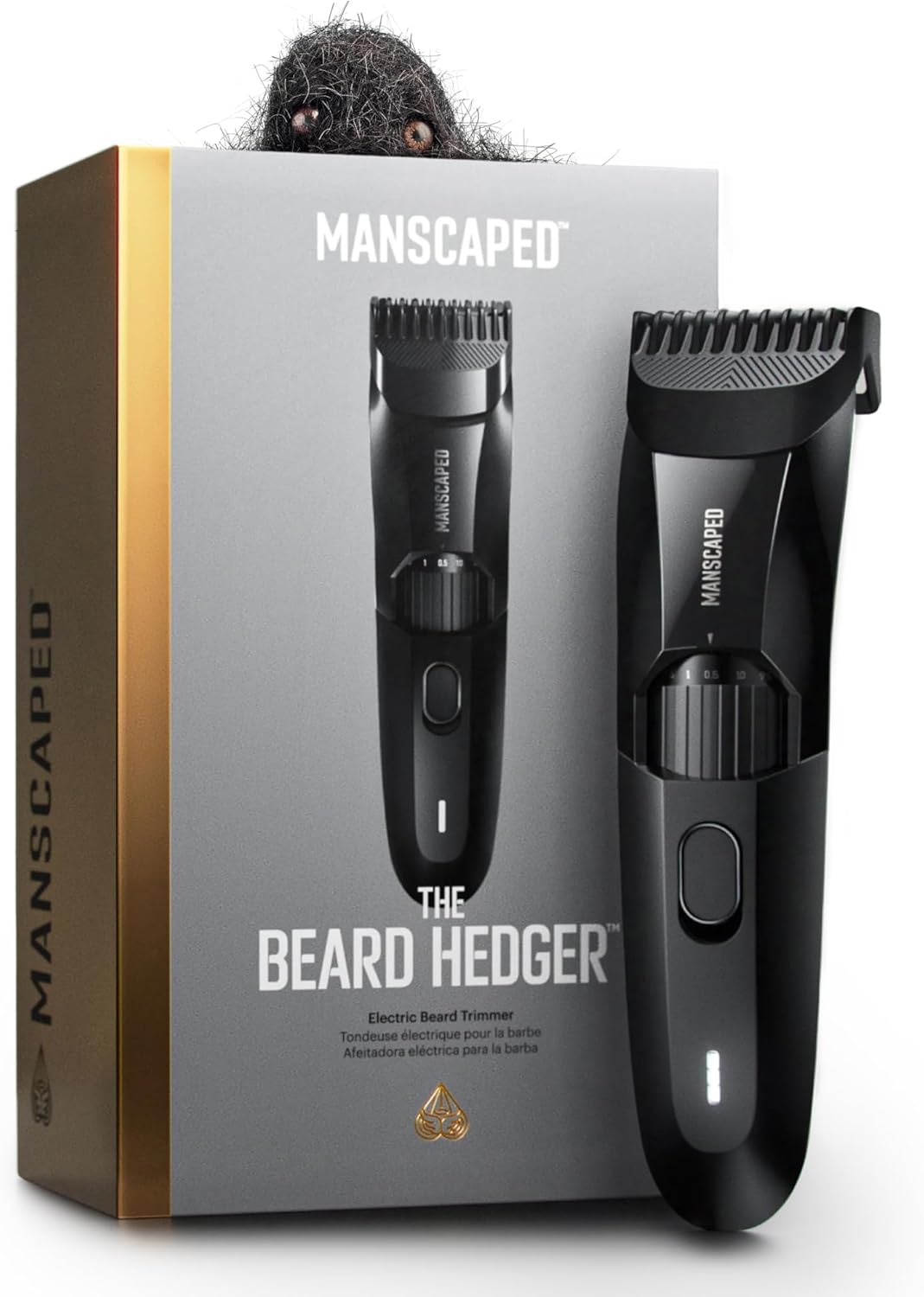

For many men, the journey to a full, rugged beard is a rite of passage. You’ve patiently waited weeks, maybe months, nurturing every inch of facial hair. You step back, admire your work in the mirror, and then you see it—the gap. That frustrating, bare strip of skin between your mustache and your goatee. The connection is missing, leaving your facial hair looking disjointed.
If you’ve ever asked yourself, “Why won’t my mustache connect to my beard?”, you are far from alone. This is one of the most common grooming frustrations men face. The good news? It’s rarely a sign of a health problem, and there are several ways to style your way around it or even encourage growth. Let’s dive into the science behind the gap and explore how to make the most of what you’ve got.
The Science of the Gap: Genetics and Androgens
To understand why your beard grows the way it does, we have to look at your family tree. The primary factor determining the density, pattern, and location of your facial hair is genetics . Your DNA dictates how sensitive your hair follicles are to androgens—the male hormones like testosterone and its more potent derivative, dihydrotestosterone (DHT).
While these hormones signal hair follicles to transition from fine, peach-fuzz-like “vellus” hairs to thick, coarse “terminal” hairs, the map of where these follicles are most sensitive is drawn in your genes . For some men, the follicles in the “connection zone” (the area around the corners of the mouth) simply aren’t programmed to produce thick, visible hair.
Celebrity stylist and groomer Jason Schneidman puts it simply: “Whatever God serves up on your face, you want to play off that. If you start breaking the laws and trying to pencil too much, you look like a dude who spent too much time in front of the mirror” . In short, a non-connecting beard is often just a unique aspect of your genetic blueprint.
Other Factors That Can Affect Beard Growth
While genetics are the main culprit, other elements can influence facial hair fullness. If you’re under 25, you might not have reached your full beard potential yet. Beard maturation can continue into a man’s early 30s . Patience is key.
Other factors include:
- Age: Most men see peak beard growth between 25 and 50 .
- Nutrition: A diet lacking in protein, biotin, and vitamins like A, C, and E can impact hair health .
- Stress: High stress levels can disrupt hormone balance and lead to temporary hair shedding (telogen effluvium) .
- Medical Conditions: In rarer cases, conditions like alopecia areata (which causes patchy hair loss) can affect the beard area .
However, for the specific issue of a missing connector, genetics is almost always the starring player.
Styling Strategies: How to Work with a Disconnected Look
Just because your beard doesn’t connect naturally doesn’t mean you can’t rock an incredible look. In fact, some of the most stylish facial hair choices embrace this natural pattern. Here’s how to style your beard to minimize the appearance of the gap or turn it into a feature.
1. The Extended Goatee
This is perhaps the most classic and effective style for dealing with a disconnected mustache. Instead of trying to force a full beard, lean into the separation.
- How to do it: Let your mustache grow out fully. On your chin and soul patch, allow the hair to grow longer. You can connect the chin hair up the jawline slightly, but keep the area around the mouth’s corners clean-shaven or very short. This creates a defined, intentional look that frames the mouth perfectly.
- Grooming Tool: To keep those lines crisp around the mouth and cheeks, you need precision. A high-quality detail trimmer is essential for edging without nicking your skin.
- Keep your lines sharp and defined with a precision trimmer.
- 👉 Shop Wahl Detail Trimmers on Amazon
2. The Heavy Stubble (The “10-Day” Beard)
Sometimes, a gap is most noticeable when hair is long because the length emphasizes the contrast between full and bare areas. Keeping your facial hair at a uniform, short length—often called “heavy stubble”—can mask sparser areas. When the hair is short, the skin beneath is less visible, and the overall texture becomes more uniform, visually filling in the gap .
- How to do it: Use a beard trimmer with an adjustable guard to keep your entire face at a consistent length (e.g., 3mm to 5mm). This creates a rugged, masculine look that requires minimal maintenance.
- A versatile trimmer is key for maintaining the perfect stubble length.
- 👉 Find Top-Rated Beard Trimmers on Amazon
3. Strategic Training and Brushing
You might be able to “train” the hairs at the corner of your mouth to cover more ground. As your beard grows longer, you can use a beard brush to guide the hairs from your mustache downward and the hairs from your beard upward to create the illusion of a connection .
- How to do it: Apply a small amount of beard balm or wax to give the hairs some hold. Then, use a boar bristle brush to brush the hair in the direction you want it to lay—toward the gap. Over time, the hairs may start to grow in that direction.
- The Right Product: A good balm not only provides hold but also conditions the hair and skin, reducing itch and promoting a healthy shine.
Train and tame your beard with a quality balm.
👉 Shop Beard Balms & Oils on Amazon
Advanced Solutions: Can You Fill the Gap?
For those dead-set on filling the connector zone, there are more advanced (and sometimes temporary) tactics to consider.
1. Minoxidil (Rogaine)
You may have heard of men using Minoxidil—the active ingredient in Rogaine—to fill in their beards. While it is FDA-approved for scalp hair loss, it is not approved for beard growth . However, its ability to stimulate hair follicles has made it a popular off-label treatment for patchy beards .
- The Reality: Some studies and anecdotal reports suggest it can be effective, but it requires consistent application and can take 6-12 months to see results . It’s crucial to consult with a dermatologist before trying this, as side effects can include skin irritation and unwanted hair growth elsewhere.
2. Beard Dye and Topical Fibers
This is a temporary, cosmetic “fix” that works wonders for special occasions or photos.
- Beard Dye: Sometimes, the connector hairs exist but are very thin, light in color, or blonde, making them nearly invisible. Using a specially formulated beard dye can darken these “peach fuzz” hairs, making them appear much thicker and helping them blend with the rest of your beard .
- Topical Fibers: Products like Toppik for beards use statically charged keratin fibers that cling to your existing hair, creating instant density and covering bare patches .
- Instantly add density and cover patches with beard fibers or dye.
- 👉 Browse Beard Dyes & Fibers on Amazon
3. Embrace the “Solo” Stache
If the gap is significant, why not go all-in on the mustache? A disconnected mustache can be a powerful, classic look in its own right. Think of iconic figures like Sam Elliott or Henry Cavill—their mustaches often stand proudly apart from their beards. You can keep a short goatee or stubble on the rest of your face while letting the mustache take center stage.
The Bottom Line
A mustache that doesn’t connect to your beard is not a flaw; it’s a feature of your unique genetic makeup. While it’s easy to obsess over what’s missing, the key to looking your best is learning to work with what you have.
Whether you choose to style it away with a precision trimmer, mask it with a bit of product, or proudly rock a disconnected look, the most important grooming tool you have is confidence. So, find a style that makes you feel good, grab the right tools for the job, and wear your facial hair with pride.
Ready to upgrade your grooming game? Check out our recommended products to master your unique beard style today!