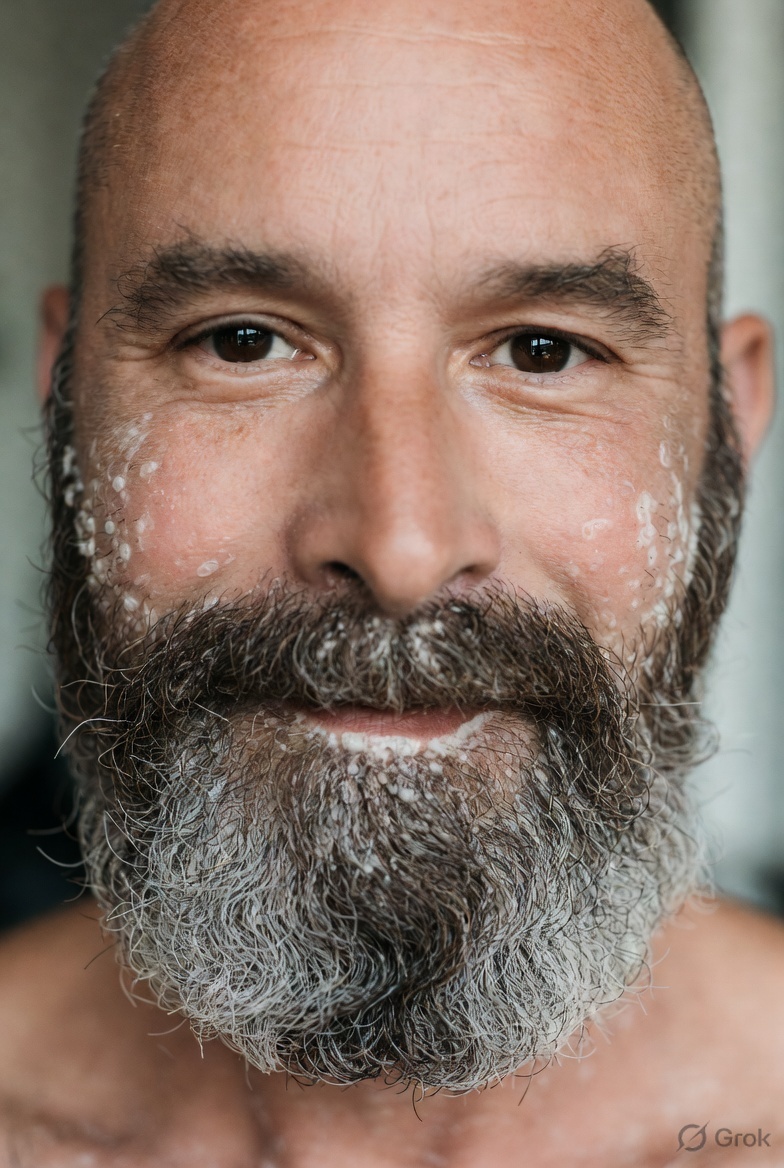

You’ve tried every beard oil on the market. You massage diligently, you’ve invested in organic blends, and yet those white flakes keep falling onto your shirt. The itching persists. Maybe it’s even getting worse.
Here’s the hard truth that most beard oil companies won’t tell you: If your beard dandruff isn’t responding to oils, you’re likely treating the wrong problem entirely.
While beard oils can help with dry skin, a significant portion of beard dandruff cases have nothing to do with a lack of moisture. What you’re dealing with is likely a fungal condition called seborrheic dermatitis—and it requires antifungal treatment, not hydration .
Let’s dive into what’s really happening under your beard and how to finally solve the problem.
The Real Culprit: Malassezia Yeast
Your skin is naturally home to a microscopic fungus called Malassezia globosa. This yeast-like organism lives on almost everyone’s skin without causing problems. But for some people, the immune system overreacts to its presence .
Here’s what happens: Malassezia feeds on sebum—the natural oil produced by your sebaceous glands. As it breaks down these oils, it leaves behind oleic acid and other byproducts. In individuals with a sensitivity to these compounds, this triggers an inflammatory response. The result? Red, itchy, flaky skin .
Why Oils Make It Worse
This is the critical point: Adding more oil to a Malassezia-driven condition is like throwing gasoline on a fire.
The yeast thrives on oil. When you apply beard oil to skin already colonized by Malassezia, you’re essentially providing an all-you-can-eat buffet for the fungus . This explains why your beard dandruff may actually worsen despite—or even because of—your diligent oiling routine.
| Treatment Approach | Effect on Dry Skin | Effect on Fungal Dandruff |
|---|---|---|
| Beard Oils | Hydrates, reduces flakes | Feeds Malassezia, may worsen condition |
| Antifungal Shampoos | Can be drying | Kills yeast, addresses root cause |
| Medicated Creams | Varies by formulation | Reduces inflammation and fungal load |
Seborrheic Dermatitis vs. Simple Dry Skin: How to Tell the Difference
Not all beard flakes are created equal. Here’s how to distinguish between simple dry skin and seborrheic dermatitis :
Signs You Have Seborrheic Dermatitis (Fungal Cause):
- Greasy, yellowish flakes rather than fine white powder
- Red, inflamed skin underneath the beard
- Itching that ranges from mild to intense
- Flakes that return quickly even after washing
- May also affect eyebrows, scalp, nasolabial folds (sides of nose), or chest
- Worsens in cold, dry weather but also flares in humid conditions
Signs You Have Simple Dry Skin:
- Fine, white, powdery flakes
- Skin feels tight or rough but isn’t necessarily red
- Improves with moisturizing (beard oils actually help)
- No associated redness or greasiness
If you’ve been using beard oil for weeks without improvement—or if your symptoms match the first column—it’s time to switch strategies.
The Science-Based Solution: Antifungal Treatment
The standard medical treatment for seborrheic dermatitis involves two components: antifungal agents to reduce Malassezia and anti-inflammatory agents to calm the skin’s reaction .
Step 1: Medicated Shampoo (The Most Important Step)
You need a shampoo with proven antifungal activity. The most effective active ingredients include :
Application technique matters enormously. For best results :
- Apply the medicated shampoo to your dry beard (not wet)
- Massage thoroughly to reach the skin underneath
- Let it sit for 3-5 minutes before rinsing
- Repeat 2-3 times per week initially
Step 2: Topical Antifungal Cream (For Stubborn Cases)
If shampoo alone isn’t enough, your doctor may recommend:
- Ketoconazole 2% cream applied once or twice daily to affected areas
- Ciclopirox cream as an alternative
- Combination products with mild hydrocortisone for inflammation
Step 3: What to Avoid
Do not use petroleum jelly or heavy occlusive ointments. According to the American Academy of Dermatology, these products tend to make seborrheic dermatitis worse by trapping oil and moisture against the skin .
Building Your Antifungal Beard Care Routine
Once you’ve cleared the active flare-up, maintenance is key to preventing recurrence. Seborrheic dermatitis is a chronic condition that requires ongoing management .
Maintenance Protocol:
| Frequency | Action |
|---|---|
| 1-2 times weekly | Medicated shampoo treatment |
| Daily | Gentle cleansing with mild, sulfate-free beard wash |
| As needed | Light application of MCT oil or squalane (these don’t feed Malassezia like other oils) |
| Ongoing | Keep beard dry after workouts; avoid prolonged sweating |
The Right Moisturizers for Fungal-Prone Skin
If you still want to use a beard product for softening, choose oils that do not promote Malassezia growth. Safe options include:
- MCT oil (caprylic/capric triglycerides only)
- Squalane (derived from sugarcane or olives)
- Mineral oil
Avoid oils that Malassezia readily metabolizes, including coconut oil, olive oil, and most plant-based beard oil blends .
When to See a Doctor
If you’ve tried medicated shampoos for 4-6 weeks without significant improvement, consult a dermatologist. You may need :
- Prescription-strength antifungal shampoo (2% ketoconazole)
- Topical corticosteroids to rapidly reduce inflammation
- Oral antifungal medications such as fluconazole or itraconazole for severe or resistant cases
- Evaluation for alternative diagnoses (psoriasis, contact dermatitis, tinea barbae)
Seek immediate medical attention if you notice:
- Signs of secondary infection (increased redness, warmth, swelling, or pus)
- Flakes accompanied by significant hair loss in patches
- Symptoms spreading rapidly beyond the beard area
Why This Matters Long-Term
Understanding the true cause of your beard dandruff isn’t just about getting rid of flakes—it’s about protecting your skin and your beard health. Chronic inflammation from untreated seborrheic dermatitis can:
- Damage hair follicles over time
- Lead to secondary bacterial infections from scratching
- Cause hyperpigmentation (dark spots) that persist for months after the flakes clear
The good news is that once you understand the problem, the solution is straightforward and highly effective. You don’t need to shave off your beard (though some find that starting fresh after treatment helps). You simply need to treat the right condition with the right products.
Key Takeaways
| Myth | Truth |
|---|---|
| Beard dandruff means dry skin | Often it means a fungal condition called seborrheic dermatitis |
| More oil = less flakes | Oil feeds the yeast that causes the problem |
| Any dandruff shampoo works | Look for ketoconazole, selenium sulfide, or zinc pyrithione |
| Once it clears, you’re done | Seborrheic dermatitis is chronic; maintenance treatment prevents recurrence |
Recommended Products for Antifungal Beard Care
Ready to tackle your beard dandruff at the source? Here are effective solutions available on Amazon:
👉 Shop Ketoconazole Shampoo for Beard Dandruff on Amazon
👉 Find Selenium Sulfide Beard Treatments on Amazon
👉 Browse Pyrithione Zinc Shampoos for Facial Hair on Amazon
👉 Shop Malassezia-Safe Beard Oils (MCT & Squalane) on Amazon
👉 Explore Antifungal Creams for Seborrheic Dermatitis on Amazon
Disclaimer: This article is for informational purposes only and does not constitute medical advice. Seborrheic dermatitis can mimic other skin conditions. Always consult a healthcare provider or dermatologist for an accurate diagnosis and personalized treatment plan.
Affiliate Disclosure: As an Amazon Associate, I earn from qualifying purchases. The affiliate links in this article use the store ID cosmoclinic-20. This means if you click a link and make a purchase, I may receive a commission at no additional cost to you.