
Introduction
For decades, the battle against androgenetic alopecia (AGA) has been a two-horse race: Minoxidil and Finasteride. Effective for some, yes, but they come with baggage—shedding cycles, sexual side effects, and a dependency that locks you in for life. Discover the science of the Endocannabinoid System & Hair Growth—including clinical findings on CB1 antagonism and TRPV desensitization that are not yet FDA-approved.
But there is a new frontier in dermatology. It is called the Endocannabinoid System & Hair Growth connection—and it operates on an entirely different electrical grid than anything you have tried before.
Discovered in the 1990s, the endocannabinoid system (ECS) is the body’s master regulator of homeostasis. We know it controls mood and appetite, but cutting-edge research reveals that the hair follicle is a primary signaling hub for the ECS. Understanding the Endocannabinoid System & Hair Growth relationship flips the script entirely: To grow hair, you don’t necessarily need to stimulate receptors; you need to antagonize (block) specific ones.
Here is the scientific breakdown of how CBD, THCV, and CBDV are rewriting the rules of hair restoration—and the specific clinical formulas hitting the market right now.
Mechanisms of Action
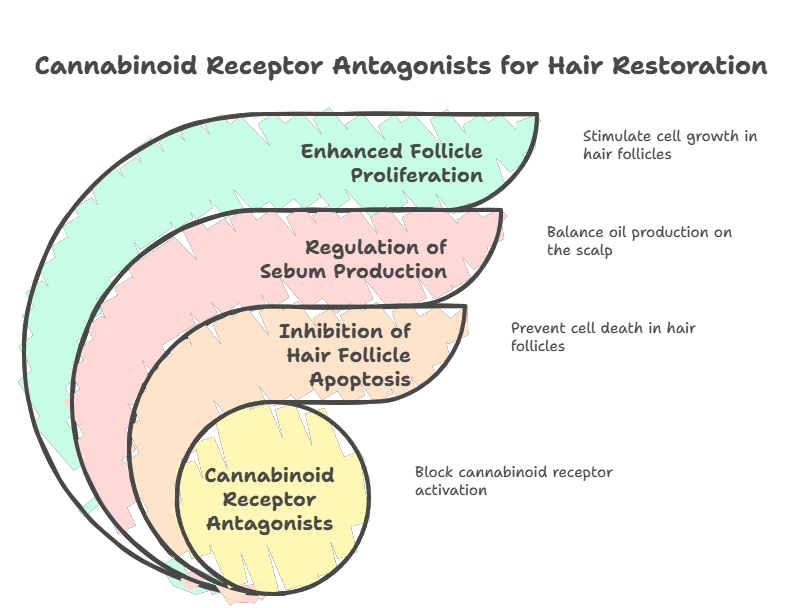
- Inhibition of Hair Follicle Apoptosis: Cannabinoid receptor antagonists may prevent programmed cell death in hair follicles, promoting healthier growth cycles.
- Regulation of Sebum Production: By modulating the ECS, these antagonists can help balance sebum production, reducing scalp conditions that may hinder hair growth.
- Enhanced Follicle Proliferation: Studies indicate that cannabinoid receptor antagonists can stimulate the proliferation of keratinocytes, the primary cells in hair follicles.
Comparative Analysis: Cannabinoid Receptor Antagonists vs. Minoxidil
| Feature | Minoxidil | Cannabinoid Receptor Antagonists |
|——————————–|——————————-|———————————-|
| Mechanism of Action | Vasodilation | Receptor blockade |
| Duration of Effect | Temporary | Potentially longer-lasting |
| Side Effects | Scalp irritation, unwanted hair growth | Fewer known side effects |
| Targeted Biological Pathways | Blood flow | Follicle health and apoptosis |
| Research Support | Extensive | Emerging |
Understanding Hair Follicle Biology
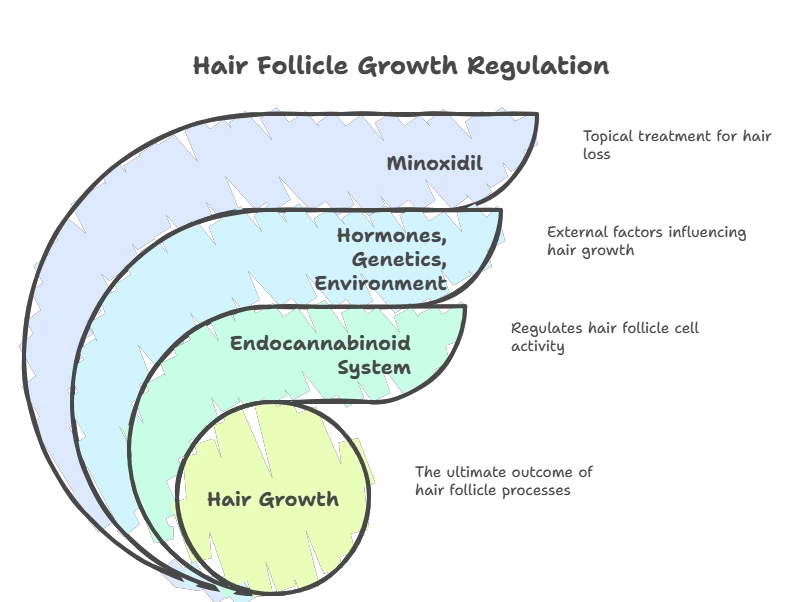
Hair follicles undergo a complex cycle of growth, rest, and shedding. This cycle is regulated by various factors, including hormones, genetics, and environmental influences. The endocannabinoid system (ECS) plays a crucial role in regulating these processes, with cannabinoid receptors (CB1 and CB2) found in hair follicles.
The Endocannabinoid System
The ECS is a network of receptors and endogenous ligands that modulate various physiological processes, including hair growth. Activation of CB1 and CB2 receptors can influence the proliferation and differentiation of hair follicle cells. However, excessive activation may lead to adverse effects, such as hair loss.
Minoxidil: The Traditional Approach
Minoxidil is a well-known topical treatment for androgenetic alopecia (male and female pattern baldness). It works by dilating blood vessels, thereby increasing blood flow to hair follicles and promoting hair growth. While effective for some, minoxidil has limitations, including side effects and variable results among users.

Limitations of Minoxidil
- Temporary Results: Minoxidil often requires continuous use to maintain results. Once discontinued, hair loss typically resumes.
- Side Effects: Users may experience scalp irritation, unwanted facial hair growth, or other adverse reactions.
- Limited Mechanism: Minoxidil primarily addresses blood flow but does not target the underlying biological mechanisms that regulate hair growth.
The Receptor Switch: CB1 Antagonism vs. TRPV Agonism
To understand the “magic” of next-gen topical hemp extracts, you have to forget the psychoactive “high” of THC. Instead, look at the hair follicle’s local control system through the lens of the Endocannabinoid System & Hair Growth mechanism.
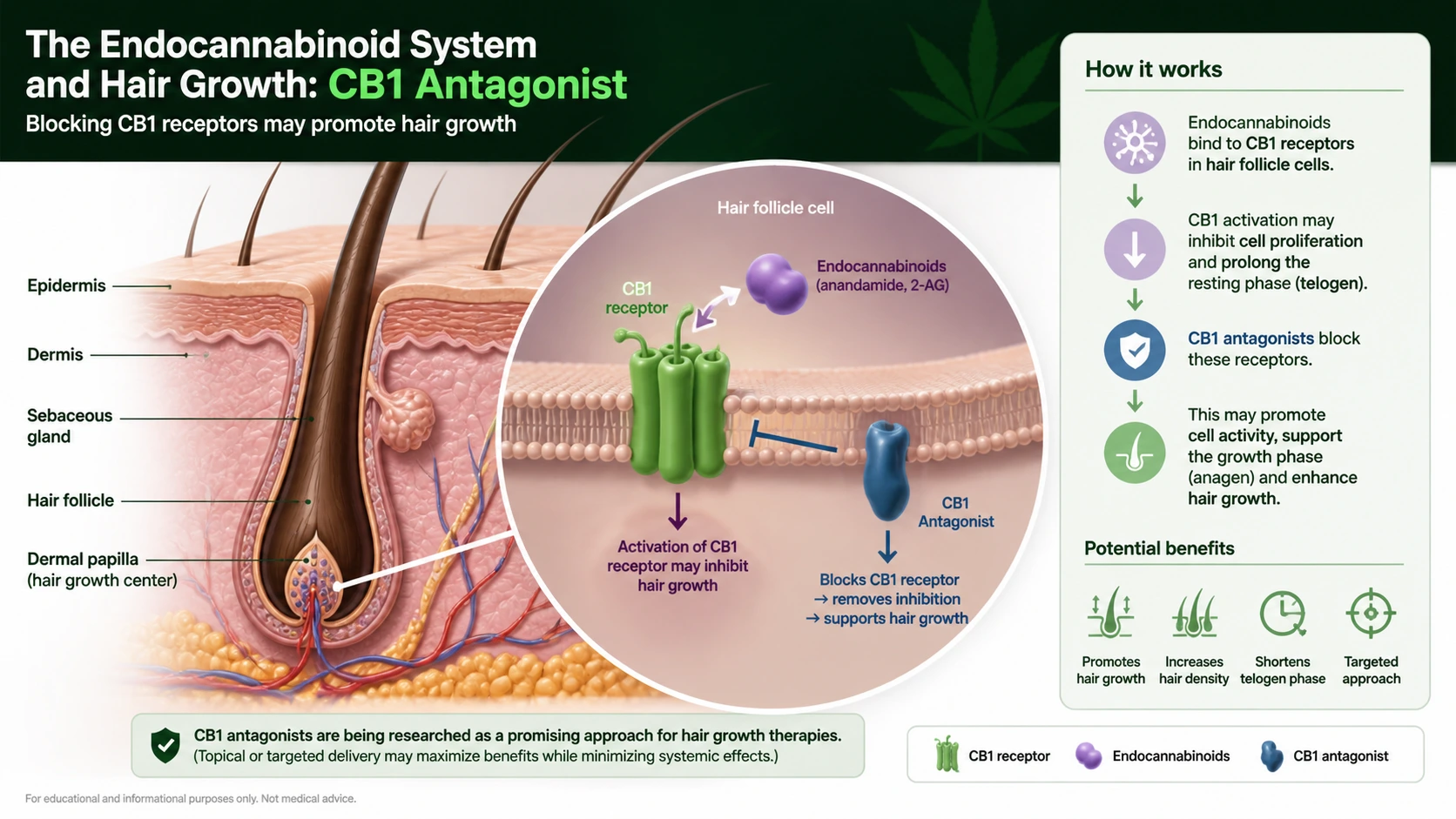
1. Blocking CB1 to Stop Hair Fall (The Antagonist Effect)
The hair follicle is rich in CB1 receptors. Historically, if you activated these receptors (with THC or an endocannabinoid like anandamide), you triggered apoptosis (cell death) in the hair matrix and premature catagen (the shedding phase). Essentially, CB1 activation tells the follicle to stop growing.
The New Discovery: Researchers have found that CB1 antagonists block this death signal. By applying compounds that neutralize the CB1 receptor, the hair shaft elongates and the anagen (growth) phase is prolonged.
- The Agent: While CBD is a partial antagonist, the real power players are THCV and CBDV (Tetrahydrocannabivarin and Cannabidivarin). These are “full neutral antagonists” of CB1.
2. Desensitizing TRPV1 to Stop Regression
TRPV1 (the transient receptor potential vanilloid-1) is the “pain receptor” activated by capsaicin (chili peppers). In hair biology, TRPV1 acts as a brake pedal. When activated, it promotes hair follicle regression (catagen) and keratinocyte death.
The Mechanism: Phytocannabinoids like CBD are TRPV1 agonists. At first glance, this sounds bad. However, the therapeutic effect comes from desensitization. By bombarding the TRPV1 receptor chronically, the nerve endings become desensitized, effectively removing the brake on hair growth.
3. The “Goldilocks” Dose: Wnt Signaling vs. Catagen
This is where dosage becomes critical, and where many off-the-shelf CBD oils fail.
- Low to Moderate Doses: CBD increases Wnt signaling pathways. In dermatology, Wnt is the “master switch” for follicle regeneration.
- High Doses: Paradoxically, very high doses of CBD activate TRPV4, which forces hair follicles into premature catagen (death).
Clinical Insight: There is a therapeutic window. The most successful case studies do not use “maximum strength” CBD; they use calibrated, low-dose formulations combined with specific antagonists like THCV.
Clinical Findings: The 93.5% Jump (Pre-Approval Data)
While the FDA has not fully approved cannabinoids for AGA (hence these are “clinical findings yet to be approved”), the human data on the Endocannabinoid System & Hair Growth axis is compelling.
A landmark case series published in Int J Trichology (2023) moved beyond petri dishes to human scalps. Researchers formulated a topical hemp oil specifically high in CBD, THCV, and CBDV.
The Results:
- Patients using this specific triple-cannabinoid formulation saw an average increase of 93.5% in hair count after six months.
- Comparative efficacy: The study noted that this mechanism was “superior to oral finasteride, 5% minoxidil once daily foam and CBD topical extract alone.”
Why this matters: Unlike minoxidil, which works as a stimulant (often causing an ugly “dread shed”), ECS modulators work on inflammation and the cellular cycle. They are anti-inflammatory, inhibit COX-2 pathways, and reduce the oxidative stress that miniaturizes follicles.
The Regulatory Gap (What is “Not Yet Approved”)
It is crucial to note the current legal and medical landscape regarding the Endocannabinoid System & Hair Growth.
- Status: The FDA has not approved topical THCV/CBDV for hair loss. The current evidence is peer-reviewed but classified as a “case series,” not a multi-center Phase 3 RCT.
- The Ingredient Trap: Many commercial “CBD hair oils” are made from Cannabis sativa seed oil (hemp seed oil), which contains zero cannabinoids. You need full-spectrum or broad-spectrum extracts that include the acidic precursors and rare varins (THCV/CBDV) to hit the CB1 antagonist pathway effectively.
Why This Matters for Your Regimen (Synergy)
Because the ECS mechanism is distinct from minoxidil and finasteride, it can be used synergistically.
- Minoxidil + CBD: Minoxidil works as a vasodilator; CBD works on receptor signaling and inflammation. They attack hair loss from orthogonal angles.
- Natural Safety: Current trials report no significant adverse effects, as topical cannabinoids poorly absorb past the epidermis but concentrate nicely in the follicle bulb.
The Verdict
The science is clear: understanding the Endocannabinoid System & Hair Growth connection is the key to unlocking a new generation of hair restoration. We need to leverage CB1 antagonism (via THCV/CBDV) and TRPV modulation (via calibrated CBD), rather than the old methods of simply blasting the scalp with stimulants.
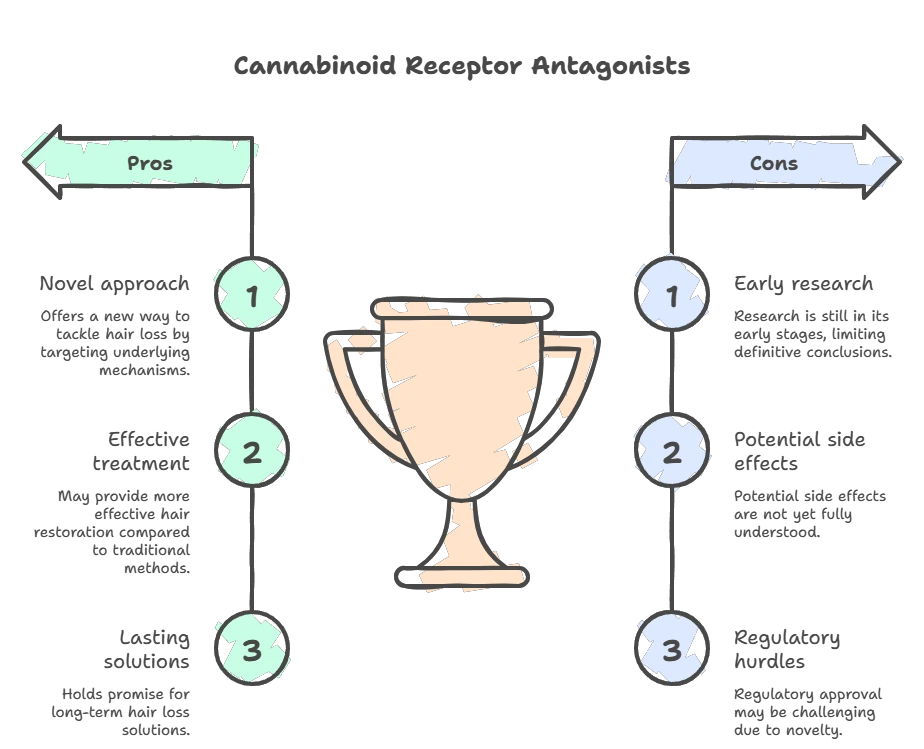
The “C(ut)annabinoid” revolution presents an exciting frontier in hair restoration. While minoxidil has been a go-to treatment for years, the potential of cannabinoid receptor antagonists offers a novel approach that may address the underlying mechanisms of hair loss more effectively. As research continues to unfold, these compounds could redefine the standards of care in hair restoration, providing hope for those seeking lasting solutions to hair loss.
If you are suffering from AGA and have hit a wall with traditional treatments, this is your next frontier.
Unlock the Science of Receptor Signaling
Ready to move beyond over-the-counter oils that lack the specific CB1 blockers required for hair retention? The clinical research points toward full-spectrum hemp extracts with calibrated cannabinoid ratios—precisely the kind of formulation that mirrors the 2023 case study results.
Get the clinically-aligned formula trusted by USA consumers exploring the ECS pathway:
👉 [Click Here to Check Availability & Pricing on Amazon (USA)]
https://amzn.to/48GOXVF
Formulation Insight: Ensure your product contains full-spectrum hemp extract. Without the entourage of minor cannabinoids, you are only getting half the science.