
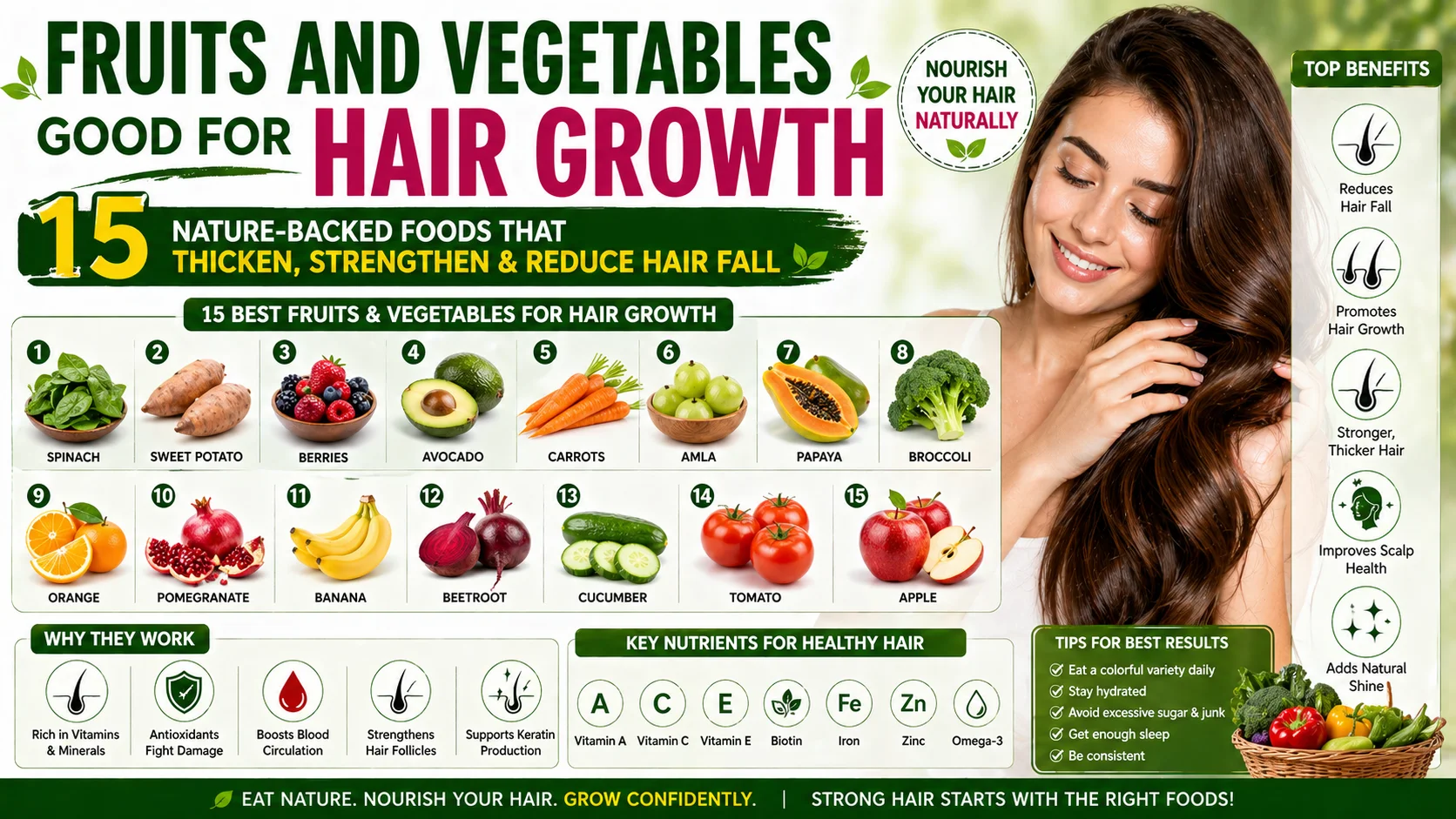

Hair thinning, excessive shedding, and slow growth are frustrating problems that millions face daily. You have likely tried expensive serums, biotin gummies, and even prescription medications. But what if the solution to luscious, long, strong hair has been sitting in your kitchen all along?
The truth is, fruits and vegetables good for hair growth are scientifically proven to outperform many synthetic supplements. Why? Because whole plant foods deliver vitamins, minerals, and antioxidants in a bioavailable form that your body recognizes and absorbs efficiently.
In this guide, you will discover 15 powerful fruits and vegetables that target the root causes of hair loss—nutrient deficiencies, inflammation, poor scalp circulation, and oxidative stress. Plus, we will share premium tools from Cosmoclinic-20 to enhance absorption and stimulate your scalp for maximum results.
🌿 Boost Your Hair Growth Journey with Premium Tools 🌿
🧴 Silicone Scalp Massager
🧖♀️ Microfiber Hair Turban
🪮 Boar Bristle Hair Brush
🛏️ Satin Pillowcase Set
🌿 Rosemary & Castor Oil Set
The Science: How Fruits & Vegetables Affect Hair Growth
Hair follicles are among the most metabolically active tissues in your body. They require a constant supply of:
| Nutrient | Role in Hair Growth |
|---|---|
| Vitamin C | Collagen production + iron absorption |
| Vitamin A | Sebum production (natural scalp conditioner) |
| Iron | Oxygen delivery to follicles |
| Zinc | Hair tissue repair + oil gland function |
| Biotin | Keratin production (the protein hair is made of) |
| Silica | Strengthens hair shaft, prevents breakage |
| Antioxidants | Protects follicles from free radical damage |
A deficiency in just one of these can trigger telogen effluvium (excessive shedding) within 2-3 months. The good news? The right fruits and vegetables provide all of these naturally.
The Top 15 Fruits and Vegetables Good for Hair Growth
1. Spinach (The Iron Powerhouse)
Spinach is arguably the #1 vegetable for hair growth. It is loaded with:
- Iron: Prevents anemia-related hair loss
- Vitamin C: Helps absorb that iron
- Vitamin A: Regulates sebum production
- Folate: Supports cell division in hair follicles
How to eat: Raw in smoothies, sautéed, or as a salad base. Aim for 1 cup daily.
2. Bell Peppers (Vitamin C King)
Red, yellow, and orange bell peppers contain more Vitamin C than oranges. Vitamin C is essential for:
- Collagen synthesis (collagen wraps around each hair strand)
- Protecting hair follicles from oxidative stress
- Enhancing iron absorption from plant sources
How to eat: Raw with hummus, roasted, or chopped into salads.
3. Avocado (Healthy Fat & Vitamin E)
Avocados are unique among fruits because they are rich in healthy monounsaturated fats and Vitamin E.
- Vitamin E protects scalp skin from oxidative damage
- Healthy fats support hormone balance (hormonal imbalances cause hair thinning)
- Biotin content supports keratin production
How to eat: On toast, in smoothies, as guacamole, or mashed into a hair mask.
4. Berries (Antioxidant Bombs)
Blueberries, strawberries, raspberries, and blackberries are packed with anthocyanins—powerful antioxidants that:
- Protect hair follicles from premature aging
- Reduce scalp inflammation (a hidden cause of hair loss)
- Provide Vitamin C for collagen
How to eat: Fresh, frozen in smoothies, or as a topping for oatmeal.
5. Sweet Potatoes (Beta-Carotene Giant)
Sweet potatoes are one of the richest sources of beta-carotene, which your body converts to Vitamin A.
- Vitamin A speeds up hair growth by helping skin glands produce sebum
- Sebum moisturizes the scalp and prevents brittle, breaking hair
How to eat: Baked, roasted, mashed, or as fries.
6. Carrots (Scalp Circulation Booster)
Carrots are famous for beta-carotene, but they also contain biotin and Vitamin B6.
- Improves blood circulation to the scalp
- Strengthens hair from root to tip
- Prevents premature graying
How to eat: Raw with dip, juiced, roasted, or grated into salads.
7. Guava (The Underrated Superfruit)
Guava is a tropical fruit loaded with Vitamin C—one guava contains over 200% of your daily needs.
- Prevents hair breakage and splitting
- Strengthens the hair shaft
- Improves scalp health
How to eat: Fresh sliced, in smoothies, or as guava paste.
8. Pumpkin (Zinc & Silica Source)
Pumpkin is one of the few vegetables rich in zinc and silica.
- Zinc supports hair follicle repair and oil gland function
- Silica strengthens hair strands and reduces breakage
- Pumpkin seeds are especially potent (eat them too!)
How to eat: Roasted pumpkin, pumpkin soup, or roasted pumpkin seeds as a snack.
9. Tomatoes (Lycopene for Scalp Protection)
Tomatoes are rich in lycopene, a powerful antioxidant that:
- Protects scalp from UV damage (sun exposure weakens hair)
- Reduces inflammation around hair follicles
- Supports collagen production
How to eat: Fresh in salads, as tomato sauce, or sun-dried.
10. Broccoli (Sulforaphane for Hormone Balance)
Broccoli contains sulforaphane, a compound that helps:
- Balance hormones that cause androgenic alopecia (pattern baldness)
- Detoxify the scalp
- Provide Vitamin C and iron
How to eat: Steamed, roasted, or raw with dip.
11. Oranges (Collagen Builder)
Oranges are the classic Vitamin C fruit. They:
- Boost collagen production for stronger hair
- Improve iron absorption
- Prevent dryness and split ends
How to eat: Fresh orange slices, freshly squeezed juice (without sugar), or zest in recipes.
12. Kale (Nutrient Density Champion)
Kale is one of the most nutrient-dense vegetables on earth. It provides:
- Iron
- Vitamin C
- Vitamin A
- Calcium (supports hair follicle signaling)
How to eat: Massaged kale salads, green smoothies, or baked kale chips.
13. Mango (Vitamin A & C Combo)
Mangoes deliver both Vitamin A and C in one delicious package.
- Vitamin A stimulates sebum production
- Vitamin C builds collagen
- Antioxidants protect follicles
How to eat: Fresh sliced, in smoothies, or as mango salsa.
14. Onions (Sulfur for Keratin Production)
Onions are rich in sulfur, one of the building blocks of keratin (the protein hair is made of).
- Sulfur strengthens hair strands
- Reduces breakage and split ends
- Topical onion juice has been studied for regrowth
How to eat: Raw in salads, caramelized, or cooked into soups and stir-fries.
15. Beets (Iron & Folate Powerhouse)
Beets are excellent for hair growth because they contain:
- Iron: Prevents hair loss from anemia
- Folate: Supports cell division in follicles
- Betaine: Reduces scalp inflammation
How to eat: Roasted beets, beet juice, grated raw into salads, or pickled.
The Ultimate Hair Growth Meal Plan (Sample Day)
| Meal | Foods to Include |
|---|---|
| Breakfast | Spinach and berry smoothie (spinach, blueberries, banana, almond milk) |
| Lunch | Quinoa bowl with roasted sweet potatoes, avocado, black beans, and bell peppers |
| Snack | Fresh guava or a handful of pumpkin seeds |
| Dinner | Grilled salmon with steamed broccoli and a side salad of kale, tomatoes, and carrots |
| Bedtime | Chamomile tea and a small orange |
How Long Until You See Results?
| Timeframe | Expected Change |
|---|---|
| 2-4 weeks | Reduced shedding, shinier hair |
| 6-8 weeks | New baby hairs along hairline |
| 3-4 months | Noticeable length and thickness |
| 6 months | Significant transformation |
Hair grows approximately ½ inch per month. Consistency with these fruits and vegetables—combined with scalp care—yields visible results within one hair growth cycle (90-120 days).
Bonus: Fruits & Vegetables to Limit (If You Have Hair Loss)
While most plants are beneficial, a few can interfere with nutrient absorption if overconsumed:
- Raw cruciferous vegetables in excess (kale, broccoli, cabbage) contain goitrogens that may affect thyroid function in sensitive individuals. Cooking neutralizes this.
- Spinach is excellent but contains oxalates. Pair with Vitamin C (lemon juice) to improve iron absorption.
FAQS:
Q: Can fruits and vegetables reverse baldness?
A: They can reverse hair loss caused by nutrient deficiencies, stress, or inflammation. Genetic baldness (androgenetic alopecia) may require additional treatments, but a nutrient-rich diet supports any regrowth protocol.
Q: Which fruit is best for hair growth?
A: Guava wins for Vitamin C content, while berries win for antioxidants. Eat a variety.
Q: Can I just take supplements instead?
A: Whole foods provide co-factors that supplements lack. However, if you have a diagnosed deficiency, supplements help. Always consult a doctor first.
Q: Do I need to eat these raw or cooked?
A: Both work. Cooking can increase bioavailability of some nutrients (like lycopene in tomatoes) while raw preserves Vitamin C. Eat a mix.
Medical Disclaimer
This article is for educational purposes only and does not constitute medical advice. Hair loss can result from medical conditions (thyroid disorders, alopecia areata, hormonal imbalances). Always consult a dermatologist or healthcare provider before starting any new diet or supplement regimen.
Affiliate Disclosure
*This post contains affiliate links to the Cosmoclinic-20 store on Amazon. As an Amazon Associate, we earn a commission from qualifying purchases at no extra cost to you. This helps us create high-quality, free content.*