
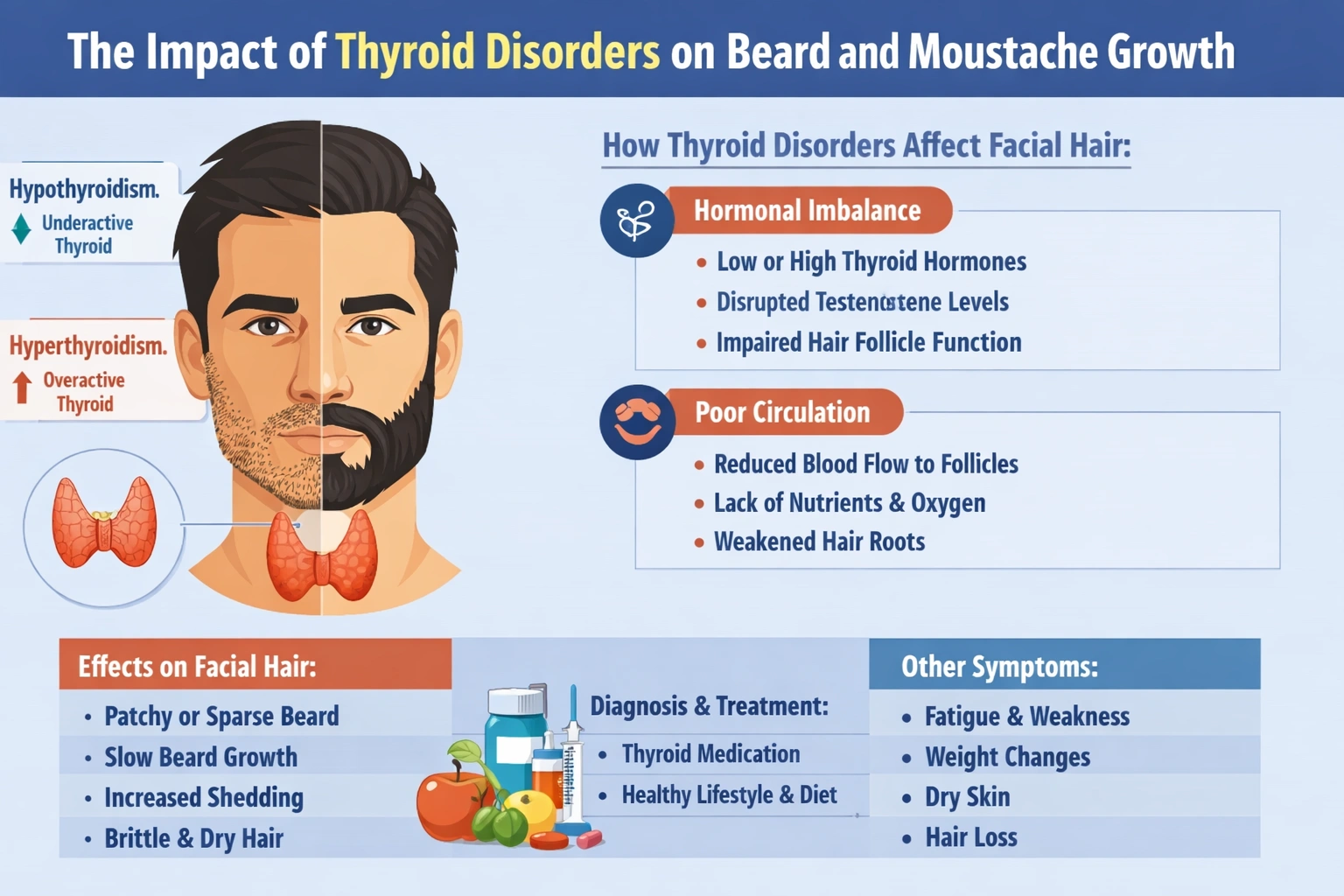

For many men, facial hair is more than just style—it is a symbol of masculinity, maturity, and confidence. But what happens when your beard grows in patchy, your moustache thins out, or hair starts falling off your face entirely?
While most men blame genetics or age, the real culprit might be sitting in your neck: your thyroid gland. Understanding the impact of thyroid disorders on beard and moustache growth is the first step to regaining the full, healthy facial hair you deserve.
How Your Thyroid Controls Hair Follicles
Your thyroid is a butterfly-shaped gland that produces hormones (T3 and T4) regulating your metabolism. Hair follicles are among the most metabolically active cells in your body. They require a constant supply of energy, oxygen, and nutrients to produce a thick hair shaft.
When thyroid hormone levels go out of balance, hair follicles enter a “resting” (telogen) phase prematurely. For scalp hair, this looks like diffuse shedding. For facial hair, it translates to:
- Slower growth rates
- Patchy or bald spots on the cheeks and chin
- A thinning, wispy moustache
- Coarse beard hair becoming brittle and breaking off
Hypothyroidism (Underactive Thyroid): The Slow Grower
Hypothyroidism is the most common thyroid disorder affecting facial hair. When your body lacks thyroid hormones, everything slows down—including beard growth.
Specific effects on beard and moustache:
- Diffuse thinning: Hair becomes sparse across the entire beard area, not just in typical male pattern baldness zones.
- Loss of the outer third of the eyebrow: A classic sign, but also affects moustache density.
- Dry, brittle facial hair: The hair shaft loses moisture and oils, leading to breakage.
- Slow regrowth: After shaving, it may take weeks longer than normal to see stubble.
Other symptoms to watch for: Fatigue, weight gain, cold intolerance, dry skin, and depression.
Hyperthyroidism (Overactive Thyroid): The Shedder
Hyperthyroidism (including Graves’ disease) speeds up your metabolism to dangerous levels. Ironically, this also damages beard growth.
Specific effects on beard and moustache:
- Telogen effluvium: A massive shedding event where up to 70% of beard hairs fall out simultaneously, usually 2–3 months after thyroid levels spike.
- Fine, soft facial hair: New growth comes in thin and unpigmented, lacking the usual coarse texture.
- Patchy alopecia: Smooth, bald circles can appear within the beard area.
Other symptoms to watch for: Rapid heartbeat, anxiety, heat intolerance, weight loss, and hand tremors.
Autoimmune Thyroid Disease: The Double Threat
Hashimoto’s thyroiditis (causing hypothyroidism) and Graves’ disease (causing hyperthyroidism) are autoimmune conditions. Here, the immune system attacks both the thyroid and, in some cases, hair follicles directly.
For men with autoimmune thyroid disease, beard loss can be sudden, severe, and resistant to standard hair treatments. You may need immunomodulating therapies, not just thyroid medication, to restore facial hair.
Can Beard Growth Return After Thyroid Treatment?
Yes—but patience is required. Once you are properly diagnosed and your thyroid hormone levels normalize (via levothyroxine for hypothyroidism or anti-thyroid drugs/radioactive iodine for hyperthyroidism), facial hair usually regrows.
Timeline for recovery:
- Months 1–3: Shedding stops. You will notice less beard hair on your pillow or in the sink.
- Months 4–6: Fine “vellus” hairs (peach fuzz) appear in patchy areas.
- Months 6–12: Terminal (thick, dark) beard hairs gradually replace vellus hairs.
- Month 12+: Full density often returns, though some men may have permanent thinning if the autoimmune attack was severe.
What You Can Do While Waiting for Thyroid Treatment
Regulating your thyroid is the foundation. However, you can support facial hair recovery with these strategies:
- Optimize nutrition: Ensure adequate zinc, iron, vitamin D, and biotin—all commonly deficient in thyroid patients and essential for beard growth.
- Reduce inflammation: Chronic thyroid inflammation keeps hair follicles suppressed. An anti-inflammatory diet (low sugar, high omega-3s) helps.
- Avoid harsh products: Thyroid-affected beard hair is fragile. Use gentle, moisturizing beard oils and avoid chemical dyes or heat styling.
- Consider minoxidil (Rogaine): Some men with thyroid-related beard loss respond well to topical minoxidil, but consult your doctor first.
When to See a Doctor
Do not assume a patchy beard is just bad genetics. If you experience any of the following, request a thyroid blood panel (TSH, Free T3, Free T4, and thyroid antibodies):
- Sudden or rapid beard thinning over weeks to months
- Patchy hair loss on the face accompanied by scalp shedding
- Fatigue, weight changes, or temperature sensitivity alongside beard changes
- A family history of autoimmune or thyroid disease
The Bottom Line
Your beard and moustache are windows into your endocrine health. If you have been struggling with patchy, slow-growing, or thinning facial hair despite good genetics and proper grooming, do not just reach for a beard oil. Look at your neck—not at your jawline, but at your thyroid.
Treating the underlying thyroid disorder often restores a thicker, fuller beard within a year. And for the first time, that beard will be a sign not just of style, but of true metabolic health.
Disclaimer: This article is for informational purposes only and does not constitute medical advice. Always consult a healthcare provider for diagnosis and treatment of thyroid disorders or hair loss.