
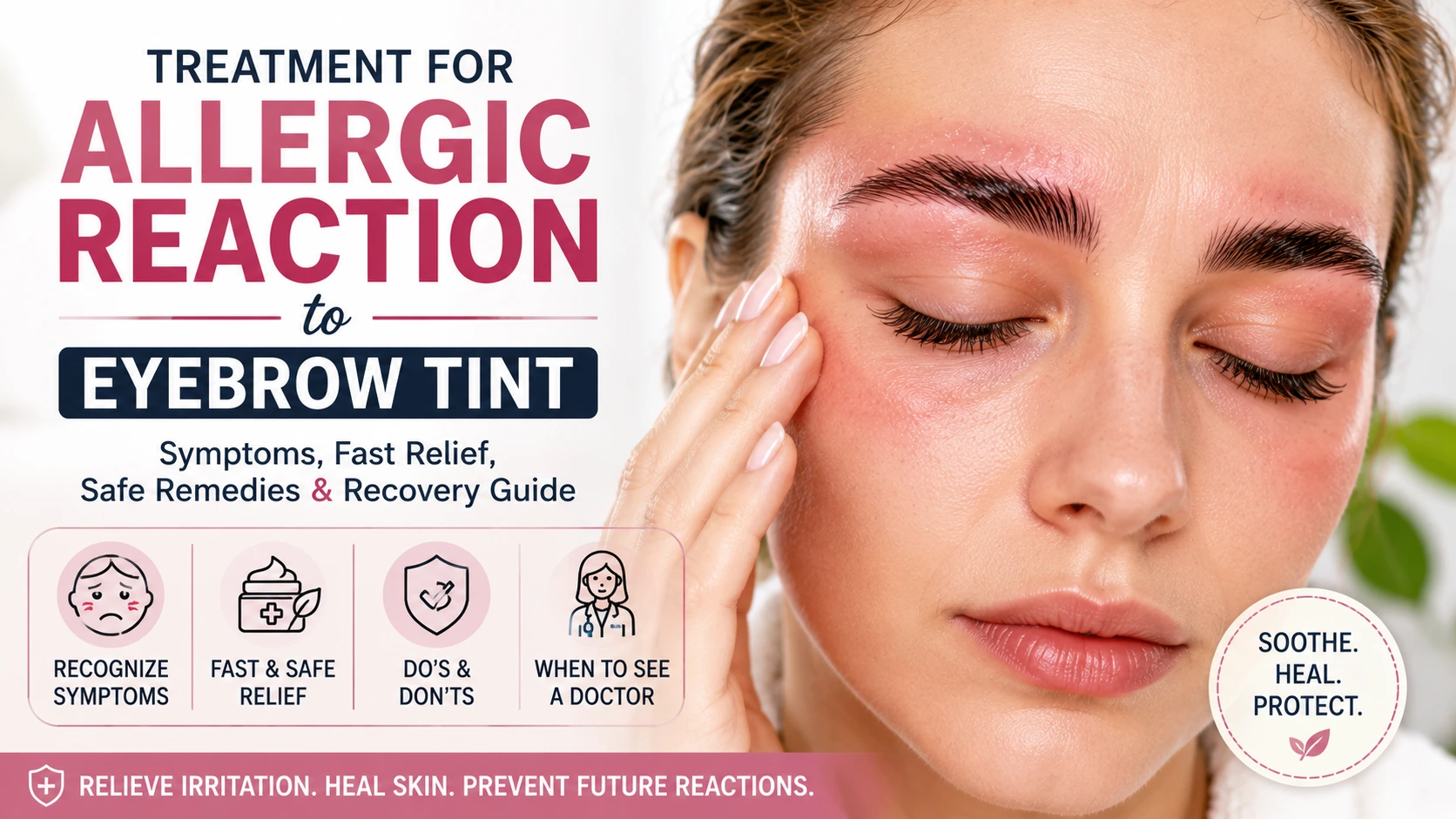

- Most reactions are caused by PPD, a common chemical in dark brow tints.
- Symptoms can range from mild (itching, redness) to severe (blistering, difficulty breathing).
- Immediate action is key: remove the tint, apply a cold compress, and use over-the-counter antihistamines or hydrocortisone cream for mild cases.
- Seek emergency care if you experience swelling of the throat, mouth, or difficulty breathing—these are signs of anaphylaxis.
- Always patch test 48 hours before any tinting, even if you’ve used the same product before.
What Causes an Allergic Reaction to Eyebrow Tint?
The primary culprit behind most allergic reactions to eyebrow tints is a chemical called Paraphenylenediamine (PPD). This is a powerful coloring agent found in most permanent and semi-permanent dyes, especially in darker shades like black and dark brown.
Why PPD Causes Reactions
PPD needs to be mixed with a developer (like hydrogen peroxide) to oxidize and create color. It is in this partially oxidized state that it becomes highly allergenic. Even if you’ve used the same product before without issue, you can develop an allergy at any time because your immune system can become sensitized with repeated exposure.
Other Common Allergens
Besides PPD, other ingredients that can trigger reactions include:
- Ammonia
- Resorcinol
- Peroxide
- Chloro-PPD (found in some semi-permanent tints)
Important Note: Even “natural” alternatives like henna can cause reactions, particularly “black henna,” which often contains PPD. Plant-based dyes can also be sensitizing for some people.
Signs and Symptoms to Watch For
Allergic reactions can appear within minutes or take up to 48 hours to develop. Symptoms are categorized by severity:
| Severity | Symptoms |
|---|---|
| Mild | Itching, redness, dryness, slight stinging or burning |
| Moderate | Swelling around the eyes, raised rash, bumps, burning sensation |
| Severe | Blisters, oozing skin, significant swelling that may close the eyes |
| Critical (Anaphylaxis) | Throat swelling, difficulty breathing, dizziness, fainting, widespread hives |
If you experience any symptoms of anaphylaxis, call emergency services immediately. This is a life-threatening emergency.
Step-by-Step Treatment Guide
If you’re having a mild to moderate reaction, follow these steps to manage your symptoms:
- Remove the Product Immediately: Gently wash your brows and the surrounding area with lukewarm water and a mild, fragrance-free soap or gentle shampoo. Avoid harsh scrubbing.
- Apply a Cold Compress: Soak a clean cloth in cold water and apply it to the affected area for 10 minutes at a time. This helps soothe inflammation and reduce swelling.
- Use Emollients: Apply a small amount of petroleum jelly or a fragrance-free moisturizer to help restore the skin barrier and prevent dryness.
- Topical Corticosteroids: For a mild reaction, you can apply an over-the-counter 1% hydrocortisone cream to reduce redness and itching. Be careful to avoid direct contact with your eyes.
- Oral Antihistamines: Take an over-the-counter antihistamine like Benadryl (diphenhydramine), Claritin (loratadine), or Zyrtec (cetirizine) to combat allergic symptoms systemically.
- Monitor for Escalation: Watch your symptoms closely. If the swelling spreads or you experience difficulty breathing, seek emergency medical help immediately.
What to Avoid During a Reaction
When your skin is reacting, it’s important to be gentle. Here’s what you should avoid:
- Don’t apply makeup or any additional products to the area.
- Avoid Neosporin unless recommended by a doctor. It’s an antibiotic, not an anti-inflammatory, and won’t help with an allergic reaction.
- Don’t scratch or pick at the area, as this can lead to infection and scarring.
- Skip the temptation to re-dye or “fix” the tint at home while you’re still reacting.
How Long Does a Reaction Last?
The duration of an allergic reaction depends on its severity and how quickly you treat it. Mild reactions, such as redness and itching, may subside within a few days.
However, more severe reactions (like blistering or significant swelling) can take two to four weeks to fully resolve, even with proper treatment. If you are still exposed to the allergen, such as through residual pigment in the skin, the reaction can persist longer.
Prevention: Patch Testing and Safer Alternatives
The Crucial Patch Test
A patch test is your best defense against a bad reaction. It should be performed 48 hours before any tinting appointment, even if you are a returning customer.
How to do it:
- Mix a small amount of the tint with the developer.
- Apply a tiny dot behind your ear or on the inner crease of your elbow.
- Leave it on for 10 minutes, then rinse.
- Observe the area for 48 hours. Look for any signs of redness, swelling, or itching.
Important: A negative patch test does not guarantee you won’t have a reaction, as facial and ocular skin can be more sensitive. However, it significantly reduces the risk.
Safer Tint Alternatives
If you’ve had a reaction to PPD, it’s best to avoid it permanently. There are alternatives available, but they should still be patch-tested.
| Alternative | Notes |
|---|---|
| Apraise | PPD-free formula designed for professional salon use. |
| Supercilium SNAP Gel Tint | Specifically marketed as PPD-free. |
| Pure Henna | A natural option, but beware of “black henna” which may contain PPD. |
| Silver Nitrate (4% viscous gel) | Approved by the FDA for professional eyebrow coloring. |
Remember: Even PPD-free options contain other ingredients like resorcinol or ammonia that can also cause reactions. Always patch test any new product.
“Brows that slay, not swell. 🧡”
“Patch test today, slay tomorrow.”
“Allergic? No panic — we’ve got the plan.”
“Healthy brows = happy you. Always patch test!”
❓ Frequently Asked Questions
Yes, absolutely. You can develop a sensitivity to PPD at any time, even after years of safe use. This is why a patch test is recommended before every application.
Symptoms to watch for include redness, itching, swelling, stinging, or burning around the brow area. These symptoms usually appear within 24-48 hours after the procedure.
For mild reactions, you can use a cold compress, over-the-counter hydrocortisone cream, and oral antihistamines like Benadryl. For more severe reactions, consult a doctor, who may prescribe stronger corticosteroid medication.
The tinting process itself shouldn’t hurt or sting. However, if you have sensitive skin or are having a reaction, you may experience stinging, burning, or discomfort during or after the treatment.
Safer alternatives include PPD-free professional tints from brands like Apraise and Supercilium, as well as pure henna (avoid ‘black henna’). Always patch test these options as well.
This article is for informational purposes only and does not constitute medical advice. Allergic reactions can be serious. If you experience severe symptoms, difficulty breathing, or significant swelling, seek immediate medical attention. Always consult with a healthcare professional or dermatologist before starting any new treatment for an allergic reaction.