
Scalp massage is a simple, natural technique that many people use to promote healthier hair, reduce stress, and support follicle strength. Regular scalp massage increases blood circulation to the scalp, delivering more oxygen and nutrients to the hair follicles while helping to remove buildup and reduce tension that can contribute to shedding.
Studies (including small clinical ones) suggest consistent scalp massage—such as 4–20 minutes daily—can lead to thicker hair strands and potentially support growth by stimulating follicles and improving scalp health. It’s especially complementary when paired with follicle strengthening serums, as the massage helps those active ingredients penetrate better.
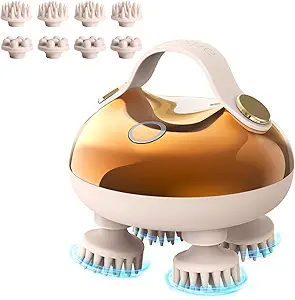
Here are some of the most effective and popular scalp massage techniques you can do at home—no fancy tools required (though a scalp massager brush can enhance results).
1. Basic Fingertip Circular Massage (Most Recommended for Beginners)
This is the classic technique backed by multiple sources for boosting circulation and follicle stimulation.
Step-by-step:
- Sit or lie down comfortably in a quiet spot.
- Use the pads of your fingertips (not nails) from both hands.
- Start at your hairline or forehead.
- Apply light to medium pressure and move your fingers in small, slow circular motions.
- Work systematically: move from front to back, then cover the crown, sides (temples and above ears), and nape of the neck.
- Cover your entire scalp—divide it into sections if it helps (e.g., quarters).
- Continue for 5–10 minutes (or up to 20 for maximum benefit), ideally 1–2 times daily.
Tip: Increase pressure gradually if it feels good, but never to the point of pain. Do this dry, or apply your favorite follicle serum first for better absorption.
2. Kneading Technique
Great for deeper relaxation and releasing built-up tension.
How to do it:
- Place your fingertips or the base of your palms on the scalp.
- Gently “knead” the scalp like dough—lift and squeeze sections lightly with your fingers or palms.
- Move across the scalp in sections, focusing on tighter areas like the crown or base of the skull.
- Do this for 3–5 minutes after circular motions.
3. Tapping (Percussion) Technique
This stimulates nerve endings and wakes up dormant follicles.
How to do it:
- Use your fingertips to gently tap (like raindrops) all over the scalp.
- Start lightly and cover the whole head.
- Alternate with circular motions for variety.
- Spend 1–2 minutes on tapping.
4. Raking or Gentle Pulling
Helps exfoliate and stimulate without tools.
How to do it:
- Spread your fingers wide like a rake.
- Gently drag them from forehead to nape, applying light downward pressure.
- Or grasp small sections of hair near the roots and give a gentle tug (not pulling out hair—just enough to move the scalp).
- Repeat across the head for 2–4 minutes.
Bonus: In-Shower Massage
Combine with washing for efficiency:
- Use warm water to open pores.
- Apply shampoo or conditioner, then perform circular or kneading motions while lathering.
- The slip from product makes it easier and adds cleansing benefits.
Quick Tips for Best Results
- Consistency matters—aim for daily sessions, even if short (5 minutes is better than none).
- Pair with a follicle strengthening serum (apply before or during massage for better penetration).
- Use optional add-ons: a few drops of essential oils like peppermint or rosemary (diluted in a carrier oil) for extra stimulation.
- Be gentle—aggressive rubbing can irritate the scalp or cause breakage.
- If you have scalp conditions (psoriasis, severe dandruff, etc.), check with a dermatologist first.
Shop scalp massagers and tools on Amazon
Explore follicle strengthening serums to pair with massage
Incorporate one or more of these techniques into your routine, and many people notice less shedding, a healthier-feeling scalp, and improved hair density over 1–3 months. It’s low-effort, cost-free, and feels amazing—give it a try today!
Scientific studies on scalp massage primarily focus on its potential effects on hair thickness, hair growth, and conditions like androgenetic alopecia (pattern hair loss). While the evidence is promising, most studies are small-scale, and results often rely on self-reports or limited participants. Larger, more rigorous randomized controlled trials are still needed for definitive conclusions. Here’s a breakdown of the key scientific findings from peer-reviewed research.
Key Study 1: Standardized Scalp Massage Increases Hair Thickness (2016)
One of the most cited studies is a small but controlled trial published in Eplasty (Koyama et al., 2016).
- Participants: 9 healthy Japanese men (no history of significant hair loss).
- Method: Participants performed a standardized 4-minute daily scalp massage on one side of the head for 24 weeks (the other side served as a control).
- Findings:
- Hair thickness increased significantly on the massaged side (from an average of 0.085 mm to 0.092 mm).
- No significant change in hair growth rate or total hair count.
- The researchers used biomechanical modeling (finite element method) and in vitro experiments on dermal papilla cells to show that mechanical stretching from massage induces gene expression changes.
- Upregulation of hair cycle-related genes (e.g., NOGGIN, BMP4, SMAD4, IL6ST).
- Downregulation of hair loss-related genes (e.g., IL6).
- Mechanism proposed: Mechanical stress/stretching on dermal papilla cells in the subcutaneous tissue promotes thicker hair strands without necessarily speeding up growth rate.
- Limitations: Very small sample size; focused on thickness rather than regrowth in balding areas. This study is available on PubMed/PMC: Standardized Scalp Massage Results in Increased Hair Thickness.
Key Study 2: Self-Assessments of Standardized Scalp Massages for Androgenic Alopecia (2019)
A larger survey-based study (English et al., 2019) published in Dermatology and Therapy examined effects in people with androgenetic alopecia (AGA).
- Participants: 340 respondents (mostly with self-reported AGA); 327 attempted standardized scalp massages (SSMs) based on an online tutorial (involving pinching, pressing, and stretching for ~20 minutes twice daily).
- Findings:
- 68.9% reported hair loss stabilization or visible regrowth.
- Positive correlation between total effort (minutes/day × months) and perceived improvements.
- Average time to notice stabilization/regrowth: ~36.3 hours of cumulative effort.
- Benefits appeared consistent regardless of age, gender, Norwood stage, or concurrent use of minoxidil, finasteride, supplements, or microneedling (though slightly less effective for diffuse thinning vs. frontal/vertex patterns).
- Response rates reached 75%+ among those adhering for 8+ months.
- Limitations: Self-reported data (no objective measurements like hair counts or photos); potential selection bias (participants bought a tutorial). Full study: Self-Assessments of Standardized Scalp Massages for Androgenic Alopecia.
Other Supporting Research
- A 2020 randomized trial on reflexology/scalp massage in women with chemotherapy-induced alopecia found significantly improved hair regrowth compared to controls.
- Reviews and summaries (e.g., from Healthline, Verywell Health, UCLA Health) note that while small studies show benefits for thickness and potential stabilization in AGA, evidence remains limited and inconclusive for broad claims of “stimulating hair growth” in all cases. Many experts describe results as supportive but not a replacement for proven treatments like minoxidil or finasteride.
- No large-scale, double-blind, placebo-controlled trials have definitively proven scalp massage alone reverses significant balding, but it may complement other therapies by improving circulation, reducing scalp tension, and enhancing product absorption (e.g., follicle strengthening serums).
Overall Consensus
Scalp massage appears safe, low-cost, and potentially beneficial—particularly for increasing hair thickness via mechanical stimulation and gene expression changes. It may help stabilize or mildly improve pattern hair loss with consistent, long-term effort (e.g., 10–20 minutes daily for months). However, results vary by individual, and scientific backing is still emerging with small sample sizes and some reliance on subjective reports.
If you’re dealing with noticeable hair thinning, combine massage with evidence-based options and consult a dermatologist for personalized advice.
Shop scalp massagers to support your routine on Amazon Pair with follicle strengthening serums for enhanced results
Consistency is key—many positive outcomes in studies required months of daily practice