
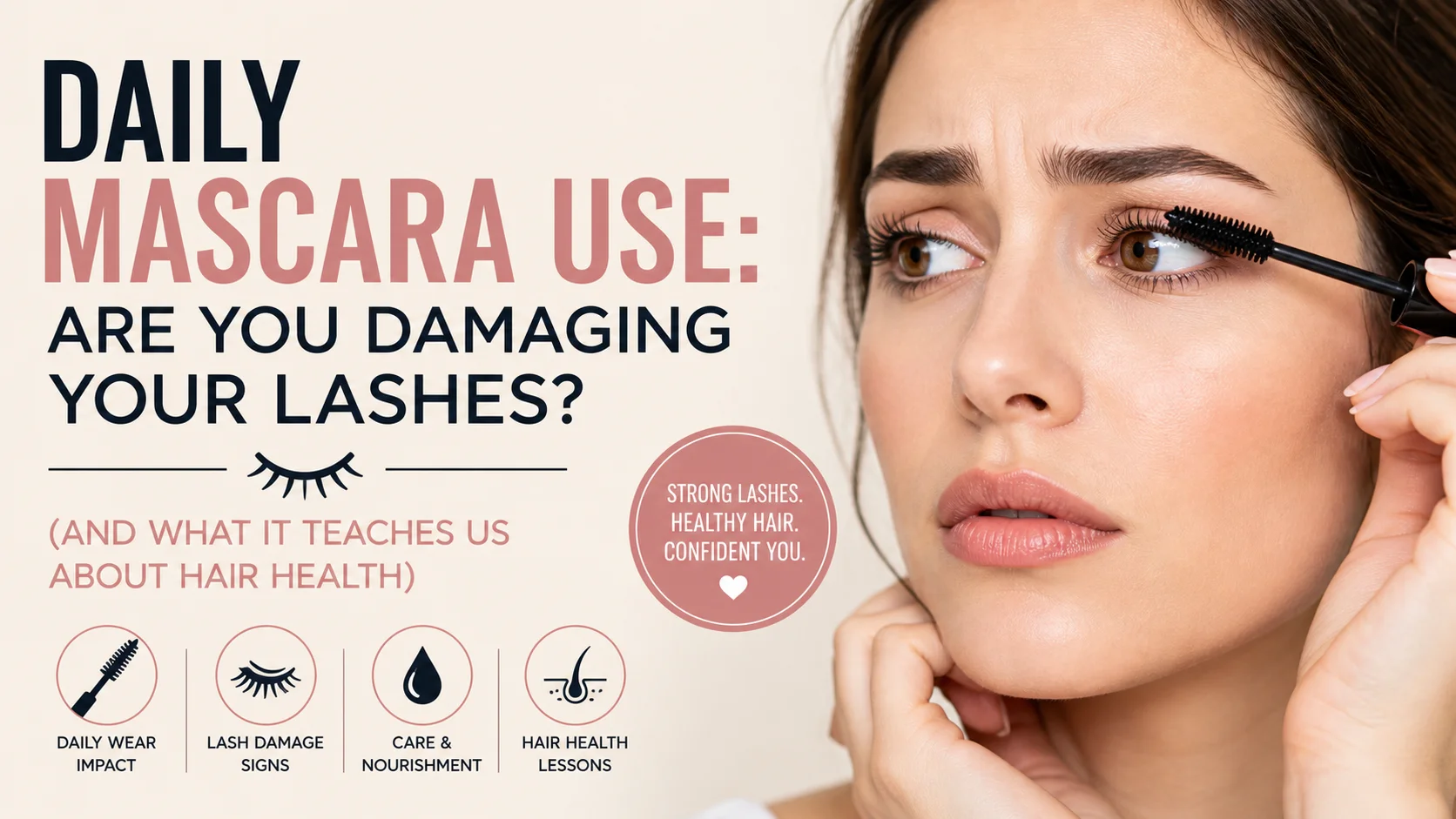

When we talk about hair transplantation and restoration, the focus is usually on the scalp or beard. However, as experts in facial aesthetics, we know that every hair on your face—including your eyebrows and eyelashes—plays a crucial role in framing your appearance.
Many people use mascara daily to achieve thicker, darker lashes. But have you ever stopped to consider the side effects of using mascara daily? While mascara isn’t a transplant procedure, understanding how daily chemical and mechanical stress impacts your lash hair follicles can actually teach us a lot about maintaining the health of all your facial hair grafts.
Here is a clinical breakdown of what happens to your lash line with daily mascara application, and why recovery breaks are essential for hair retention.
1. Follicle Fatigue and Breakage
Just like the hairs transplanted to your beard or scalp, your eyelashes have a natural growth cycle (Anagen, Catagen, Telogen). Applying mascara every day adds significant weight to each hair shaft.
The side effect: Chronic weighing down of the follicle leads to micro-trauma. Over time, lashes snap off before they complete their growth phase. For our transplant patients, this is a vital reminder: heavy products can physically extract weak hairs. If you are post-transplant (eyebrow or beard), daily mascara use on adjacent areas could put tension on healing follicles.
2. Bacterial Build-Up (Blepharitis)
One of the most severe side effects of using mascara daily is the risk of blepharitis—an inflammation of the hair follicles on the eyelid margin.
Old mascara acts as a magnet for bacteria and Demodex mites (microscopic organisms that live in hair follicles). When these mites multiply due to product buildup, they clog the follicular opening.
- The result: Itchy, red lash lines and madarosis (eyelash hair loss).
- The parallel: Just as we require a clean scalp before a FUE (Follicular Unit Extraction) procedure, your lash follicles need a clean environment to thrive. Daily mascara without nightly oil-based removal suffocates the root.
3. The “Waterproof” Trap
Many men and women use waterproof mascara to hold a curl. However, waterproof formulas are the worst offenders regarding hair health.
Why it’s dangerous: Waterproof mascara requires harsh, oil-based solvents to remove. The aggressive rubbing required to dissolve this product physically pulls out healthy hairs. For someone investing in facial hair restoration, this is akin to exfoliating a fresh graft site. Traction alopecia (hair loss from pulling) is a real risk of daily mascara removal.
4. Allergic Contact Dermatitis
The skin around your eyes is the thinnest on your body. Daily exposure to common mascara ingredients (Parabens, Propylene glycol, and black pigments) can trigger a delayed allergic reaction.
Even if you have used the same brand for years, the cumulative daily dose can eventually turn your immune system against the follicle. The resulting swelling and itching often leads to scratching, which mechanically destroys the hair bulb.
The Alternative: Lash Health Strategies (Inspired by Transplant Care)
At facial-hairtransplant.com, we believe in proactive hair preservation. You don’t need to stop wearing mascara entirely, but adopting a “transplant mindset” will save your lashes.
- Rotate Your Products: Give your follicles a break. Use mascara every other day to prevent the constant weight load. On days off, use a clear lash serum.
- Daily, Not Weekly, Cleaning: You must remove mascara every single night. Use a gentle, non-irritating micellar water. Sleeping in mascara doubles the side effects of using mascara daily by trapping dirt against the follicle for 8 hours.
- Know Your Replacement Cycle: Never use a mascara tube for longer than 3 months. Bacteria levels in the tube rise exponentially after 90 days, directly causing folliculitis.
- Consider a Growth Serum: If you have sparse lashes from daily damage, over-the-counter prostaglandin analogs (like Latisse, used carefully) can help, but consult a dermatologist first.
Final Verdict
While mascara is a powerful tool for facial aesthetics, the side effects of using mascara daily include brittle breakage, bacterial infections, and traction loss. Your eyelashes are delicate terminal hairs—very similar to the hairs we transplant into the beard or scalp.
Treat them with the same respect you would a surgical graft. If you are experiencing lash loss or thinning of any facial hair, contact us. Sometimes the health of one follicle tells you everything about the health of the rest.
Disclaimer: This article is for informational purposes only and does not constitute medical advice. Always consult a dermatologist or trichologist for persistent hair loss.