
For millions of men, the dream of a full, thick beard remains frustratingly out of reach. Patchy cheeks, a thin mustache, and sparse connectors leave many wondering: “What actually works?” Minoxidil vs. Beard Oil
Two camps have emerged in the battle for better beards. On one side: Minoxidil (commonly known as Rogaine), a FDA-approved medication for scalp hair loss that has gained a massive following for off-label beard use. On the other: Beard oil, the natural, conditioning blend sold everywhere from barbershops to Amazon.
But which one actually grows hair? And can you use both?
Minoxidil (the active ingredient in products like Rogaine) can actually promote new beard growth for many men, especially those with patchy or slow-growing facial hair. It works by widening blood vessels, improving blood flow to hair follicles, and prolonging the growth phase of hair. Off-label use for beards shows visible results in before/after photos, often within 3–6 months (though results vary by genetics, age, and consistency)
In the world of men’s grooming, few topics spark as much passion and skepticism as beard growth. For men struggling with patchy, sparse, or slow-growing facial hair, the promise of a fuller beard often leads to a heated debate: Minoxidil versus beard oil. One is a pharmaceutical vasodilator originally developed for high blood pressure, now used off-label for hair growth. The other is a blend of natural oils marketed as a nourishing elixir. But which one truly delivers new facial hair, and which is better suited for maintenance? Let’s dive into the science, real-world results, mechanisms, side effects, and practical advice to settle this debate.
Understanding the Contenders
Minoxidil is the active ingredient in products like Rogaine. It was originally an oral medication for hypertension but gained fame when patients reported unexpected hair growth as a side effect. Today, it’s FDA-approved for scalp hair loss in 2% and 5% topical formulations (liquid or foam). For beards, it’s used off-label—meaning it’s not officially approved for facial hair, but many turn to it anyway.
Beard oil, by contrast, is a grooming staple. It typically combines carrier oils (such as jojoba, argan, coconut, or castor) with essential oils (like tea tree, peppermint, or sandalwood). Brands tout benefits like softening hair, moisturizing skin, reducing itchiness during the “beard itch” phase, and even “promoting growth.” However, these claims are largely marketing-driven.
How Minoxidil Works for Beard Growth
Minoxidil’s mechanism is well-studied for scalp hair and extends logically to facial follicles. It acts as a vasodilator, widening blood vessels to increase blood flow, oxygen, and nutrient delivery to hair follicles. It also prolongs the anagen (active growth) phase of the hair cycle while shortening the telogen (resting/shedding) phase. Additionally, it may influence prostaglandin synthesis, collagen production, and vascular endothelial growth factor (VEGF) expression, all of which support follicle activity.
The key enzyme involved is sulfotransferase, which converts minoxidil into its active form (minoxidil sulfate). People with higher enzyme activity in follicles tend to respond better. Results aren’t instant—most users notice finer vellus hairs (peach fuzz) within 4–8 weeks, with thicker terminal hairs appearing after 3–6 months of consistent twice-daily application.
Scientific Evidence for Minoxidil on Beards
Evidence, though limited compared to scalp studies, is promising. A landmark randomized, double-blind, placebo-controlled trial in 2016 involved 48 Thai men aged 20–60. Participants applied 0.5 mL of 3% minoxidil lotion twice daily for 16 weeks. The minoxidil group showed statistically significant increases in beard hair count, density, and diameter compared to placebo. Global photographic assessments and patient satisfaction scores were also markedly higher.
More recent studies reinforce this. A 2024 investigation on transgender men (assigned female at birth) on gender-affirming hormone therapy found that 2% topical minoxidil significantly enhanced facial hair growth over six months, particularly on the upper lip and chin. Case reports, including one involving a transgender adolescent using 5% minoxidil, documented visible pigmented hair growth within three months, sometimes even in untreated areas due to minor systemic absorption.
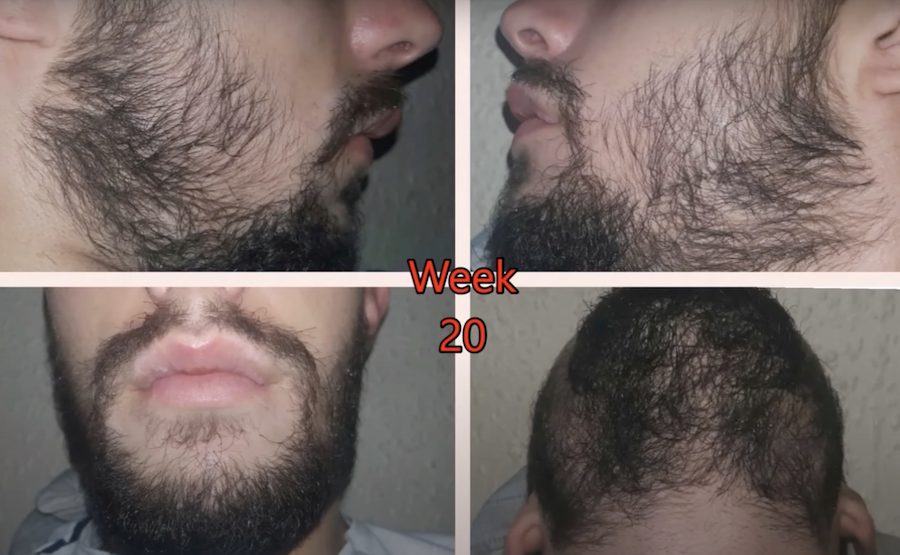
Before-and-after photos circulating online and in clinics often show patchy beards filling in substantially after 4–12 months. However, genetics remain the ultimate limiter—minoxidil can’t create follicles where none exist; it activates dormant ones.
Beard Oil: Hype vs. Reality
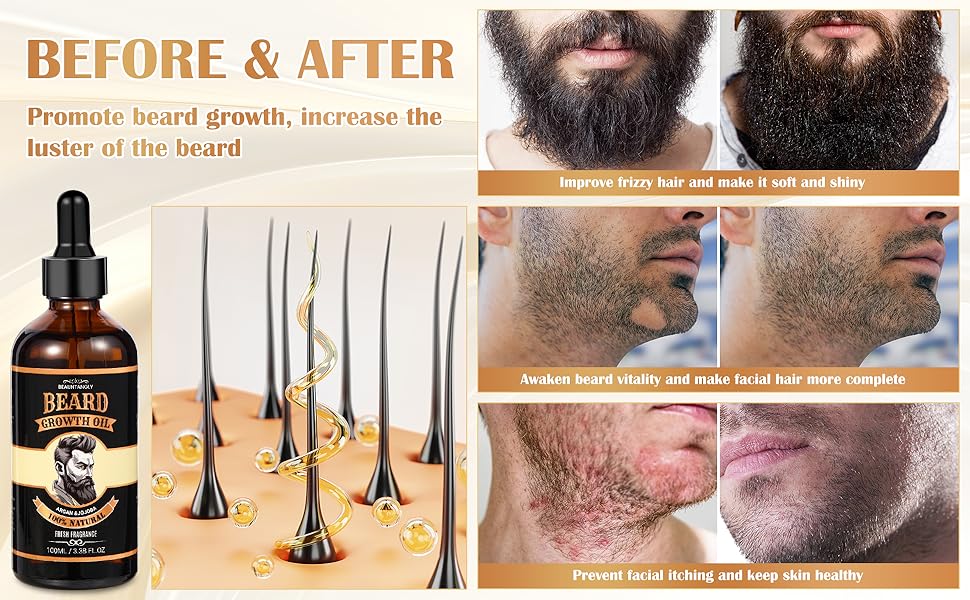
Beard oil does not grow new facial hair in any meaningful, evidence-based way. No robust clinical trials demonstrate that jojoba, argan, or essential oil blends stimulate follicle activity or convert vellus to terminal hair. Claims of “awakening beard vitality” or “increasing luster” are anecdotal at best.
What beard oil does excel at is conditioning. It moisturizes the skin beneath the beard, preventing dryness and flakiness that can lead to irritation or ingrown hairs. It softens coarse facial hair, reduces beardruff, and gives the appearance of a fuller, healthier beard by improving shine and manageability. Some users report less itch during early growth stages, which indirectly supports consistent grooming habits.
Peppermint oil has shown hair-growth potential in one animal study (outperforming minoxidil in mice), but human evidence for beards is negligible, and high concentrations can irritate skin. Overall, beard oil is maintenance, not magic.
Direct Comparison: Minoxidil vs. Beard Oil
- Growth Potential: Minoxidil wins decisively. It can increase hair count and thickness where follicles are present but underactive. Beard oil offers zero new growth.
- Speed and Results: Minoxidil users often see changes in 1–3 months, with peak results around 6–12 months. Beard oil provides immediate cosmetic benefits but no progressive thickening.
- Maintenance Role: Once growth occurs, beard oil becomes essential. Many combine both: minoxidil for stimulation, followed by beard oil for hydration (applied after minoxidil dries).
- Cost and Commitment: Minoxidil requires daily twice-a-day application for months and ongoing use to maintain gains (hair may shed if stopped). Beard oil is cheaper, easier, and used as needed.
- Side Effects: Minoxidil can cause skin dryness, itching, redness, flaking, or contact dermatitis—especially with liquid formulations (foam is often gentler). Unwanted hypertrichosis (hair growth on ears, forehead, or neck) occurs if product spreads. Rare systemic effects include dizziness if over-absorbed. Beard oil rarely causes issues beyond mild allergies to specific essential oils.
- Safety Note: Minoxidil is not FDA-approved for beards. Consult a dermatologist, especially if you have sensitive skin, heart conditions, or are under 18. Women should avoid it due to risk of facial hair growth.
Practical Tips for Users
If trying minoxidil for beards:
- Start with 3–5% foam or liquid, applying 0.5–1 mL twice daily to clean, dry skin.
- Expect an initial “shed” phase (old hairs falling out as new ones cycle in).
- Shave or trim minimally in early stages for even application.
- Moisturize with beard oil or a gentle lotion to combat dryness.
- Be patient and consistent—results vary widely by age, genetics, and hormone levels.
- Track progress with weekly photos.
For beard oil:
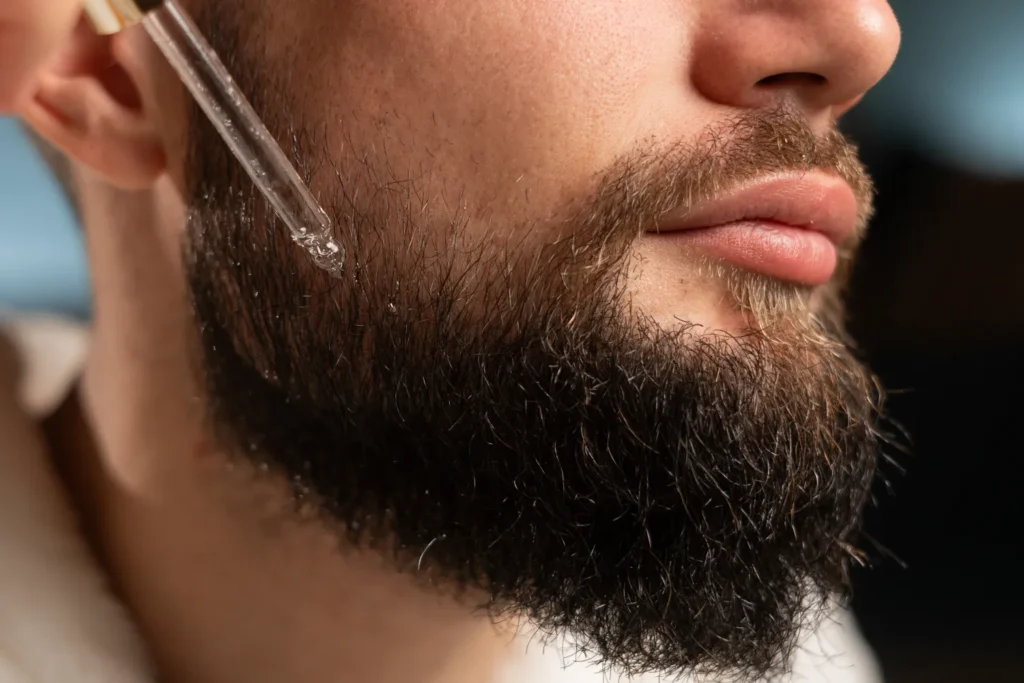
- Apply a few drops to a damp or dry beard, massaging into skin and hair.
- Use after showering for best absorption.
- Choose unscented or lightly scented options if sensitive.
Many men report the best outcomes by using minoxidil to “kickstart” growth for 6–12 months, then transitioning primarily to beard oil for long-term care. Genetics still dominate—if your family tree features sparse beards, neither product will deliver a lumberjack-level mane.
In the Great Beard Debate, minoxidil is the clear champion for actually growing facial hair. Supported by randomized trials and clinical observations, it delivers measurable increases in density and thickness for many users. Beard oil, while invaluable for grooming and comfort, cannot create hair from nothing—it’s a supportive player, not a growth agent.
Ultimately, success depends on realistic expectations. Combine science (minoxidil) with smart grooming (beard oil), maintain consistency, and embrace your genetic baseline. A healthy beard isn’t just about volume—it’s about confidence in the face you have. If patches persist despite efforts, options like beard transplants or simply owning the look remain valid paths. The debate continues in forums and barbershops, but the evidence tilts strongly toward minoxidil for growth and beard oil for glory..
Minoxidil for Beard Growth – The Pharmaceutical Powerhouse
What Is Minoxidil?
Minoxidil is a topical vasodilator – a medication that widens blood vessels. Originally developed as an oral treatment for high blood pressure, doctors noticed a curious side effect: patients grew hair in unexpected places . This discovery led to its current life as the active ingredient in Rogaine (and countless generic versions).
For scalp use, minoxidil is FDA-approved to treat androgenetic alopecia (male and female pattern baldness). However, using it on your beard is considered off-label – meaning the FDA has not officially approved it for this purpose, but doctors may still recommend it based on clinical evidence .
Does It Actually Work for Beards?
Yes, the evidence is strong.
A double-blind, placebo-controlled clinical trial published in The Journal of Dermatology found that men who applied topical 3% minoxidil twice daily for 16 weeks experienced:
- Significant improvement in beard growth as assessed by photography
- Significant increases in facial hair count compared to placebo
- Positive self-assessments from participants who noticed their beard growth had improved
The study noted no difference in hair thickness between minoxidil and placebo groups – meaning minoxidil helps grow more hairs, not necessarily thicker ones .
A 2024 study on transgender men receiving gender-affirming hormone therapy further confirmed minoxidil’s efficacy. After 6 months of topical minoxidil use, participants showed statistically significant beard growth, with median upper lip scores increasing from 2 to 3.5 and chin scores from 1 to 4 (on a 4-point scale) .
How Minoxidil Works on Facial Hair
Minoxidil’s exact mechanism isn’t fully understood, but researchers believe it works by:
- Shortening the telogen (resting) phase of the hair growth cycle
- Rapidly shifting follicles into the anagen (active growth) phase
In simple terms: minoxidil wakes up dormant follicles and tells them to start growing.
The medication requires an enzyme called sulfotransferase to convert minoxidil into its active form – minoxidil sulfate. People with naturally higher sulfotransferase activity in their hair follicles tend to see better results .
Interestingly, some research suggests that low-dose aspirin use may decrease sulfotransferase activity, potentially reducing minoxidil’s effectiveness .
The Timeline: What to Expect
Common Side Effects
Minoxidil is generally safe, but side effects do occur :
| Side Effect | Frequency | What to Do |
|---|---|---|
| Skin irritation, itching, scaling | Common | Switch to foam formulation (often contains less propylene glycol) |
| Dry skin/flaking | Common | Use a moisturizer (not immediately after application) |
| Hypertrichosis (unwanted hair growth elsewhere) | Less common | Avoid transferring product to pillowcases or hands; wash hands thoroughly after use |
| Heart palpitations | Rare | Discontinue and consult a doctor immediately |
| Allergic reaction | Rare | Stop use; seek medical attention if severe |
Many men report success using foam formulations, which typically contain less propylene glycol (a common irritant) than liquid solutions, dry faster, and spread less .
Part 2: Beard Oil – The Natural Conditioner
What Is Beard Oil?
Beard oil is a topical blend of carrier oils (like jojoba, argan, coconut, or grapeseed oil) and essential oils (like peppermint, tea tree, or cedarwood) designed to moisturize both beard hair and the skin beneath it .
Unlike minoxidil, beard oil is classified as a cosmetic, not a drug. The FDA does not regulate its claims, and manufacturers cannot legally market beard oil as a treatment for hair loss .
Does Beard Oil Actually Grow Hair?
The short answer: No, not in the way you might hope.
According to Dr. Ife Rodney, a board-certified dermatologist: “Beard hair growth has a lot to do with genetics. Ingredients [in beard oil] won’t actually grow hair for someone who can’t grow a beard” .
The scientific consensus is clear: there is no peer-reviewed evidence that the active ingredients in beard oils can make hair grow faster or activate dormant follicles .
What Beard Oil Can Do
While beard oil won’t create new hairs, it offers legitimate benefits for beard health:
1. Moisturizes the skin beneath the beard
Dry, flaky skin (beard dandruff) can create an unhealthy environment for follicles. Beard oil hydrates the skin, potentially reducing irritation that might impede healthy growth .
2. Softens coarse beard hair
Beard hair is typically rougher than scalp hair. Oils soften the hair shaft, making it less prone to breakage and split ends – which helps existing hairs reach their full length potential .
3. Reduces itching
The infamous “beard itch” that plagues new growers often results from dry skin and sharp, new hairs irritating the follicle. Beard oil lubricates both, providing relief .
4. May reduce ingrown hairs
For men with curly or coarse hair (common in Black beards), beard oil softens hair shafts, making them less likely to curl back into the skin and cause painful ingrowns .
5. Creates better conditions for growth
By reducing inflammation, breakage, and dryness, beard oil helps ensure that any hair you can grow reaches its full potential. Think of it as fertilizer for an existing lawn – it won’t plant new seeds, but it helps what’s there thrive.
Promising Natural Ingredients (With Caveats)
Some natural oils have shown hair-growth-promoting properties in animal studies – but human beard data is extremely limited.
Important: The peppermint oil study was conducted on mice, not humans, and used shaved dorsal skin – not facial hair. While intriguing, these results cannot be directly translated to human beard growth .
Common Side Effects
Beard oil is generally safe, but risks include :
- Contact dermatitis (redness, itching, burning)
- Allergic reactions to specific essential oils
- Clogged pores (acne mechanica) – especially with heavy or frequent application
- Increased reliance on products – some men find their skin becomes drier when they stop using oil
Always perform a patch test on a small area of skin (like the inner arm) before applying a new beard oil to your face.
Head-to-Head Comparison
| Factor | Minoxidil | Beard Oil |
|---|---|---|
| Primary mechanism | Pharmacological – wakes dormant follicles | Cosmetic – moisturizes and conditions |
| Creates new hairs? | Yes – converts vellus to terminal hairs | No – cannot activate dormant follicles |
| Scientific evidence | Strong (multiple clinical trials) | Weak to none (no human beard studies) |
| FDA approval for beards | No (off-label use) | No (cosmetic, not a drug) |
| Typical cost (monthly) | $15–$30 | $10–$25 |
| Time to visible results | 2-4 months | Immediate (softness/shine), none for growth |
| Results permanence | Requires continued use; some terminal hairs may persist | Reversible; stops working when discontinued |
| Side effect risk | Moderate (irritation, dryness, rare systemic effects) | Low (allergic reactions possible) |
| Best for | Men with patchy beards or sparse growth | Men with existing beards wanting better condition |
Real User Experiences
Minoxidil Success Story
One YouTube user documented his journey using 5% minoxidil foam consistently for 1.5 years. His before-and-after photos show a dramatic transformation: sparse, patchy cheeks transformed into a full, thick beard. He also claimed to have retained his beard 10 months after stopping – though this is not typical, as most users experience gradual loss of gains within 12-24 weeks of discontinuation .
Minoxidil Non-Responder
Not everyone succeeds. Minoxidil’s effectiveness depends heavily on sulfotransferase enzyme activity. Men with naturally low levels may see little to no results, regardless of how consistently they apply the product .
Beard Oil User
A consistent beard oil user with good genetics may maintain a healthy, soft, shiny beard that looks its absolute best. However, the same user would likely have grown the same number of hairs without the oil – they just might have dealt with more itching, dryness, and breakage along the way.
Can You Use Both? (The Winning Strategy)
Yes – and many experts recommend exactly this approach.
Minoxidil and beard oil serve completely different purposes. Using them together can address both growth (minoxidil) and conditioning (beard oil).
The Recommended Protocol
- Apply minoxidil first to a clean, dry face
- Wait 4 hours for minoxidil to fully absorb
- Apply beard oil to moisturize and condition
Why wait? Applying beard oil immediately after minoxidil can interfere with minoxidil absorption, potentially reducing its effectiveness .
Alternative: Staggered Application
- Morning: Apply minoxidil after your shower
- Evening: Wash face, apply beard oil before bed
- Or vice versa – some users apply minoxidil twice daily and use beard oil only once, during the off-cycle
Product Recommendations
Below are commercially available products for both approaches, available via Amazon affiliate links using store ID cosmoclinic-20.
Minoxidil Products
| Product | Strength | Format | Best For |
|---|---|---|---|
| Kirkland Signature Minoxidil 5% | 5% | Foam or Liquid | Budget-conscious users; generic equivalent to Rogaine |
| Rogaine Men’s 5% Minoxidil Foam | 5% | Foam | Less irritation; dries quickly |
| Hims Minoxidil Solution | 5% | Liquid | Subscription convenience; telehealth support |
- Search Link: Click here to browse Minoxidil products on Amazon
Beard Oil Products
- Search Link: Click here to browse Beard Oil products on Amazon
Derma Rollers (Often Used with Minoxidil)
Derma rollers create microscopic channels in the skin, potentially improving minoxidil absorption. Some evidence suggests combining minoxidil with microneedling enhances results .
- Search Link: Click here to browse Derma Rollers on Amazon
Frequently Asked Questions
Are Minoxidil beard gains permanent?
Generally, no. If you stop using minoxidil, you will typically notice hair loss within 12 to 24 weeks. However, some users report that hairs that have fully transitioned to terminal (thick, dark, mature) hairs may persist longer or permanently. This varies significantly by individual .
Does Minoxidil work if you have no facial hair at all?
Possibly, but results vary. A case study documented a transgender male with no prior facial hair who induced beard growth with consistent application of topical minoxidil 5% over 5 months . However, genetics play a massive role – men from families with little to no facial hair may see limited results regardless of treatment.
Does beard oil cause hair growth?
No. There is no peer-reviewed evidence that beard oil ingredients can make hair grow faster or activate dormant follicles. Beard oil conditions existing hair and skin but does not create new hairs .
Can I make my own beard oil at home?
Yes. DIY beard oil is simple and cost-effective. A basic recipe:
- Carrier oil base (1 oz): Jojoba, argan, sweet almond, or grapeseed oil
- Essential oils (5-10 drops total): Peppermint, cedarwood, lavender, or tea tree (always dilute)
Combine in a glass dropper bottle and shake before each use .
Is Minoxidil safe for everyone?
Minoxidil is generally safe for healthy adult men. However, do not use if you have:
- Heart disease or uncontrolled high blood pressure
- Known allergy to minoxidil
- Scalp conditions (psoriasis, severe sunburn, etc.)
Always consult a doctor before starting minoxidil, especially if you take other medications .
How long should I try Minoxidil before giving up?
Most experts recommend 6 months of consistent, twice-daily use before evaluating results. Some slow responders may not see significant changes until 8-12 months. If you see zero new vellus hairs by month 4, you may be a poor responder due to low sulfotransferase activity .
Part 8: The Bottom Line
| Your Goal | Recommended Product |
|---|---|
| Grow a beard where none exists | Minoxidil (and patience – 4-6 months minimum) |
| Fill in patchy areas | Minoxidil (off-label use, clinically supported) |
| Soften an existing beard | Beard oil (immediate results for feel and appearance) |
| Reduce beard itch and dandruff | Beard oil (hydrates skin and softens hair) |
| Maximize both growth AND condition | Both – minoxidil for growth, beard oil for care (staggered application) |
The Honest Truth
If you have the genetics for a full beard, you will likely grow one with or without any product – though beard oil may make the journey more comfortable.
If your genetics are working against you, minoxidil offers a legitimate, evidence-based chance at transforming patchy cheeks into a fuller beard. It requires commitment (twice daily application for months), patience (results take time), and acceptance of potential side effects (dryness, irritation).
Beard oil, despite the marketing claims, will not grow hair where none exists. But it remains a valuable tool for anyone who wants a healthier, softer, better-looking beard – regardless of how they achieved their growth.
Quick Reference Summary
Disclaimer: This article is for informational purposes only and does not constitute medical advice. Minoxidil use for beard growth is off-label and not FDA-approved for this indication. Always consult a healthcare provider before starting any new medication or supplement regimen. Individual results vary significantly based on genetics and other factors.
This article contains affiliate links. As an Amazon Associate, the author may earn a commission from qualifying purchases at no additional cost to you.