

FUE (Follicular Unit Extraction) is currently the most popular and advanced technique for hair transplantation, including facial hair restoration (beard, mustache, goatee, sideburns). It is a minimally invasive method that provides natural-looking, permanent results with minimal scarring.
FUE Technique Explained: The Gold Standard for Facial Hair & Hair Restoration
FUE (Follicular Unit Extraction) is the most advanced and popular method for hair transplantation, including beard, mustache, goatee, and sideburn restoration. It delivers natural-looking, permanent results with minimal scarring and quick recovery.
What is FUE?
FUE involves extracting individual follicular units (groups of 1–4 hairs) from a donor area (usually the back/sides of the scalp) using a tiny punch tool. These grafts are then implanted into the recipient area at precise angles to match natural growth patterns.
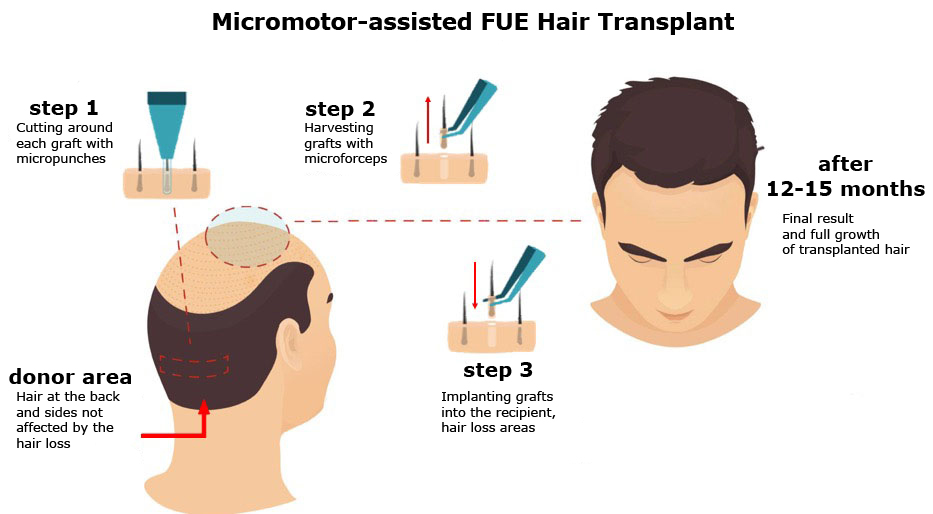
Detailed FUE Procedure Steps
The outpatient procedure (4–10 hours) uses local anesthesia.
- Consultation & Planning – Design beard shape/density.
- Preparation – Donor area trimmed, anesthesia applied.
- Extraction – Micro-punch (0.7–1.0 mm) removes grafts one by one.
- Implantation – Grafts placed at natural angles.
- Post-Procedure – No stitches; scabs heal in 7–10 days.
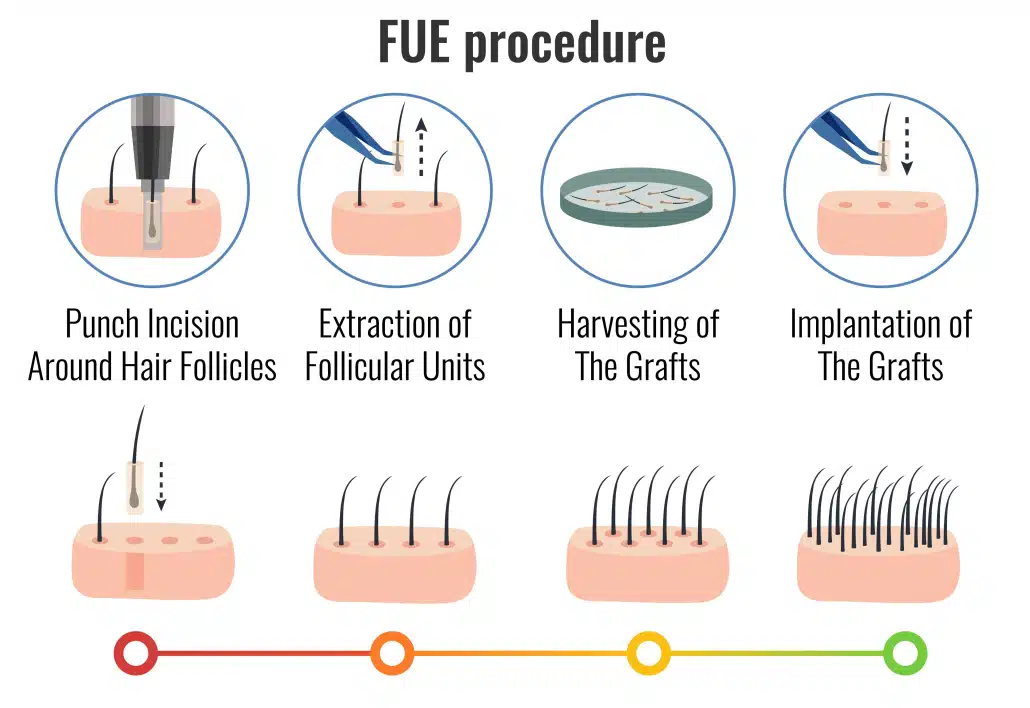
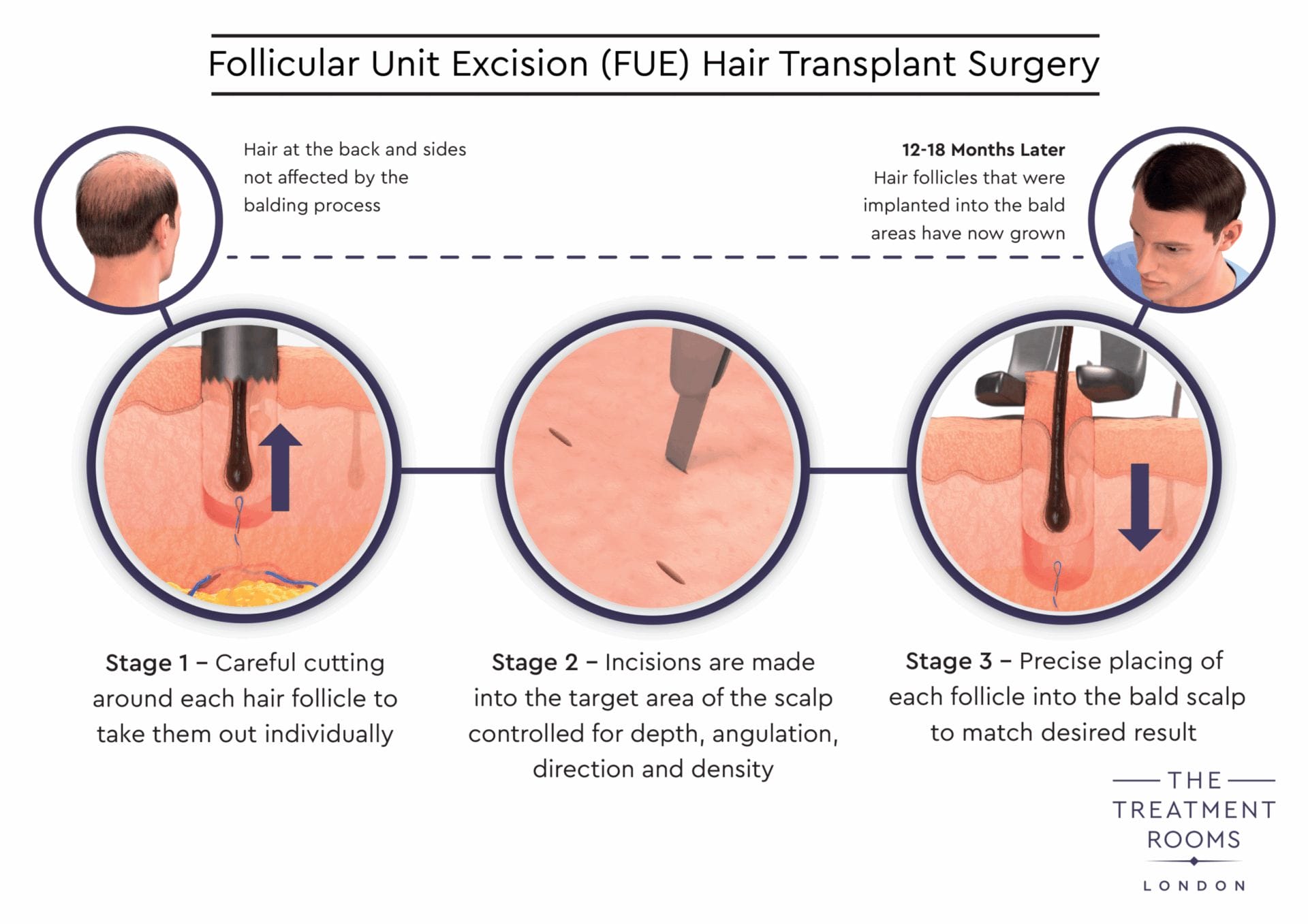
FUE vs. FUT Comparison
FUE avoids the linear scar of FUT (strip method), making it ideal for short hair/beards.


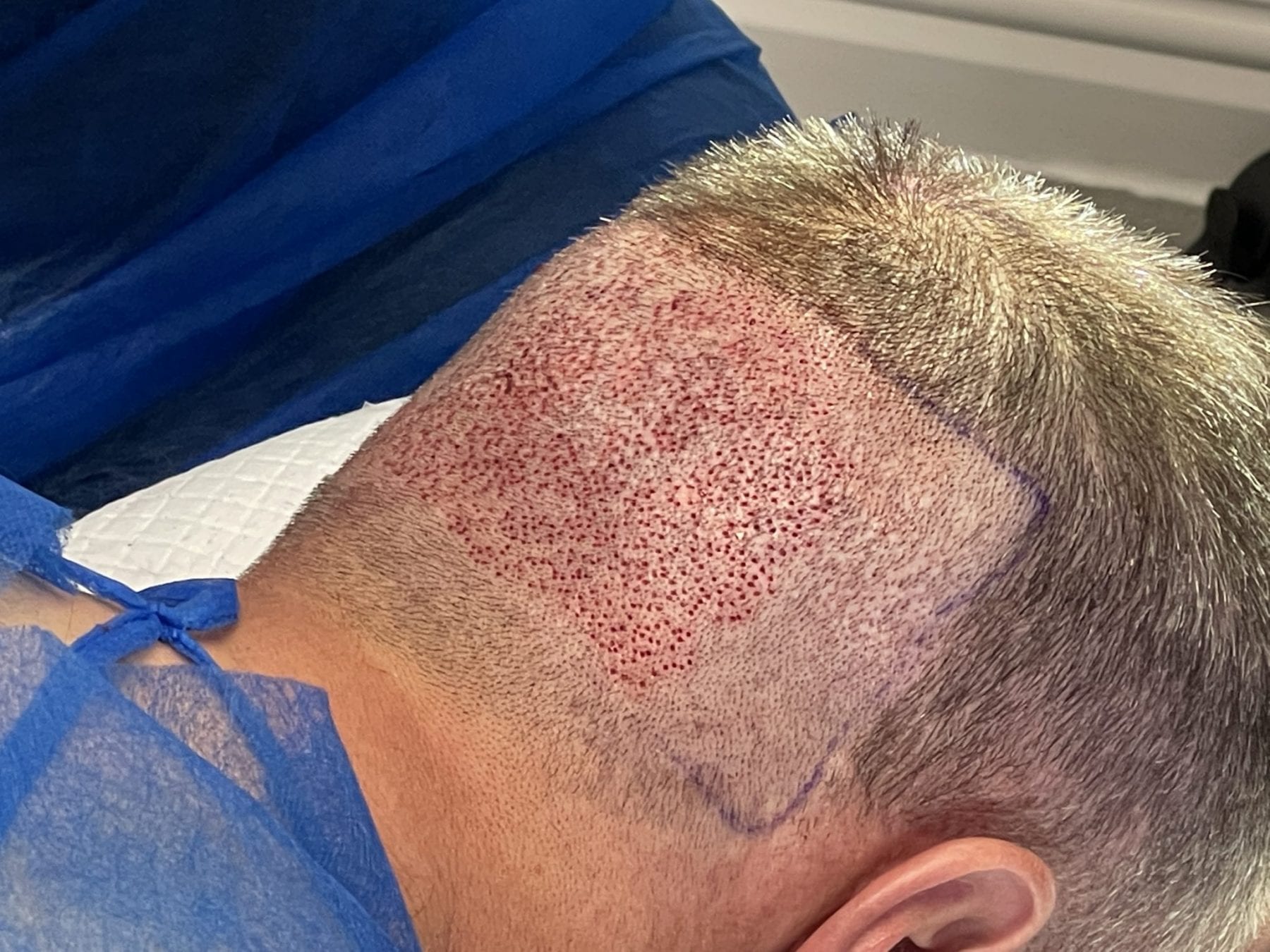
Donor Area After FUE: Minimal Scarring
Only tiny dot scars remain – nearly invisible once healed, especially with short hair.

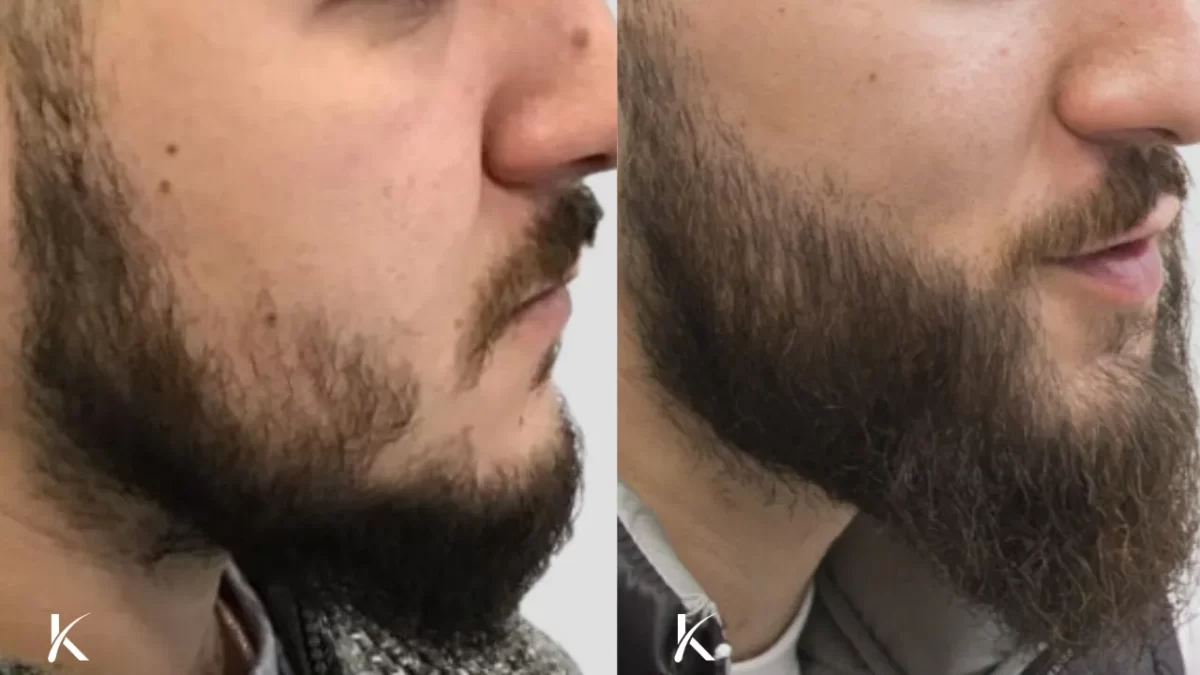
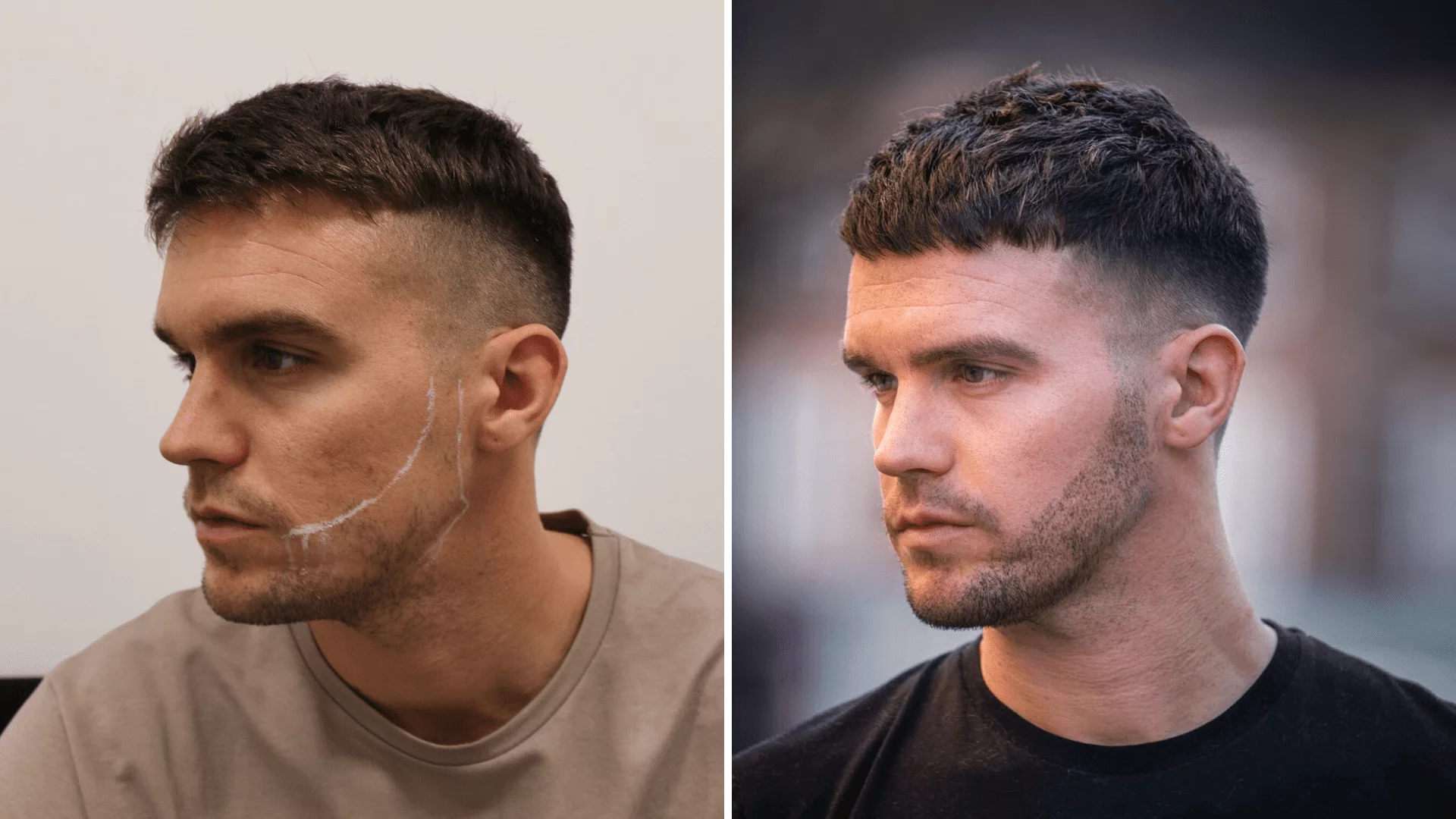
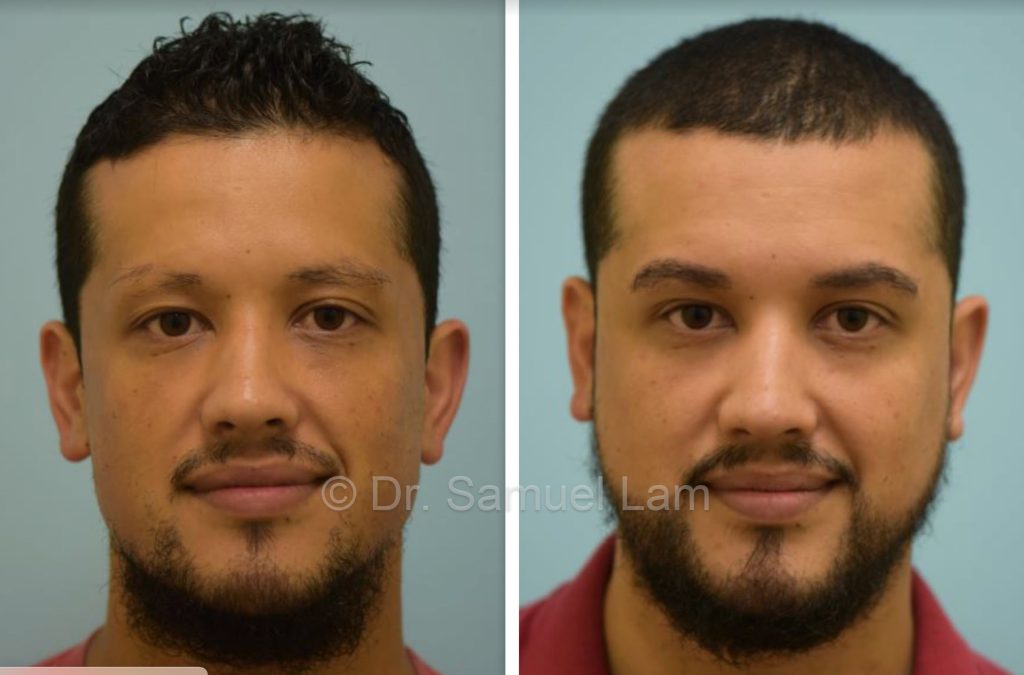
Before & After: Beard Transplant Results with FUE
Realistic transformations for patchy beards to full, natural coverage (results in 9–18 months).

Advantages of FUE for Facial Hair
- No visible linear scar
- Quick recovery (days)
- Natural angles & density
- Permanent growth you can shave/style
Unlike the older FUT (Follicular Unit Transplantation / strip method), which removes a linear strip of scalp skin (leaving a linear scar), FUE is scarless in practical terms—no stitches, no long scar.
Detailed Procedure Steps (Typical for Scalp or Facial Hair Transplant)
The procedure is usually performed under local anesthesia (with optional mild sedation), as an outpatient session lasting 4–10 hours depending on the number of grafts (e.g., 800–1,800 for partial beard; 2,000–4,000+ for full beard or larger scalp areas).
- Consultation & Planning
- Goals discussion, medical history review, and examination of donor/recipient areas.
- Design the new hairline/beard shape (for facial: defining cheek lines, goatee outline, mustache density).
- Patient approves the plan.
- Preparation
- Donor area (back/sides of scalp) is trimmed/shaved to 1–2 mm (for facial transplants, sometimes beard-area grafts are used if small).
- Recipient area (face or scalp) may be lightly trimmed if needed.
- Local anesthesia is injected to numb both areas completely.
- Extraction (Harvesting) Phase
- Surgeon uses a micro-punch tool (0.7–1.0 mm diameter, manual, motorized, or robotic-assisted) to make tiny circular incisions around each follicular unit.
- The graft is gently separated from surrounding tissue and extracted with fine forceps.
- Tiny dot-like wounds remain in the donor area (heal as small white scars, usually invisible with short hair).
- Grafts are collected, sorted by quality (single-hair for hairline/edges, multi-hair for density), and kept in a special solution to maintain viability.
- Recipient Site Creation & Implantation
- Tiny incisions/slits/channels are made in the recipient area at exact angles and directions (critical for natural growth—beard hair grows downward/outward, mustache sideways, etc.).
- Grafts are carefully placed one by one using fine instruments (implanters or forceps).
- For facial hair: surgeons match texture/caliber (scalp hair is often slightly finer/wavier than beard hair, but results look natural after growth).
- Post-Procedure
- No sutures needed.
- Small scabs form at extraction and implantation sites (fall off in 7–10 days).
- Patient goes home the same day.
Timeline of Results
FUE is a hair restoration procedure where individual follicular units (natural groups of 1–4 hairs, including the follicle, sebaceous gland, and tiny surrounding tissue) are extracted one by one directly from a donor area (usually the back or sides of the scalp, where hair is genetically resistant to balding) using a small specialized punch tool. These grafts are then implanted into the recipient area (thinning/bald scalp or facial hair zones) at precise angles, depths, and directions to mimic natural growth.
- Days 1–10: Redness, scabs, mild swelling (face may swell more).
- Weeks 2–4: Transplanted hairs shed (“shock loss” – normal).
- Months 3–6: New growth begins.
- Months 9–12 (up to 18): Full, mature results — permanent hair that grows and can be shaved/styled normally.
Advantages of FUE
- No linear scar — ideal for short hairstyles or beards (only tiny dot scars).
- Minimal downtime — most return to work/social life in 3–7 days.
- Less pain/discomfort compared to strip method.
- Faster healing of donor area.
- Natural results — precise placement allows artistic design (especially important for facial hair contours).
- Versatile — can use body/beard hair as donor in some cases; suitable for small (mustache) to large sessions.
Disadvantages / Limitations
- Longer procedure time — extracting thousands of grafts individually takes longer than strip harvesting.
- Higher cost per graft in many clinics (due to time/labor).
- Limited daily graft yield — typically 2,000–4,000 grafts per session (vs. higher in FUT for mega-sessions).
- Requires skilled surgeon/technicians — transection (damaging grafts during extraction) risk if not experienced.
- Donor area thinning if over-harvested (though rare with proper planning).
- Slightly lower graft survival in some early studies (modern techniques have closed the gap).
Special Notes for Facial Hair (Beard/Mustache)
- Donor is almost always scalp hair (mid-occipital best match for thickness/texture).
- Fewer grafts often needed (1,000–3,000 typical).
- Angles/direction are crucial for natural beard flow.
- Recovery on face: swelling peaks day 2–3, resolves faster than scalp.
- Results look fully natural because transplanted hair grows/behaves like real facial hair.
FUE has become the gold standard for most patients seeking facial or scalp restoration due to its minimally invasive nature and excellent aesthetic outcomes. If you’re considering it, a personalized consultation with before/after photos from real patients is essential to assess your donor supply and expected density.