
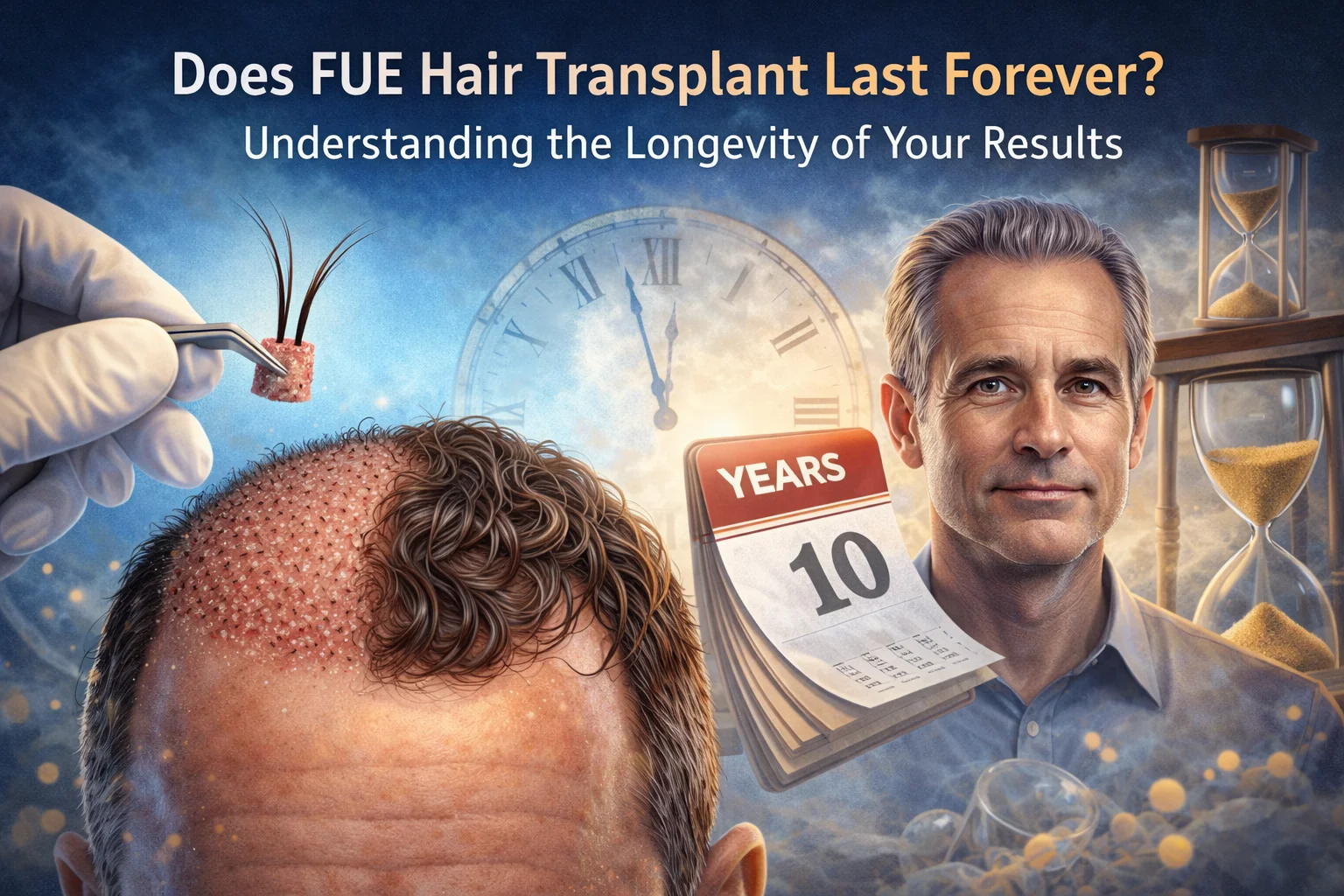

For millions grappling with hair loss, the promise of a full, natural-looking head of hair is the ultimate goal. Modern restoration techniques, particularly Follicular Unit Extraction (FUE), offer a compelling solution. But for anyone considering this investment, the most pressing question is: does FUE hair transplant last forever?
The short answer is yes, the transplanted hair itself is genetically programmed to last a lifetime. However, the long-term aesthetic result is more nuanced. While the new hair is permanent, it exists on a scalp that continues to age and, in some cases, continues to lose native hair. This article unpacks the science behind the permanence of FUE, the factors that influence its longevity, and what you can expect decades after your procedure.
The Science of Permanence: Why Transplanted Hair Lasts
To understand why an FUE hair transplant is considered a permanent solution, we must first understand why we lose hair in the first place. The most common cause is androgenic alopecia, or male/female pattern baldness. This condition is driven by a hormone called dihydrotestosterone (DHT), which binds to receptors in hair follicles, causing them to shrink (miniaturize) and eventually stop producing hair .
However, not all hair follicles are created equal. The hair on the sides and back of your scalp (the “donor area”) is genetically resistant to DHT. The cornerstone of hair transplant longevity is a principle called donor dominance. This means that when DHT-resistant follicles are moved to a balding area, they retain their genetic resistance and continue to grow for the rest of your life .
During an FUE procedure, a surgeon extracts these individual, resistant follicular units from the donor area and meticulously implants them into the thinning or bald regions. Once transplanted, these follicles establish a new blood supply and begin cycling through the normal phases of hair growth: growing (anagen), resting (catagen), and shedding (telogen). This cycle continues indefinitely, making the transplanted hair a permanent fixture .
The “Yes, But”: Factors That Influence Lifelong Results
So, if the follicles are permanent, why might the overall look change over time? The phrase “does FUE hair transplant last forever” requires a holistic answer that considers the entire scalp, not just the transplanted follicles. The primary factor is the progression of native hair loss.
The Battle Against Ongoing Hair Loss
While your transplanted hair is safe from DHT, the non-transplanted hair on the top and crown of your head remains susceptible. If you were still experiencing active hair loss at the time of your transplant, the native hair surrounding your new grafts will continue to thin over the years . This can create a situation where you have a stable, permanent hairline but a thinning area behind it, sometimes described as an “island” of hair . This is the most common reason why patients, years after a successful first transplant, may consider a second procedure to “fill in” behind the new hairline .
The Long-Term Timeline: What to Expect Over Decades
Looking at results over a 30-year timeline provides the clearest picture of what “permanent” truly means.
- Year 1-5: The Golden Years. After the initial healing and growth phases, patients enjoy the full, thick results of their transplant. The hair is stable, natural-looking, and requires no special maintenance beyond standard hair care .
- Year 10: The Reality Check. A decade post-surgery, the long-term effects of progressive hair loss and aging become measurable. One 10-year retrospective analysis showed that while patient satisfaction remained high, some density changes were observed. The study found that 55.35% of patients experienced moderate density reduction, while only 8.92% maintained no change at all . This isn’t the transplanted hair failing, but rather the combination of aging and the thinning of surrounding native hair.
- Year 20-30+: Aging with Your Hair. By this stage, the transplanted hair is still present and growing. However, it is subject to the same aging processes as the rest of your hair. It may naturally thin out, change in texture, or turn grey . Patients in their 70s and 80s who had transplants decades ago provide the ultimate proof of longevity: the transplanted follicles are still producing hair, validating the “permanent” claim, even as the overall appearance has naturally evolved with age .
Other Critical Factors for Longevity
Besides the progression of hair loss, the permanence of your results hinges on several other variables:
- Surgeon Skill and Technique: This is arguably the most important factor. An experienced surgeon ensures minimal trauma to the follicles during extraction and implantation, achieving a graft survival rate of 90-95% . Proper planning also ensures the donor area isn’t over-harvested, which could lead to a thinning appearance at the back of the head .
- Health of Donor Follicles: The quality of the donor hair at the time of transplant is crucial. Strong, healthy follicles have a higher survival rate and are more likely to thrive for a lifetime .
- Post-Operative Care: The first few weeks after surgery are critical. Following your surgeon’s instructions on how to wash your hair, avoid sun exposure, and refrain from strenuous activity is essential for the grafts to “take” properly .
- Medication and Maintenance: To protect your investment and slow the progression of native hair loss, many surgeons recommend continuing with medications like finasteride (to lower DHT) and minoxidil (to stimulate blood flow) after the transplant . Studies show a statistically significant correlation between medication compliance and long-term satisfaction .
Will You Need a Second Transplant?
It’s a common misconception that a hair transplant is a “one-and-done” procedure for everyone. Statistics from the International Society of Hair Restoration Surgery (ISHRS) indicate that 31.9% of patients eventually require additional procedures . This is not a sign that the first transplant failed. Instead, it is usually to address the ongoing, progressive nature of the patient’s hair loss in areas that were not previously treated .
Conclusion: A Permanent Solution in an Evolving Landscape
So, does FUE hair transplant last forever? The hair follicles transplanted during an FUE procedure are indeed genetically programmed to resist DHT and continue growing hair for the rest of your life. In that sense, the results are permanent.
However, the overall picture you see in the mirror is not frozen in time. The final, lifelong result is a dynamic interplay between your permanent new hair and the progressive, natural changes in your scalp—including the ongoing thinning of native hair and the effects of aging. By choosing a highly skilled surgeon, following meticulous aftercare, and considering long-term maintenance strategies like medication, you can maximize the longevity of your results and enjoy a natural-looking head of hair for decades to come