
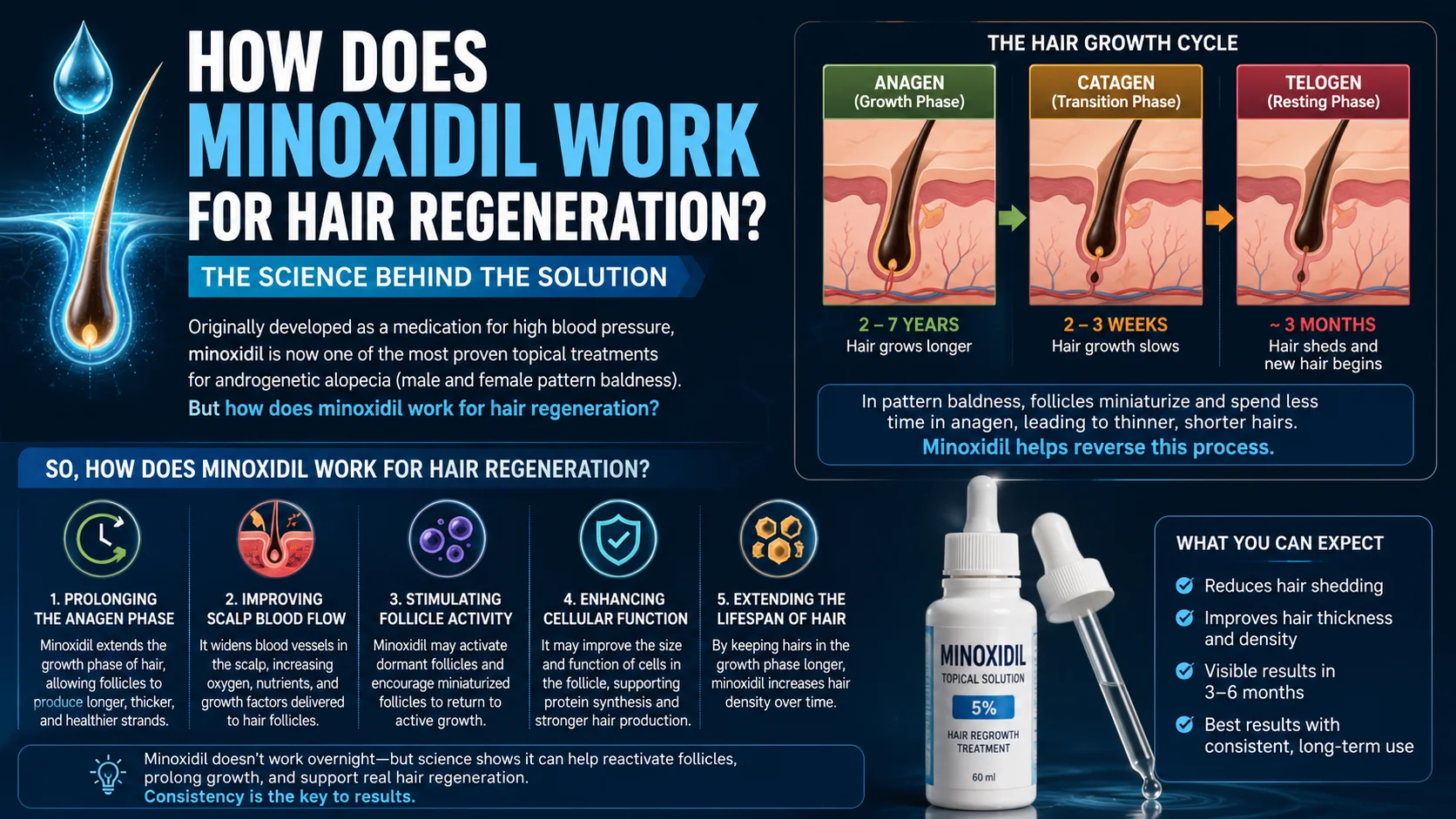

Hair loss affects millions of people worldwide, and few treatments have stood the test of time like minoxidil. Originally developed as an oral medication for high blood pressure, minoxidil is now one of the most widely used topical treatments for androgenetic alopecia (male and female pattern baldness). But the key question remains: how does minoxidil work for hair regeneration? In this article, we’ll break down the mechanisms, the evidence, and what you can realistically expect.
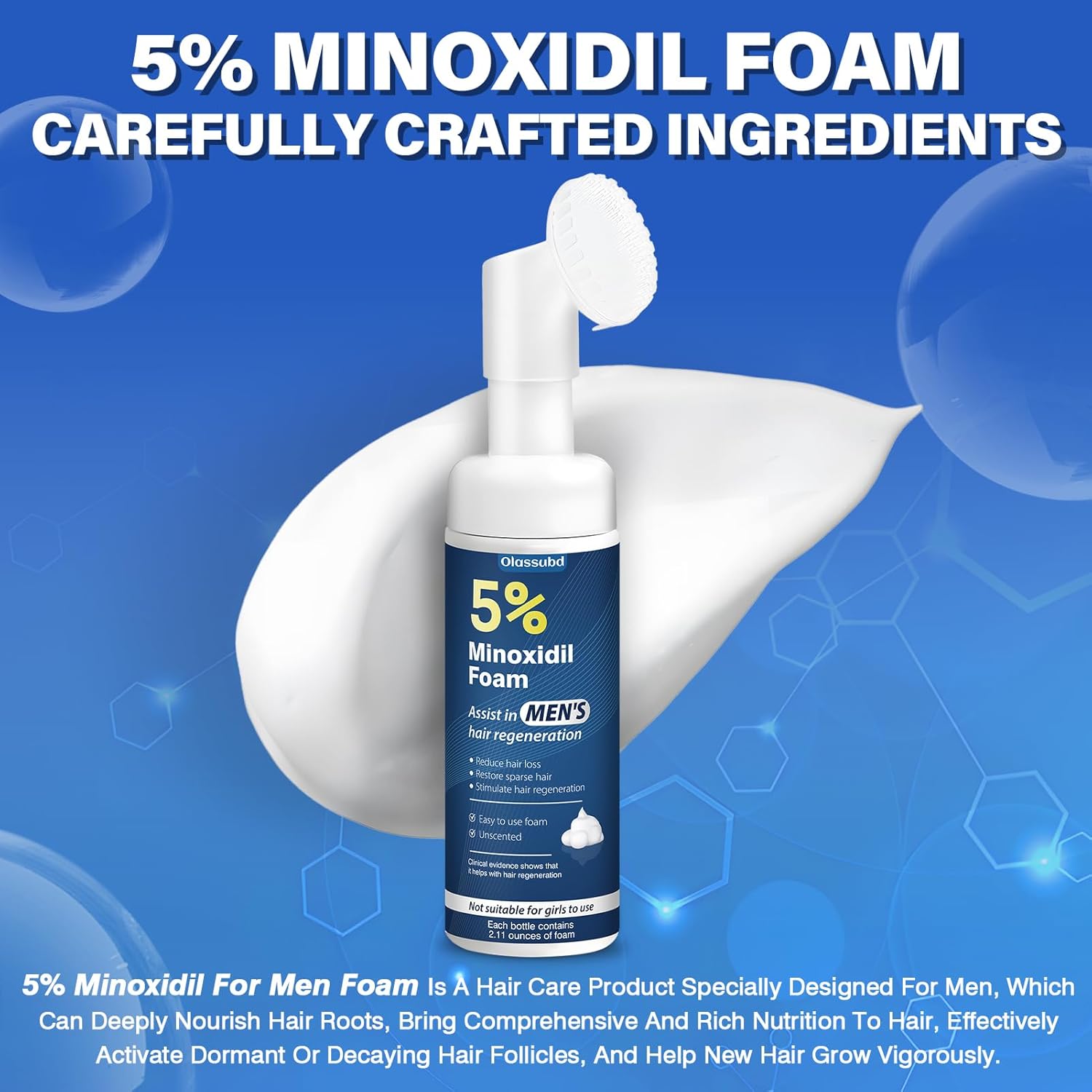
Minoxidil Hair Regrowth
Treatment for Men & Women
Understanding Hair Regeneration: The Basics
Before diving into minoxidil’s effects, it helps to understand the natural hair cycle. Each follicle goes through three phases:
- Anagen (growth phase) – lasts 2–7 years.
- Catagen (transition phase) – a short 2–3 week period.
- Telogen (resting phase) – about 3 months, after which hair sheds and a new strand begins growing.
In pattern baldness, follicles shrink (miniaturize) and spend less time in anagen, leading to thinner, shorter hairs. True hair regeneration means reversing this miniaturization and extending the growth phase.
So, How Does Minoxidil Work for Hair Regeneration?
The exact mechanism isn’t 100% understood, but research points to several key actions:
1. Prolonging the Anagen Phase
Minoxidil extends the time follicles stay in the active growth stage. By delaying the transition to telogen, it allows hairs to grow longer, thicker, and more robust. This is the cornerstone of hair regeneration – not creating new follicles, but revitalizing existing ones.
2. Increasing Blood Flow to Follicles
Minoxidil is a potassium channel opener and a vasodilator. It relaxes blood vessels around the hair bulb, improving nutrient and oxygen delivery. Better circulation means healthier dermal papilla cells, which are essential for signaling hair growth.
3. Stimulating the Wnt/β-Catenin Pathway
This is a critical molecular pathway for hair follicle development. Studies show minoxidil upregulates β-catenin activity, which encourages follicles to enter anagen and promotes dermal papilla cell proliferation. In simple terms, it turns on the “grow” switch.
4. Anti-Inflammatory Effects
Chronic low-grade inflammation contributes to follicular miniaturization. Minoxidil has been shown to reduce inflammatory markers around hair follicles, creating a healthier environment for hair regeneration.
Does Minoxidil Truly Regenerate Hair?
This is where expectations matter. Minoxidil does not cure baldness. It does not create brand-new follicles in completely scarred or smooth bald skin. However, for early to moderate hair thinning, it can reverse miniaturization – making fine, vellus hairs thicker, darker, and longer (terminal-like hairs). Many users regrow visible hair within 4–6 months, which qualifies as functional regeneration.
Combining Minoxidil with Other Methods for Better Regeneration
To maximize how does minoxidil work for hair regeneration in practice, consider these adjuncts:
- Microneedling (dermarolling) : Creates micro-injuries that boost minoxidil absorption and release growth factors. Clinical trials show significantly better results when microneedling is added.
- Topical finasteride or oral anti-androgens – Address hormonal causes (DHT) that minoxidil ignores.
- Low-level laser therapy – May synergize with minoxidil’s vasodilation effects.
Realistic Timeline for Results
- Months 1–2 – Initial shedding (old telogen hairs fall out – a good sign of cycle reset).
- Months 3–4 – First fine new hairs appear (vellus hair).
- Months 6–12 – Visible thickening and coverage (regeneration becomes noticeable).
- After 12 months – Peak effect; continued use needed to maintain gains.
Stop treatment, and you’ll lose the regenerated hair within 3–6 months – because the underlying thinning process resumes.
Important Safety and Usage Tips
- Use 5% solution for men, 2% or 5% for women (depending on tolerance).
- Apply directly to the scalp, not hair strands. Twice daily is standard.
- Be patient – hair regeneration is slow; check progress with photos every 2 months.
- Possible side effects – Scalp irritation, unwanted facial hair (if drips occur), rare systemic effects like dizziness.
Final Verdict
So, how does minoxidil work for hair regeneration? It extends the growth phase, improves blood flow, activates cellular pathways, and reduces inflammation. It is not a miracle cure, but for millions of people, it is the most effective, affordable, and well-trusted topical treatment for stimulating real, visible hair regrowth.
If you start using minoxidil today and combine it with consistent care and realistic expectations, you stand a good chance of seeing genuine hair regeneration – and keeping it for years to come.
. Can minoxidil permanently regrow hair?
No, minoxidil does not permanently regrow hair.
- Why: Minoxidil works only as long as you use it. It continuously stimulates follicles to stay in the growth (anagen) phase. Once you stop applying it, the underlying hair loss process (e.g., DHT-induced miniaturization in androgenetic alopecia) resumes.
- What happens after stopping: Within 3–6 months, most hair that was gained or maintained by minoxidil will shed, and your scalp will return to its pretreatment state.
- Exception: If your hair loss was due to a temporary condition (e.g., telogen effluvium from stress or illness), minoxidil might help speed recovery, but the hair would likely regrow on its own anyway. For genetic hair loss, permanent results do not occur.
2. Why is Gen Z losing hair?
Multiple factors make hair loss more visible or earlier in Gen Z (born ~1997–2012):
- Chronic stress & mental health: High rates of anxiety, depression, and academic/career pressure can trigger telogen effluvium (temporary shedding) and worsen androgenetic alopecia.
- Nutritional gaps: Trendy diets (vegan/keto without planning), high processed food intake, and low iron/ferritin levels are common. Vitamin D and B12 deficiencies also contribute.
- Hormonal changes: Earlier puberty, increased use of hormonal contraceptives, and endocrine-disrupting chemicals in plastics/personal care products may accelerate pattern balding.
- Scalp care mistakes: Frequent use of dry shampoo, tight hairstyles (traction alopecia from slicked buns or braids), and harsh chemical treatments.
- Post-COVID shedding: Many young adults experienced temporary hair loss after COVID-19 infection, which can unmask underlying genetic thinning.
- Social media awareness: Gen Z simply talks about and notices hair loss more openly than previous generations, making it seem more common.
3. How long will it take for minoxidil to regrow hair?
Typical timeline for visible results:
| Period | What to expect |
|---|---|
| 1–2 months | Initial shedding (old resting hairs fall out – a good sign). |
| 3–4 months | Fine, vellus (peach fuzz) hairs may appear. |
| 6 months | Most users see noticeable regrowth or thickening. |
| 9–12 months | Maximum regrowth for most people. |
| After 12 months | No further gain – minoxidil will maintain what it has achieved. |
Important: If you see zero improvement by 6–8 months with consistent twice-daily use, minoxidil may be ineffective for you (non-responder rate ~40%). Adding microneedling can boost response.
4. What happens if we use minoxidil for 20 years?
Long-term (20+ years) minoxidil use is generally safe, but here’s what you can expect:
- Sustained benefit: You will maintain the hair you regrew in the first 1–2 years. Hair loss will not progress as quickly as it would have without treatment.
- Gradual decline: Over decades, androgenetic alopecia may slowly overpower minoxidil’s effects. Some people notice gradual thinning after 10–15 years, especially without a DHT blocker like finasteride.
- Safety profile: Topical minoxidil has been used since the 1980s. Long-term side effects are rare. Potential issues include:
- Persistent scalp dryness or irritation.
- Fine unwanted facial hair (if the solution drips).
- Very rarely, contact dermatitis.
- No permanent dependence: If you stop after 20 years, you will lose all minoxidil-dependent hair within months – but you’ll be left with whatever hair you would have had without treatment (likely much less).
- Tolerance? True pharmacological tolerance is uncommon. If it seems less effective after years, it’s usually because the underlying balding has advanced.
Verdict: Using minoxidil for 20 years is safe and effective for slowing hair loss, but it never offers a permanent cure. You must apply it twice daily, essentially indefinitely, to maintain results.
Disclaimer: This article is for informational purposes only and does not constitute medical advice. Consult a dermatologist before starting any hair loss treatment.