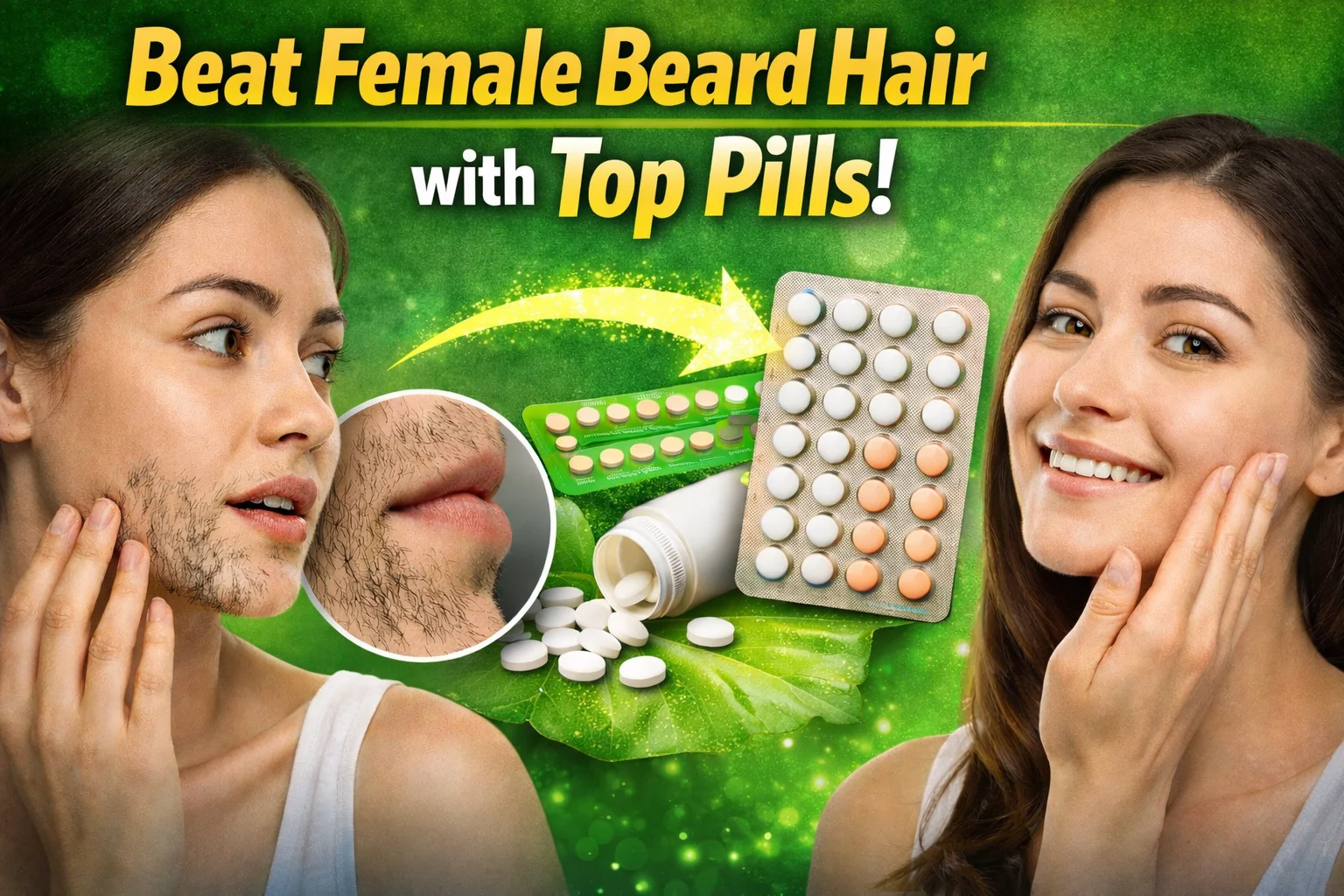

When society hears the phrase beard hair in women, it often responds with confusion or stigma. Yet, clinically speaking, female facial hair—known as hirsutism when excessive—is one of the most common endocrine-related conditions affecting women worldwide. From coarse chin whiskers during perimenopause to full sideburn growth due to Polycystic Ovary Syndrome (PCOS), the presence of beard hair in women is a biological reality, not a rarity.
The key difference between managing a man’s beard and a woman’s beard lies in the goal. Men typically want density and length; women almost universally want reduction, softening, or permanent removal. However, a growing niche of women are also choosing to keep their facial hair, focusing instead on styling and skincare. This guide explores every angle: medical management, daily aesthetics, and the surprising role of products like beard oil for facial hair growth in female grooming routines.
Part 1: Why Does Beard Hair Grow in Women? Understanding the Root Cause
Before managing the hair, you must understand the follicle. Beard hair in women differs from vellus hair (peach fuzz) in three ways:
- Thickness: It is terminal hair—coarse, pigmented, and thick.
- Hormonal Driver: Androgens (testosterone and DHT) stimulate facial follicles. Even women with “normal” hormone levels can have sensitive follicles that react strongly to low levels of androgens.
- Location: True beard hair appears on the upper lip, chin, sideburns, and along the jawline.
Common causes include:
- PCOS (Polycystic Ovary Syndrome): The leading cause, affecting 5-10% of women of reproductive age.
- Idiopathic Hirsutism: No detectable hormone imbalance; just genetic sensitivity.
- Menopause: As estrogen drops, the ratio of androgens effectively rises, triggering late-onset chin hair.
- Medications: Minoxidil, certain steroids, and cyclosporine can induce growth.
Part 2: Management Strategies – From Daily Plucking to Laser
Managing beard hair in women requires a tiered approach based on skin sensitivity, pain tolerance, and budget.
2.1 Temporary Removal (For Immediate Aesthetics)
- Threading & Tweezing: Ideal for isolated chin hairs. Risk: repeated tweezing can cause ingrown beard hair and folliculitis if the hair breaks below the skin.
- Waxing/Sugaring: Effective for larger areas like the jawline. Downside: requires hair to be at least ¼ inch long, meaning a visible “growth phase” every few weeks.
- Shaving: The most controversial method for women. Does it make hair thicker? No. That is a myth. Shaving creates a blunt tip, making regrowth feel stubbly. However, for women with significant beard hair in women, a daily dry shave with the best hair beard trimmer (set to zero guard) is often the quickest, painless solution before makeup.
2.2 Permanent Reduction (Medical Aesthetics)
- Laser Hair Removal: Works best on dark hair with light skin. Requires 6-8 sessions. Warning: Paradoxical hypertrichosis (increased hair growth) can occur in women with hormonal imbalances.
- Electrolysis: The only FDA-approved permanent hair removal method. A tiny probe destroys each follicle individually. It is slow, expensive, and painful, but it works on all hair colors and skin types.
Part 3: The Aesthetics of Keeping the Female Beard
A small but visible movement of women are choosing to keep their facial hair, framing it as a gender-nonconforming or body-positive aesthetic choice. For these women, management shifts from removal to grooming.
3.1 Softening Coarse Fibers
Surprisingly, beard oil for facial hair growth is not just for men trying to fill patches. For women keeping a natural beard, beard oil serves a different purpose:
- Hydration: Female beard hair is often dry and brittle due to frequent washing or plucking. Beard oil (containing jojoba, argan, or grapeseed oil) softens the shaft, making it less prickly against a partner’s skin or your own neck.
- Itch Reduction: When beard hair in women reaches 1-2 cm in length, the sharp tips curl and poke the skin, causing irritation. Oil weighs down the hair, reducing that itch.
- Does it cause growth? For women with normal androgen levels, topical beard oil will not trigger new follicles. It simply improves the quality of existing hair.
3.2 Color Management
Many women with dark, coarse facial hair struggle with the “five o’clock shadow” even after shaving. While just for men beard hair color is marketed toward men, it is increasingly used by women to blend gray beard hairs into their natural color or, conversely, to lighten dark stubble.
- Application tip: Mix a small amount of just for men beard hair color and apply only to the gray or dark patches with a fine brush. Leave for 3 minutes (not the full 5) to slightly lighten, not darken, the hair. This makes the stubble less visible against pale skin.
Part 4: The Nightmare of Ingrown Hairs in the Female Beard
Because beard hair in women is often curly or coarse, it is highly prone to becoming an ingrown beard hair. In women, this usually occurs on the chin or upper lip after waxing or shaving.
Signs of an ingrown beard hair:
- A small, red, painful bump (papule) that may contain a visible hair loop.
- Hyperpigmentation (dark spots) left behind after healing—a major aesthetic concern for women of color.
How to treat an ingrown beard hair in women:
- Stop tweezing. Digging worsens inflammation.
- Apply a warm compress for 10 minutes to soften the skin.
- Use chemical exfoliation: Salicylic acid (Stridex pads) or glycolic acid (The Ordinary’s 7% toner) applied nightly dissolves the dead skin trapping the hair.
- Gently lift the tip with a sterile needle if the hair is visible. Never cut it out.
Prevention: The best hair beard trimmer used with a “lift and cut” motion (trimming against the grain at a 45-degree angle) leaves the hair long enough to clear the follicle opening, dramatically reducing ingrowns compared to a razor.
Part 5: Styling the Female Beard – Yes, It’s a Thing
For women who embrace their facial hair, a hair cut style with beard synergy becomes relevant. The same principles of balance apply:
- Short hair + female beard: A pixie cut or shaved head (similar to a shaved hair and beard look on men) draws attention to the jawline. Keeping the beard neatly edged (using the best hair beard trimmer with a precision foil shaver) creates a striking, editorial look.
- Long hair and beard: Women with long hair and beard often use the length of their scalp hair to soften the impact of facial hair. A flowing mane paired with a short, velvety beard (1-3 mm) creates contrast.
- Defined lines: Unlike men who fade their beards into their sideburns, women often prefer a clean “cosplay” line—a sharp demarcation between scalp hair and beard hair. This is achieved by shaving the cheeks completely bare while leaving the chin and jawline defined.
Part 6: When to See a Doctor
While managing beard hair in women is often a cosmetic journey, sudden or rapid growth warrants medical attention. See an endocrinologist if you also experience:
- Voice deepening
- Male-pattern balding
- Clitoromegaly
- Severe cystic acne
These signs suggest an androgen-secreting tumor or non-classic congenital adrenal hyperplasia (NCAH), not simple hirsutism.
Conclusion: Redefining the Female Beard
Beard hair in women is not a flaw to be eradicated at all costs—it is a trait to be managed according to your own comfort, budget, and aesthetic. Whether you choose daily shaving with the best hair beard trimmer, laser removal, or a proudly displayed long hair and beard combination, the tools exist. Use beard oil for facial hair growth only if you want softness, just for men beard hair color if you want camouflage, and chemical exfoliants to stop that painful ingrown beard hair. The most powerful tool, however, is rejecting the shame. A female beard is just hair. And hair, no matter where it grows, can be styled.
When we think of a beard, we typically imagine a man grooming his jawline. However, the reality of beard hair in women is far more common than society admits. Medically known as hirsutism, this condition affects millions of women, causing coarse, dark hair to grow on the face, chest, and back.
But here is the truth: having beard hair in women does not make you less feminine. It makes you hirsute—a medical term, not a judgment.
This article explores the hirsutism definition, the difference between hirsutism vs normal hair, the best cures for hirsutism, and even takes a surprising detour into botany and marine life with Kniphofia hirsuta fire dance and green hirsuta montipora coral. Yes, the word “hirsuta” appears in nature too! We will also review the best contraceptive pill for hirsutism and how to manage pcos hirsutism vs normal hair.
Whether you are dealing with chin hirsutism vs normal hair or looking for hirsutism treatments that work, this guide is for you.
Part 1: The Hirsutism Definition – What Does Hirsute Mean?
Let’s start with the basics. The hirsute meaning comes from the Latin hirsutus, which translates to “rough,” “bristly,” or “shaggy.” In medical terms, a hirsute woman is one who grows terminal (thick, pigmented) hair in androgen-dependent areas—specifically the upper lip, chin, chest, and lower abdomen.
The hirsutism definition is clinical: it is excessive hair growth in women following a male pattern. This is different from simply having dark arm hair. To understand hirsutism vs normal hair, look at the location. Normal vellus hair is the soft “peach fuzz” found everywhere. Hirsutism replaces that fuzz with thick, dark strands.
The word hirsuten (the noun form describing the state of being hairy) is rarely used in conversation, but it appears in dermatology texts to describe the degree of hairiness.
Key distinction: Hypertrichosis vs hirsutism is a common point of confusion. Hypertrichosis refers to excessive hair growth anywhere on the body that is not androgen-dependent. It can be congenital or drug-induced. Hirsutism is specifically androgen-driven and follows a male distribution pattern. So if you have hair all over your arms and back but not specifically on your chin and chest, that is likely hypertrichosis, not female hirsutism.
Part 2: Beard Hair in Women – The Emotional and Physical Reality
Beard hair in women is the most visible and distressing form of female hirsutism. The chin and upper lip are the most common sites. For many hirsute women, the daily ritual of plucking, shaving, or waxing can consume hours and cause significant psychological distress.
Naked hirsute women—a search term that often brings up clinical images—refers to the medical documentation of how hirsutism in women appears without clothing to obscure it. Clinicians use the Ferriman-Gallwey scoring system to grade hair growth across nine body areas. A score above 8 indicates hirsutism. For example, on the chin, grade 1 is a few scattered hairs, while grade 4 is a complete, heavy “beard” .
Chin hirsutism vs normal hair is particularly telling. A few fine, light hairs on the chin are normal for many women, especially after menopause. But when those hairs become dark, thick, and numerous, that crosses into chin hirsutism. This specific presentation is often the earliest sign of pcos hirsutism vs normal hair.
Part 3: PCOS Hirsutism vs Normal Hair – What’s the Difference?
Polycystic Ovary Syndrome (PCOS) is the leading cause of hirsutism in women, accounting for 70-80% of cases. Understanding pcos hirsutism vs normal hair is crucial for treatment.
| Feature | Normal Hair (Vellus) | PCOS Hirsutism |
|---|---|---|
| Thickness | Fine, translucent | Coarse, pigmented |
| Location | Cheeks, forehead, arms | Chin, upper lip, chest, lower abdomen |
| Onset | Childhood/puberty | Sudden or progressive after puberty |
| Hormonal driver | None | Elevated androgens (testosterone, DHEAS) |
| Associated symptoms | None | Acne, irregular periods, weight gain, infertility |
In pcos hirsutism vs normal hair, the key is the conversion of vellus to terminal hair. Under the influence of androgens, a soft follicle transforms into a bristly one. This is why beard hair in women with PCOS often appears rapidly—sometimes over just a few months.
Part 4: Cures for Hirsutism – What Actually Works?
The phrase cures for hirsutism is tricky because a true “cure” depends on the underlying cause. If the cause is a reversible medication or a benign adrenal tumor, removing the source can stop the growth. However, for most women with idiopathic hirsutism or PCOS-related female hirsutism, we speak of management rather than cure.
That said, modern medicine offers several hirsutism treatments that can dramatically reduce hair growth to the point of being nearly invisible.
4.1 Mechanical Removal (Immediate but Temporary)
- Shaving, plucking, waxing, threading, and depilatory creams.
- These do not change the hair’s thickness or growth rate but provide instant cosmetic relief.
4.2 Topical Prescription Creams
- Eflornithine (Vaniqa®): Slows facial hair growth by inhibiting an enzyme in the follicle. Applied twice daily, it can significantly reduce the need for shaving or plucking.
4.3 Permanent Reduction
- Laser Hair Removal: Best for dark beard hair in women on light skin. Requires 6-8 sessions.
- Electrolysis: The only FDA-approved permanent hair removal method. Destroys each follicle individually with heat or chemical energy.
4.4 Systemic Medications (Slow but Address the Root Cause)
These reduce androgen production or block androgen action at the follicle.
Part 5: Oral Contraceptives for Hirsutism – The First-Line Defense
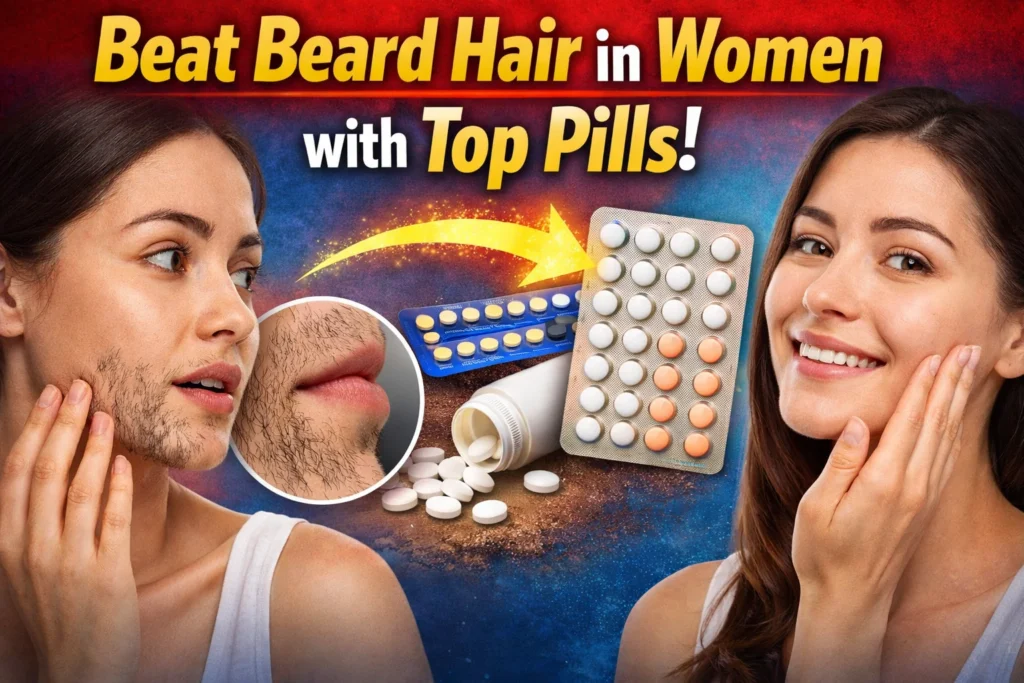
For women who do not wish to become pregnant, oral contraceptives for hirsutism are considered first-line therapy. They suppress ovarian androgen production, increase sex hormone-binding globulin (SHBG), and reduce free testosterone .
How They Work
Combined oral contraceptives (COCs) containing estrogen and progestin suppress luteinizing hormone (LH), which in turn reduces the ovarian theca cells’ production of testosterone. They also raise SHBG, which binds to free testosterone and renders it biologically inactive .
The Best Contraceptive Pill for Hirsutism
Not all pills are equal. Progestins have varying androgenic or anti-androgenic properties.
- Drospirenone-containing pills (Yaz, Yasmin, Beyaz): These are widely considered the best contraceptive pill for hirsutism because drospirenone has direct anti-androgenic activity (similar to spironolactone). Studies show a 43% reduction in Ferriman-Gallwey scores after 12 months of treatment with Yaz or Yasmin . Drospirenone also has anti-mineralocorticoid effects, reducing bloating.
- Norgestimate-containing pills (Ortho Tri-Cyclen): A balanced option with low androgenic activity and moderate effectiveness .
- Desogestrel-containing pills: Effective but may carry a slightly higher risk of blood clots compared to norgestimate .
- Levonorgestrel-containing pills: Generally not recommended for hirsutism because levonorgestrel has androgenic properties that can worsen hair growth .
Which is best? For most women with pcos hirsutism vs normal hair, a drospirenone-based pill (Yaz or Yasmin) is the top choice. Yaz contains 20mcg of estrogen with a 24/4 schedule (shorter hormone-free interval), while Yasmin has 30mcg with a 21/7 schedule. Both are effective, but Yaz may provide more consistent androgen suppression due to the shorter pill-free interval .
Part 6: Hirsutism Treatment Options – A Complete Comparison
Here is a summary of hirsutism treatments available today, adapted from clinical guidelines .
| Treatment | Mechanism | Time to Result | Permanence | Key Consideration |
|---|---|---|---|---|
| Oral Contraceptives | Suppress ovarian androgens | 6-12 months | Reversible | First-line for PCOS |
| Spironolactone | Androgen receptor blocker | 6-9 months | Reversible | Requires contraception (teratogenic) |
| Eflornithine cream | Inhibits hair follicle enzyme | 4-8 weeks | Reversible | Only for face |
| Laser | Destroys follicles with light | 6-12 months | Long-term reduction | Best for dark hair/light skin |
| Electrolysis | Destroys follicles with electricity | 12-18 months | Permanent | Works on all hair/skin types |
| Weight loss | Lowers insulin and androgens | Variable | Reversible | Particularly effective in PCOS |
Part 7: The Surprising World of “Hirsuta” – Plants and Corals
The word hirsuta appears not only in medicine but also in botany and marine biology. If you are a gardener or reef tank enthusiast, you may have encountered these terms.
Kniphofia hirsuta fire dance
Kniphofia hirsuta fire dance is a stunning perennial plant, commonly known as “Red Hot Poker” or “Torch Lily.” The species name hirsuta refers to the fine hairs on its foliage . Kniphofia hirsuta fire dance produces compact spikes of coral-red and yellow flowers that bloom from summer to autumn. It is cold-hardy (Zone 4-9), drought-tolerant, and attracts hummingbirds . For gardeners, Kniphofia hirsuta fire dance is a low-maintenance, showy addition to borders or containers.
Green hirsuta montipora coral
In the saltwater aquarium hobby, green hirsuta montipora coral is a sought-after species of Small Polyp Stony (SPS) coral. Montipora hirsuta gets its name from the tiny hair-like projections (papillae) on its surface. The green hirsuta montipora coral is valued for its bright coloration and encrusting or plating growth form. It requires high light, strong water flow, and stable water parameters—making it a challenge for beginners but a treasure for experienced reef keepers.
These natural examples remind us that “hirsute” simply means “hairy”—and in the plant and coral kingdoms, that is a beautiful thing.
Part 8: Managing Hirsutism at Home – Skincare and Affiliate Recommendations
While prescription medications and laser treatments are the gold standard, supporting your skin during hirsutism treatment is essential. Repeated shaving, waxing, and plucking can lead to irritation, hyperpigmentation, and ingrown hairs.
That is where a high-quality skincare product like CosmoClinic-20 comes in. Designed to soothe and rejuvenate hair follicles, CosmoClinic-20 helps reduce the appearance of redness and inflammation associated with frequent hair removal. It is particularly useful for women managing beard hair in women who need to calm the skin after daily grooming routines.
👉 [Shop CosmoClinic-20 on Amazon]
*Use this link to get the best price on CosmoClinic-20 for your hirsutism skincare routine.*
👉 [CosmoClinic-20 for Sensitive Skin – Available Here]
Formulated to reduce post-shave irritation and support healthy follicle turnover.
👉 [Buy CosmoClinic-20 – USA Shipping]
Fast delivery straight to your door.
Integrating CosmoClinic-20 into your daily regimen can complement medical hirsutism treatments by keeping the skin barrier healthy and reducing the visible damage caused by chronic hair removal.
Part 9: Living with Hirsutism – A Message for Hirsute Women
If you are one of the millions of hirsute women reading this, please know: you are not alone, and you are not broken. Hirsutism in women is a medical condition, not a moral failing. The shame surrounding beard hair in women is a social construct, not a biological imperative.
Modern medicine offers effective hirsutism treatments. From oral contraceptives for hirsutism to electrolysis and laser, you have options. Start with a visit to an endocrinologist or dermatologist. Ask specifically about the best contraceptive pill for hirsutism if you have PCOS. And while you wait for those treatments to work, use gentle skincare like CosmoClinic-20 to keep your skin healthy.
And when you hear the word hirsuta outside the doctor’s office—whether in the fiery blooms of Kniphofia hirsuta fire dance or the intricate structures of green hirsuta montipora coral—remember that hairiness is not a flaw. It is a feature of life, in all its forms.
Frequently Asked Questions: Hirsutism and Beard Hair in Women
1. Which hormone causes facial hair growth in females?
The primary hormone responsible for beard hair in women is testosterone—specifically a more potent form called dihydrotestosterone (DHT) . While testosterone is typically thought of as a “male” hormone, women’s ovaries and adrenal glands produce small amounts naturally. Problems arise when:
- Total testosterone levels are too high (e.g., in PCOS)
- The hair follicle is hypersensitive to normal testosterone levels (idiopathic hirsutism)
- Sex hormone-binding globulin (SHBG) is low, leaving more “free” testosterone available to act on follicles
Other androgens involved include androstenedione and dehydroepiandrosterone sulfate (DHEAS) . When these hormones bind to androgen receptors in facial hair follicles, they convert vellus (peach fuzz) into terminal (coarse, dark) hairs—the same type of hair that grows on a man’s chin.
2. How to stop facial hair growth in females naturally permanently
The honest answer: There is no guaranteed natural permanent cure for hirsutism. However, several natural approaches can significantly reduce the rate and thickness of beard hair in women when used consistently.
Natural approaches that help (but are not 100% permanent):
| Natural Method | How It Works | Expected Result |
|---|---|---|
| Spearmint tea (2 cups daily) | Reduces free testosterone | 30-50% reduction in mild hirsutism after 1-2 months |
| Licorice root + peony | Lowers DHEAS and testosterone | Moderate reduction, best for adrenal hirsutism |
| Weight loss (if overweight) | Lowers insulin, which lowers androgens | Significant improvement in PCOS-related hirsutism |
| Low-glycemic diet | Reduces insulin spikes | Slows progression of new hair growth |
| Turmeric (oral + topical) | Anti-inflammatory; may reduce follicle sensitivity | Mild improvement, better for associated skin issues |
| Saw palmetto | Blocks 5-alpha-reductase (converts T to DHT) | Mild to moderate reduction in chin hair |
What “natural permanent” really means:
You cannot “kill” a hair follicle naturally without electrolysis or laser. But you can:
- Slow growth (hair takes longer to regrow after removal)
- Thin the hair (coarse black hairs become finer and lighter)
- Prevent new follicles from activating
Important: If you want truly permanent removal, electrolysis is the only FDA-approved method. Natural methods are best used as adjuncts to medical treatment, not replacements.
3. How I cured my hirsutism (A patient-informed perspective)
While the word “cured” is controversial in hirsutism (because it often recurs if treatment stops), many women achieve what feels like a cure. Here is a composite of successful strategies reported by women who have “cured” their beard hair in women:
Step 1: Identify the root cause
- PCOS hirsutism vs normal hair requires different treatment than idiopathic hirsutism. Get hormone testing: total testosterone, free testosterone, DHEAS, 17-hydroxyprogesterone, and fasting insulin.
Step 2: Medical foundation (prescription)
- Oral contraceptives for hirsutism (drospirenone-based like Yaz or Yasmin) for 12-24 months
- Spironolactone (50-200 mg daily) to block androgen receptors
- Metformin (if PCOS with insulin resistance)
Step 3: Permanent hair removal
- Electrolysis for white, gray, or light hairs
- Laser for dark hairs on light skin
- 6-12 sessions over 12-18 months
Step 4: Lifestyle maintenance
- Low-glycemic diet
- Spearmint tea daily
- Stress reduction (cortisol drives adrenal androgens)
Realistic timeline for “cure”:
- Month 1-3: Slower regrowth, finer texture
- Month 6-12: 70-90% reduction in visible beard hair in women
- 18-24 months: Maintenance with occasional touch-ups
Bottom line: Women who claim “I cured my hirsutism” typically used a combination of hormonal therapy + permanent hair removal + lifestyle changes. The hair does not grow back once the follicle is destroyed (electrolysis), but underlying hormonal issues must be managed to prevent new follicles from activating.
4. How to stop facial hair growth in females permanently
To achieve permanent cessation of beard hair in women, you must address both the existing hair and the hormonal driver. Here is the medical gold standard:
Permanent solutions:
| Method | Permanence | Best For | Cost (USA) |
|---|---|---|---|
| Electrolysis | Truly permanent (each follicle destroyed) | Any hair color or skin type; small areas (chin, lip) | $50-$150 per session; 10-30 sessions needed |
| Laser hair removal | Long-term reduction (not 100% permanent; maintenance needed) | Dark hair + light skin | $200-$500 per session; 6-8 sessions |
| Androgen blockade (medication) | Reversible (hair returns if stopped) | PCOS or high-androgen hirsutism | Varies by insurance |
The “permanent protocol” that works:
- Start spironolactone or an anti-androgenic birth control pill (stops new hairs from forming)
- Undergo electrolysis or laser (destroys existing terminal hairs)
- Continue medication for 12-24 months (prevents activation of dormant follicles)
- Taper medication slowly under doctor supervision
Without step 1, new hairs may appear even after laser/electrolysis because the hormonal environment remains abnormal.
Warning: Do not pursue laser hair removal if you have untreated PCOS with high androgens. It can cause paradoxical hypertrichosis (more hair growth) in some women.
5. How to stop chin hair growth in females
Chin hair is the most common and distressing location for beard hair in women. Here is a targeted approach:
Immediate cosmetic management:
- Shaving: Fast, painless, does not thicken hair (myth debunked)
- Threading: Excellent for chin contours; no chemical irritation
- Waxing: Provides 2-4 weeks smoothness but can cause ingrowns
Medical treatments specific to chin hirsutism:
- Topical eflornithine (Vaniqa®): The only prescription cream FDA-approved for facial hirsutism. Slows growth by 50-60% after 8 weeks. Apply twice daily.
- Electrolysis: Ideal for the chin because it is a small, defined area. Requires 15-30 hours total over 12-18 months.
- Laser: Works well on the chin if you have dark hair and light skin.
Natural adjuncts for chin hair:
- Spearmint tea (2 cups daily) reduces free testosterone
- Green tea extract topically (contains EGCG, which inhibits 5-alpha-reductase)
- Turmeric paste (mix with milk or aloe) applied 3x weekly may gradually soften and lighten hair
When to worry:
Sudden, rapid growth of chin hirsutism (over weeks, not months) warrants an endocrinology workup to rule out an androgen-secreting tumor.
6. Idiopathic hirsutism
Idiopathic hirsutism is the medical term for beard hair in women with:
- Normal hormone levels on blood tests
- Regular menstrual cycles
- No identifiable cause (hence “idiopathic” = of unknown origin)
- No other signs of hyperandrogenism (acne, balding, voice changes)
Key facts about idiopathic hirsutism:
| Feature | Idiopathic Hirsutism | PCOS Hirsutism |
|---|---|---|
| Hormone levels | Normal | Elevated androgens |
| Menstrual cycles | Regular | Irregular or absent |
| Ovarian ultrasound | Normal | Polycystic ovaries |
| Insulin resistance | No | Often yes |
| Response to birth control pills | Moderate | Excellent |
| Hereditary pattern | Common (Mediterranean, Middle Eastern, South Asian) | Variable |
Why does idiopathic hirsutism happen?
The current theory: Increased 5-alpha-reductase activity in the hair follicle. This enzyme converts testosterone to DHT (5x more potent) locally in the skin, even if blood testosterone levels are normal. Essentially, your follicles are “overreacting” to normal hormone signals.
Treatment for idiopathic hirsutism:
- Electrolysis or laser (first-line, since hormones are normal)
- Eflornithine cream (Vaniqa®)
- Spironolactone (blocks androgen receptors even if blood levels are normal)
- No need for birth control pills unless you also want contraception
Good news: Idiopathic hirsutism does not affect fertility or long-term health. It is purely a cosmetic concern.
7. Hirsutism in women (Overview)
Hirsutism in women affects approximately 5-10% of reproductive-aged women worldwide. That means 1 in every 10 to 20 women you meet likely manages some degree of beard hair in women in private.
Prevalence by ethnicity:
- Mediterranean, Middle Eastern, South Asian: Up to 20%
- Hispanic: 15-18%
- Caucasian (Northern European): 5-8%
- East Asian, Sub-Saharan African: Less than 5%
The Ferriman-Gallwey scoring system:
Doctors grade hirsutism in 9 body areas (upper lip, chin, chest, upper back, lower back, upper abdomen, lower abdomen, arms, thighs). A score of 8-15 is mild, 16-25 is moderate, and >25 is severe hirsutism.
Associated conditions:
- PCOS (70-80% of cases)
- Idiopathic hirsutism (15-20%)
- Non-classic congenital adrenal hyperplasia (NCAH) (5%)
- Androgen-secreting tumors (<1%)
- Cushing’s syndrome (<1%)
Psychological impact:
Studies show hirsutism in women is associated with:
- 3x higher rates of social anxiety
- 2x higher rates of depression
- Avoidance of intimate relationships, swimming, and even eye contact
8. Hirsutism treatment (Comprehensive options)
Hirsutism treatment is highly individualized. Here is the full toolbox:
First-line (start here for most women):
| Treatment | Indication | Time to effect |
|---|---|---|
| Oral contraceptives for hirsutism | PCOS or need for contraception | 6-12 months |
| Spironolactone | Moderate-severe hirsutism (with or without PCOS) | 6-9 months |
| Electrolysis | Small areas; permanent solution | 12-18 months |
| Laser hair removal | Dark hair + light skin | 6-12 months |
Second-line (if first-line fails or not tolerated):
- Finasteride (5-alpha-reductase inhibitor; not FDA-approved for women but used off-label)
- Flutamide (potent anti-androgen; risk of liver toxicity, requires monitoring)
- Metformin (especially for PCOS with insulin resistance)
- GnRH agonists (for severe, refractory cases; induces temporary menopause)
Topical treatments:
- Eflornithine (Vaniqa®): Slows growth; best for mild-moderate facial hirsutism
- Eflornithine + laser: Synergistic; better results than either alone
Combination therapy (the gold standard):
Oral contraceptive + spironolactone + laser/electrolysis = 80-95% reduction in beard hair in women after 12-18 months.
9. Why do women with PCOS grow beards?
Women with Polycystic Ovary Syndrome (PCOS) grow beard hair in women because of a cascade of hormonal disruptions:
The PCOS beard mechanism:
- Insulin resistance → high insulin levels
- High insulin stimulates ovarian theca cells to produce excess testosterone
- High testosterone is converted to DHT in facial hair follicles
- DHT lengthens the growth phase (anagen) and thickens the hair shaft of vellus follicles
- Over months to years, soft peach fuzz becomes coarse beard hair in women
Why the chin specifically?
Facial hair follicles (especially on the chin and upper lip) have the highest density of androgen receptors in the female body. They are literally “wired” to respond to androgens more than any other body area.
PCOS hirsutism vs normal hair:
In PCOS, the conversion from vellus to terminal hair is rapid and progressive. Without treatment, a woman with PCOS may develop a full male-pattern beard within 3-5 years of puberty.
Can it be reversed?
Yes and no:
- Existing terminal hairs will not revert to vellus. They must be destroyed (electrolysis/laser) or removed permanently.
- New hair growth can be stopped by lowering androgens with birth control pills, spironolactone, or metformin.
10. Does hirsutism go away with age?
The answer depends on the cause of your hirsutism:
| Type of Hirsutism | Change with Age |
|---|---|
| PCOS-related | Often worsens until menopause, then may stabilize or slightly improve due to lower overall androgens |
| Idiopathic hirsutism | Stable or slowly worsens; does not go away on its own |
| Postmenopausal hirsutism | Appears after menopause due to falling estrogen (which unmasks androgens); does not go away without treatment |
| Medication-induced | Reverses after stopping the medication (within 6-12 months) |
The menopause paradox:
After menopause, ovarian testosterone production drops significantly. However, adrenal androgens (DHEAS) also decline with age. Some women experience improvement in beard hair in women after menopause. Others experience worsening because the ratio of estrogen to androgens shifts dramatically (estrogen drops more than testosterone).
Does hirsutism ever go away completely on its own?
Rarely. Spontaneous remission of moderate-severe hirsutism is unusual. Most women require active treatment. However, very mild chin hirsutism vs normal hair (a few stray dark hairs) may remain stable for decades without progression.
11. What are the facts about hirsutism?
Here are 10 evidence-based facts every woman should know about hirsutism:
| Fact | Explanation |
|---|---|
| 1. Hirsutism is common | Affects 5-10% of women worldwide. You are not alone. |
| 2. It is not the same as hypertrichosis | Hypertrichosis vs hirsutism: Hypertrichosis is generalized, non-androgenic excess hair anywhere on the body. Hirsutism is androgen-driven male-pattern hair. |
| 3. Shaving does not make it worse | The myth that shaving thickens hair has been scientifically debunked. It creates a blunt tip, which feels coarser, but the follicle is unchanged. |
| 4. Electrolysis is the only permanent method | Laser offers “permanent reduction” (FDA term), but only electrolysis destroys each follicle permanently. |
| 5. Hormonal treatment takes months | Do not expect results from birth control pills or spironolactone for at least 6 months. Hair cycles are slow. |
| 6. Weight loss helps PCOS hirsutism | Losing just 5-10% of body weight can lower insulin and testosterone significantly. |
| 7. Spearmint tea has real evidence | Two cups daily of organic spearmint tea reduced free testosterone by 30% in a randomized trial. |
| 8. Hirsutism affects mental health | Seek support groups or therapy. The psychological burden is real and treatable. |
| 9. You can still get pregnant | Hirsutism in women does not cause infertility by itself, but PCOS (the most common cause) can. Treat the underlying condition. |
| 10. Insurance may cover treatment | Many USA insurance plans cover electrolysis or laser if hirsutism is documented as a medical condition (not cosmetic). Check your policy. |
12. Why am I growing beard hairs as a woman?
If you are suddenly or gradually developing beard hair in women, here are the most likely explanations:
Common causes (98% of cases):
- PCOS (Polycystic Ovary Syndrome) – The #1 cause. Look for irregular periods, acne, weight gain, or thinning scalp hair.
- Idiopathic hirsutism – Normal hormones, regular periods, but your follicles are hypersensitive. Often runs in families.
- Perimenopause or menopause – Estrogen drops, unmasking normal androgens. Chin hairs are very common after age 45.
- Medications – Minoxidil, phenytoin, cyclosporine, danazol, high-dose steroids.
Rare causes (<2%):
- Non-classic congenital adrenal hyperplasia (NCAH)
- Androgen-secreting ovarian or adrenal tumor (sudden, rapid growth over weeks; often with virilization)
- Cushing’s syndrome (high cortisol; also causes weight gain, purple stretch marks, easy bruising)
- Hyperthecosis (severe ovarian androgen excess)
Red flags that require immediate medical evaluation:
- Rapid onset (full beard over 3-6 months)
- Virilization (voice deepening, clitoral enlargement, male-pattern balding, increased muscle mass)
- New onset after age 50 with no prior hirsutism
- Abdominal or pelvic mass
What to do next:
- See your primary care doctor or gynecologist for hormone testing: total testosterone, free testosterone, DHEAS, 17-hydroxyprogesterone, prolactin, and TSH.
- Ask for a pelvic ultrasound if PCOS is suspected.
- Start documenting your hair growth (photos monthly) to show progression.
- Do not panic. Most beard hair in women is benign and highly treatable.
Summary Table: Quick Answers
| Question | Short Answer |
|---|---|
| Which hormone causes facial hair growth in females? | Testosterone and DHT (dihydrotestosterone) |
| How to stop facial hair growth permanently? | Electrolysis + hormonal therapy (spironolactone or birth control pills) |
| How I cured my hirsutism? | Combination of laser/electrolysis + spironolactone + spearmint tea + weight loss |
| How to stop chin hair growth? | Topical eflornithine (Vaniqa®) + electrolysis for permanent removal |
| Idiopathic hirsutism? | Normal hormones + regular periods + sensitive hair follicles; treat with electrolysis/laser |
| Does hirsutism go away with age? | Rarely; PCOS-related may worsen; idiopathic remains stable |
| Why do women with PCOS grow beards? | Insulin resistance → high testosterone → DHT thickens facial hair |
| Why am I growing beard hairs? | Most likely PCOS, idiopathic, or perimenopause. See a doctor for testing. |
Disclaimer: This information is for educational purposes only and does not constitute medical advice. Always consult a qualified healthcare provider for diagnosis and hirsutism treatment personalized to your health history.
Affiliate Reminder: For skincare products that support your hirsutism management routine, [click here to search for CosmoClinic-20 on Amazon](https://www.amazon.com/s?k=CosmoClinic-20&tag=your affiliate id-20) or explore [post-hair removal soothing creams](https://www.amazon.com/s?k=post+hair+removal+soothing+cream&tag=your affiliate id-20) to calm skin after managing beard hair in women.
Summary Table: Key Terms Defined
| Term | Definition |
|---|---|
| Beard hair in women | Coarse, pigmented facial hair on females; a subset of hirsutism |
| Hirsutism | Excessive male-pattern hair growth in women |
| Hirsute meaning | “Rough” or “bristly” from Latin; medically, having excessive hair |
| Hirsuten | The state or degree of being hairy |
| Hypertrichosis vs hirsutism | Hypertrichosis is generalized non-androgenic excess; hirsutism is androgen-driven male pattern |
| PCOS hirsutism vs normal hair | PCOS hair is thick, dark, and on chin/chest; normal hair is fine vellus |
| Kniphofia hirsuta fire dance | A perennial flowering plant with hairy foliage and red-yellow blooms |
| Green hirsuta montipora coral | A reef-building coral with hair-like surface projections |
Final Call to Action:
If you are struggling with beard hair in women, do not suffer in silence. Book an appointment with a healthcare provider, discuss oral contraceptives for hirsutism, and explore permanent removal options. And for daily skin support, click here to purchase CosmoClinic-20 on Amazon and give your skin the care it deserves.